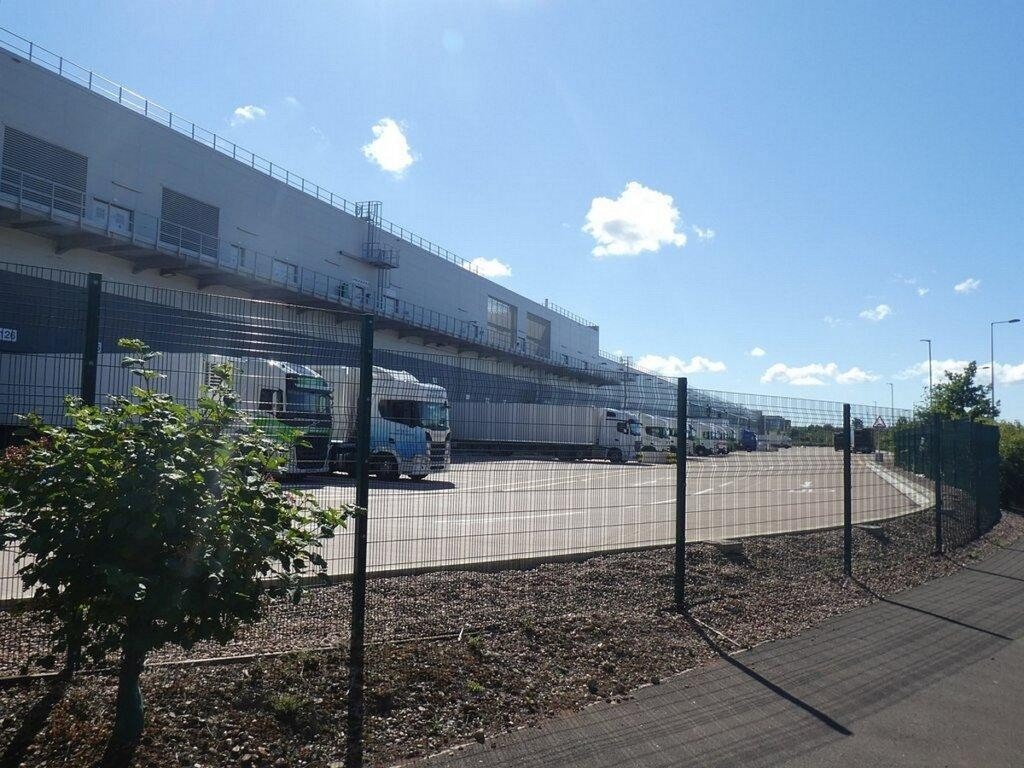
From area segmentation to cargo security: large logistics parks usually include warehouses, loading and unloading zones, vehicle lanes, parking areas, equipment zones and pedestrian access areas. Because these sites are large and functionally complex, perimeter fencing first needs to support area separation, traffic management and cargo-security management.
Figure 1 | Perimeter segregation and vehicle-operation environment at a large logistics park.
Using the highest security-grade fence in every part of a logistics park is not always economical. A more practical approach is to select different fence systems according to the function and security level of each zone.
1. Use 3D Welded Mesh Fence in Standard Areas
Large logistics parks often require long internal fence lines across many operational areas. Standard warehouse perimeters, roadsides, parking areas and general work zones can usually use 3D welded mesh fencing.
3D welded mesh fence offers a stable structure, good visibility, convenient installation and relatively economical project cost, making it suitable for large-scale use.
Common post options in logistics projects include square posts and peach posts. Peach posts can be matched with welded mesh panels to create a clean and continuous fence appearance, while square posts provide a clear structural form and flexible connection options for large-volume engineering applications.
For large logistics operators, fencing is more than a separator. On long runs, consistent mesh type, post style, color and installation alignment can directly affect the overall appearance of the logistics park. This is why large projects usually place more emphasis on system consistency, installation quality and visual coordination.
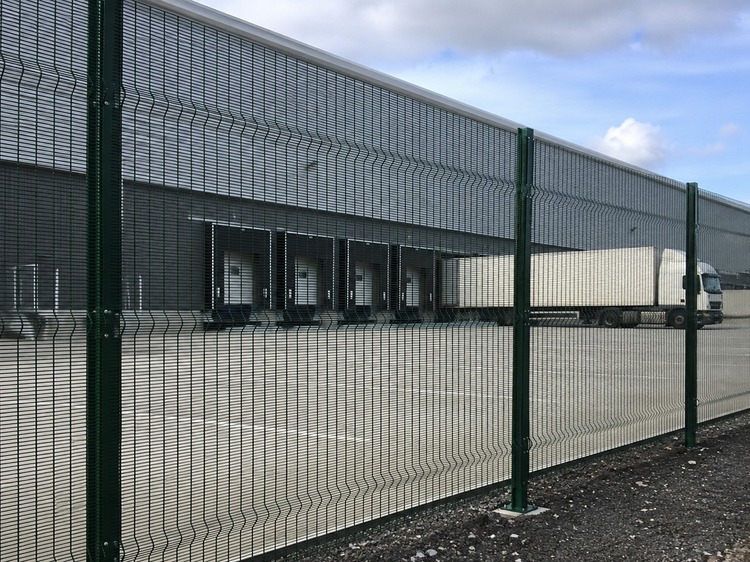
Figure 2 | 3D welded mesh fencing used to separate warehouse and loading areas.
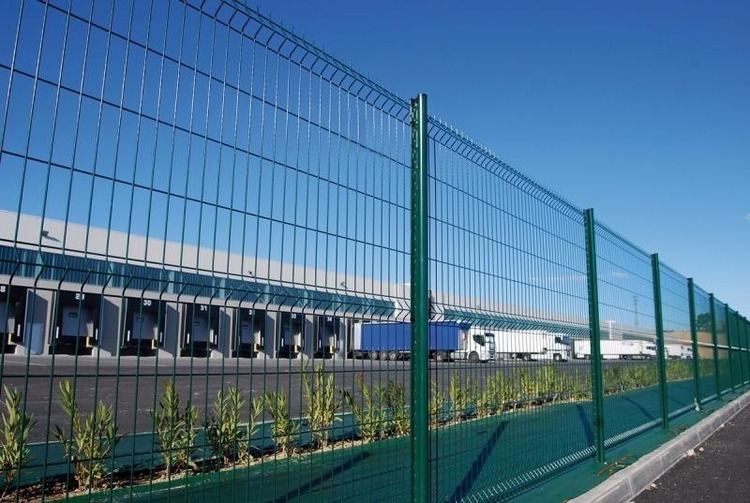
Figure 3 | Long-distance 3D welded mesh fencing with a consistent, continuous visual effect.
2. Fence Height Should Match Actual Security Requirements
Fence height in a logistics park should not be determined only by zoning needs. It must also take anti-climb performance and cargo security into account.
In actual projects, the total protective height is normally measured from the finished floor level or final site ground level. Depending on project requirements, general areas may require an overall protective height of not less than 2.5 m. Key areas or locations with higher security requirements may require a fence height of 3 m or more.
Fence height should therefore be designed according to:
the function of the area;
finished ground level;
the location of warehouses and loading zones;
conditions for external personnel approaching the fence;
anti-climb requirements; and
anti-theft requirements.
The fence system should be designed as a project-specific solution rather than supplied only as a standard product.
3. Loading Areas Need Extra Attention to Mesh Aperture and Anti-Theft Performance
Loading and unloading areas are among the locations that require the closest attention in logistics-park fence design. In general areas, fencing mainly separates people and vehicles. Inside loading zones, however, cargo may be actively handled, temporarily stored or waiting for transfer, so anti-theft and cargo-security requirements are higher.
A key question is whether a person can pass an item through the fence mesh. If the mesh opening is large, a person may still be able to pass small items through the fence even when they cannot enter the protected area.
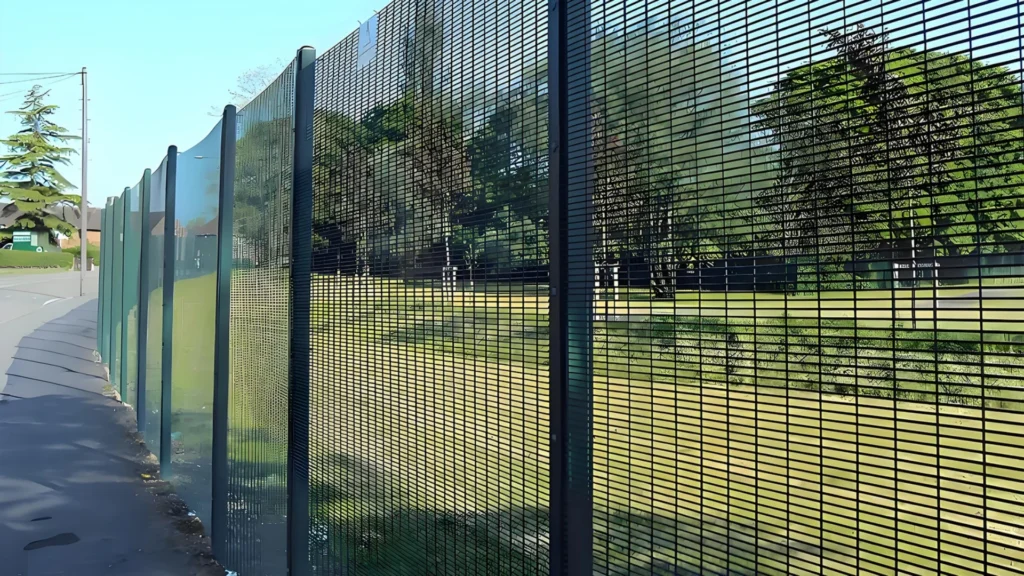
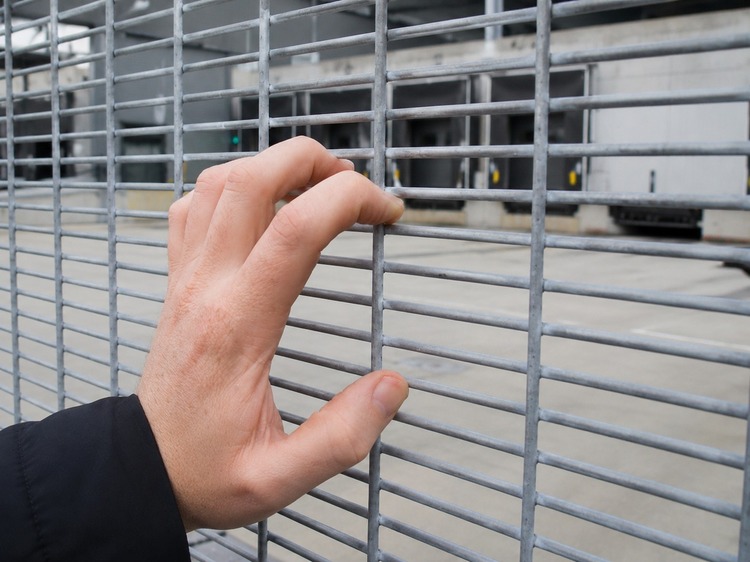
For high-value cargo zones, key loading areas and locations where items must not be passed through the mesh, 358 anti-climb fencing for perimeter security can be used. Its small-aperture mesh structure not only increases climbing difficulty but also significantly limits reaching through the mesh or passing items, improving anti-theft protection around cargo areas.
A large logistics park can therefore combine 3D welded mesh fencing and 358 anti-climb fencing according to the security level and operating function of each zone, balancing overall project cost with area separation, cargo security and anti-theft requirements.
For locations that require small apertures and a higher level of anti-climb and anti-theft protection, see the CommandFence 358 fence range.
Figure 4 | Small-aperture high-security mesh can restrict reaching through the fence and passing items.
4. Large Logistics Operators Place Greater Emphasis on the Overall Fence Appearance
For major logistics brands, fences can run for hundreds of meters or even several kilometers along site roads, warehouses and external boundaries. The finished result becomes part of the overall architecture and brand image of the logistics park, not just a standalone fence.
Projects typically need to maintain:
a consistent mesh-panel style;
a consistent post form;
a consistent fence color;
coordinated fence height and alignment;
gates that match the main fence style; and
a clean overall visual effect after long-distance installation.
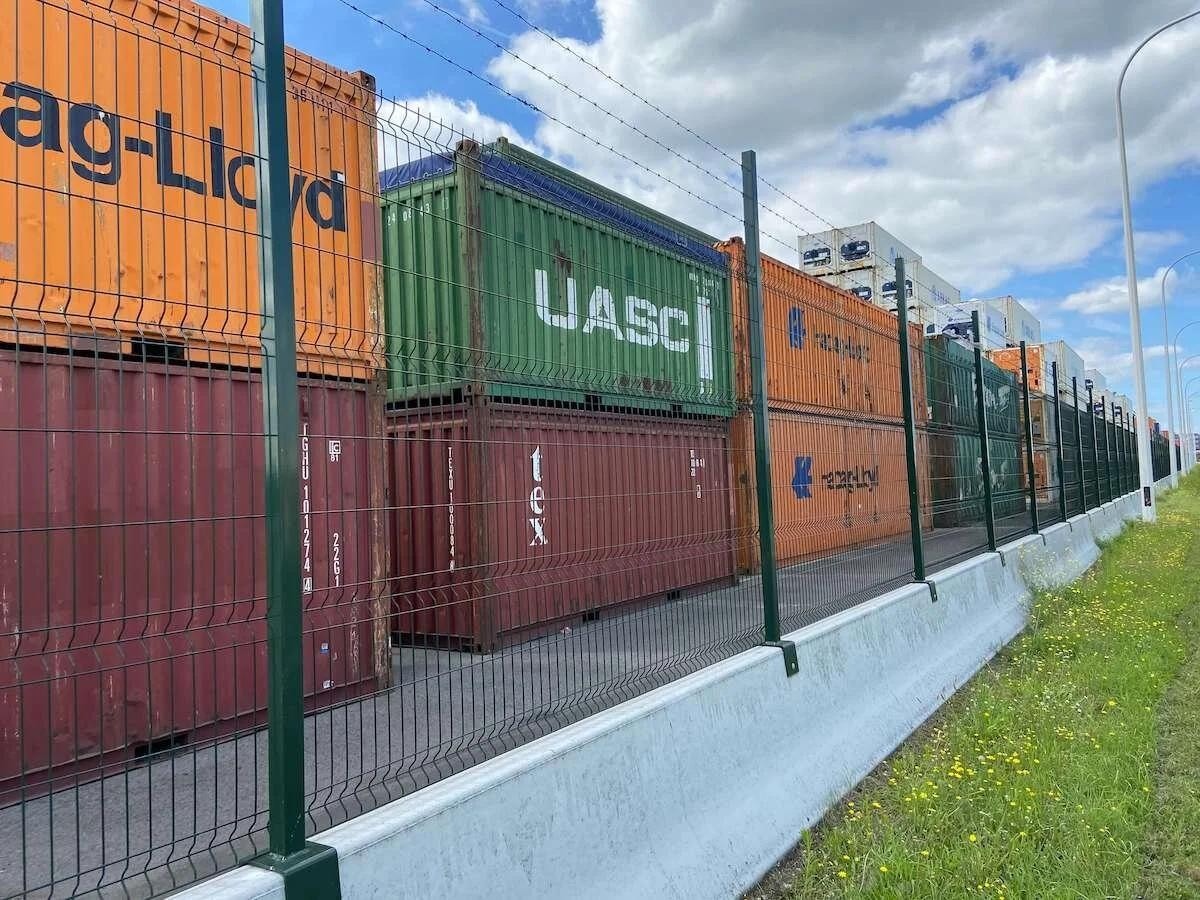
This is particularly important at main entrances, office areas and along principal roads. A neat, continuous and unified fence system can noticeably improve the perceived completeness of the project. Similar long-line planning and delivery considerations can also be seen in this port perimeter fencing project delivery reference.
Figure 5 | Long-distance perimeter fencing in a logistics and container-yard environment.
5. Corrosion Protection and Long-Term Color Stability Are Equally Important
Logistics-park fencing remains exposed to outdoor conditions for years, so the initial purchase price should not be the only consideration.
Mesh panels, posts, connection components and matching gates need corrosion protection suited to the project environment, such as hot-dip galvanizing, powder coating or a project-specified composite protection system. Related durability considerations are also important in chemical and LNG perimeter fencing where long-term outdoor exposure can place higher demands on the protective finish.
A good surface treatment affects not only rust resistance but also the appearance of the fence after long-term use. For a branded logistics park, it is especially important that the fence maintains relatively stable:
surface color;
gloss;
coating integrity;
overall visual consistency.
If fences in different parts of the site show obvious fading, chalking or corrosion after several years, maintenance costs increase and the overall site image is also affected. Corrosion-protection process, coating quality and long-term color stability are therefore important parts of fence selection for large logistics parks.
6. Fences, Vehicle Gates and Pedestrian Gates Should Be Planned Together
People and vehicles enter and leave logistics parks frequently, so gate locations need to be planned together with the fence zones.
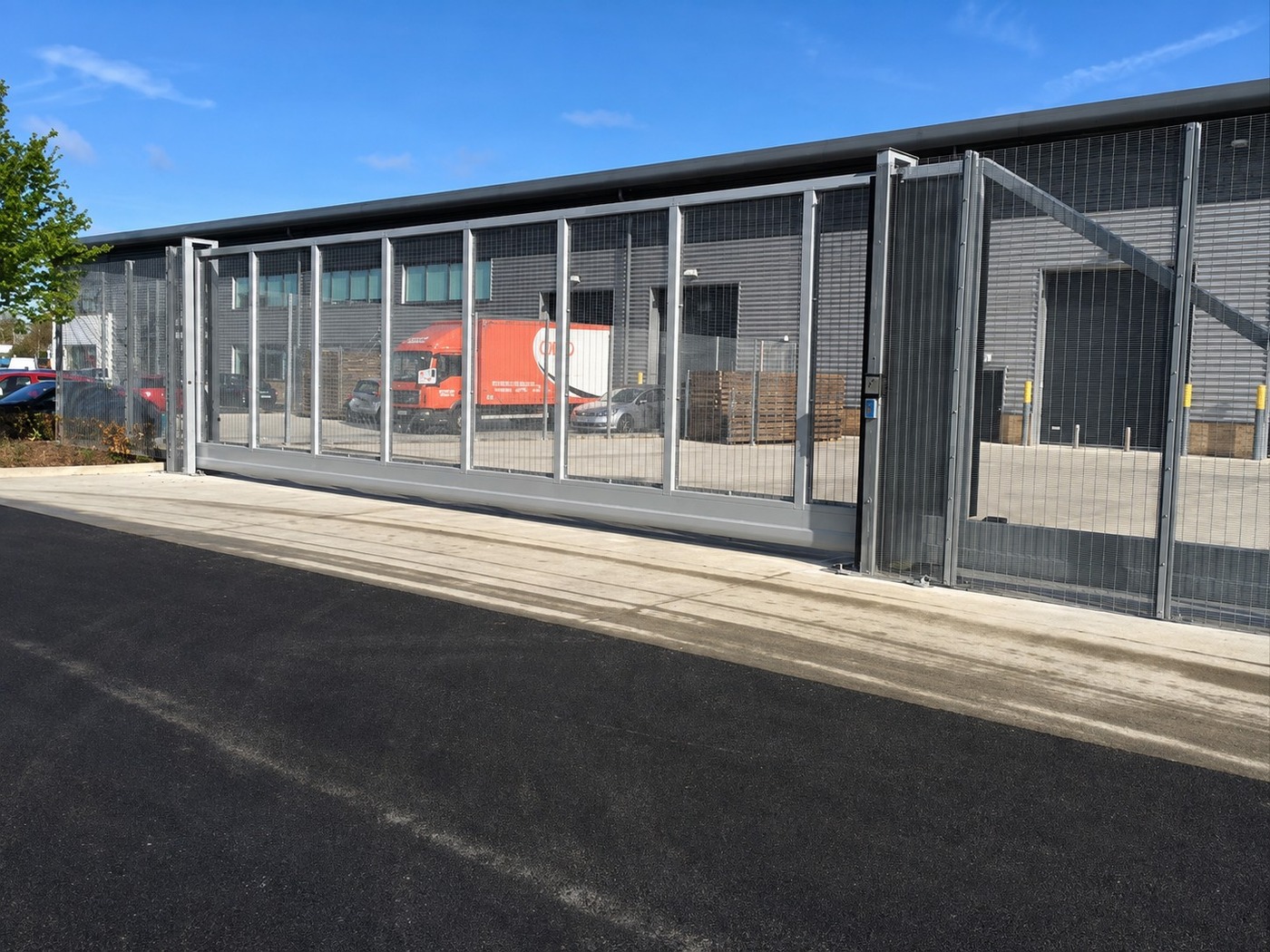
Vehicle gates should be designed according to vehicle dimensions, required passage width, opening frequency and site road conditions. For logistics lanes with frequent truck movement, a tracked sliding vehicle gate can be considered where the site layout and operating conditions are suitable.
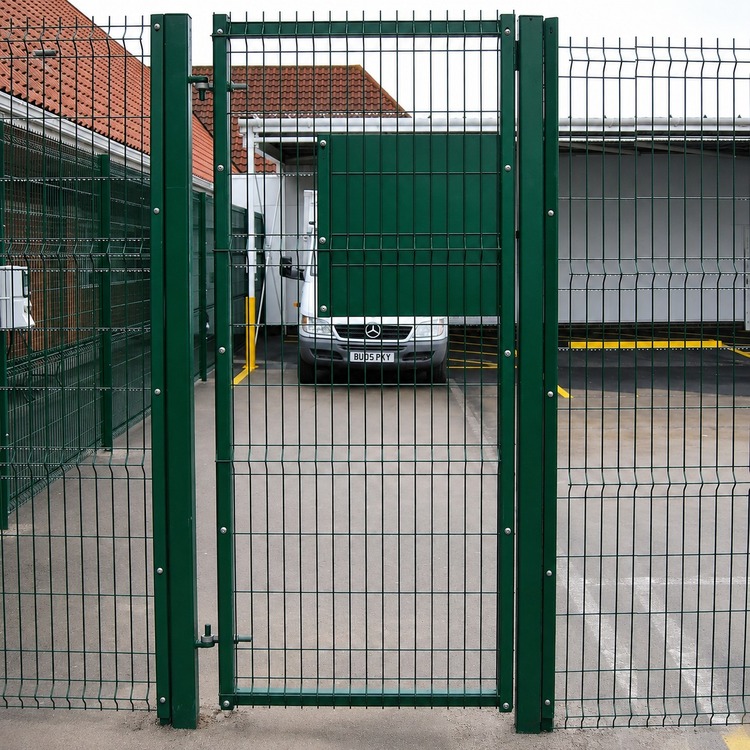
Pedestrian gates should be coordinated with employee routes, warehouse entrances and access-control locations. A single-leaf pedestrian swing gate can be integrated with the main fence line for controlled personnel access.
Where physical protection and access management are integrated, the integrated smart gatekeeper solution provides a related application reference.
Figure 6 | Large sliding vehicle gate for a logistics park vehicle access lane.
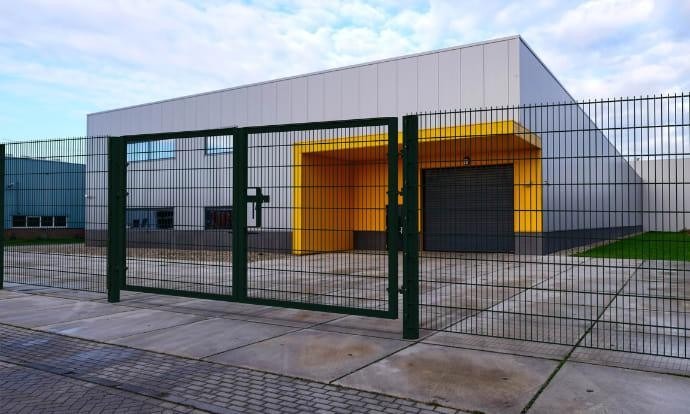
Figure 7 | Pedestrian gate planned as part of the main fence system.
Figure 8 | Double-leaf vehicle access gate in a logistics park.
If fencing, gates and site traffic routes are planned together from the beginning of the project, later site adjustments can be reduced and the zoning and access-management system becomes clearer.
Conclusion
The core principle of fence construction for a large logistics park is not to use the same high-security fence everywhere, but to configure the perimeter according to the operating requirements and cargo-security level of different functional areas.
Standard warehouse perimeters, internal roads, parking areas and general internal zoning can use more economical 3D welded mesh fencing, combined with square or peach posts to create a consistent site-wide fence system.
Key loading zones, high-value cargo areas and locations where items must not be passed through the mesh can use 358 small-aperture anti-climb fencing to raise the anti-theft and cargo-security level.
Large logistics operators should also consider consistent fence style and color, corrosion protection and the long-term appearance of the system in outdoor service.
By using 3D fencing as the main area-separation system, 358 fencing in key security zones, and matching vehicle and pedestrian gates, a project can balance area segregation, cargo security, access management, brand image and overall construction cost.
CommandFence approaches large logistics parks as complete perimeter systems rather than as a single fence product. Based on site zoning, cargo value, vehicle and pedestrian circulation, security level and environmental exposure, the fence type, posts, gates, connection details and corrosion-protection system can be coordinated as one project-specific solution.
For new logistics parks, warehouses and distribution centers, project teams can review the CommandFence product range and select a combination of 3D welded mesh fencing, 358 anti-climb fencing and access gates that matches the actual operating and security requirements of each zone.







Leave a Reply