
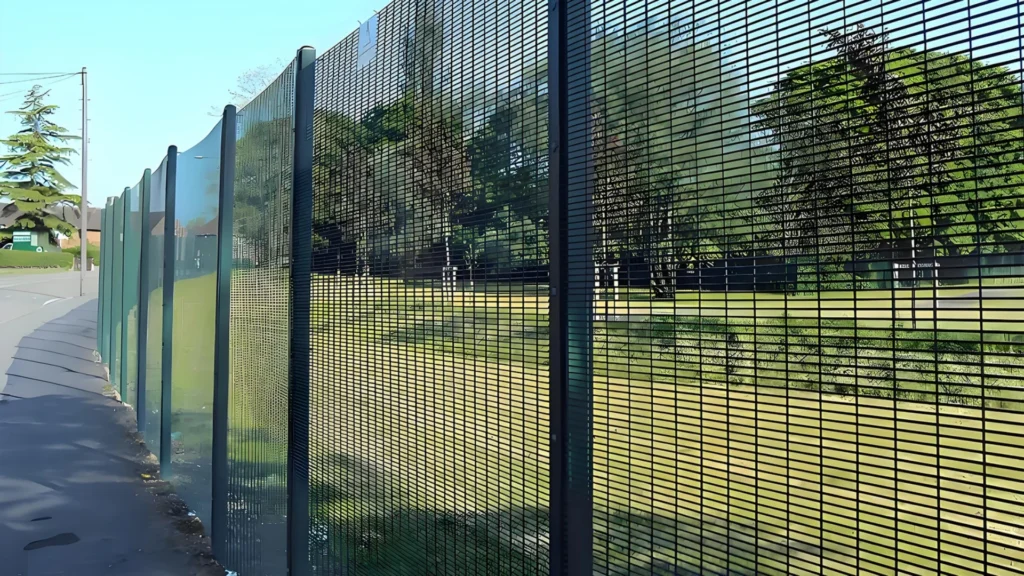
Real-project photo edition · CommandFence
|
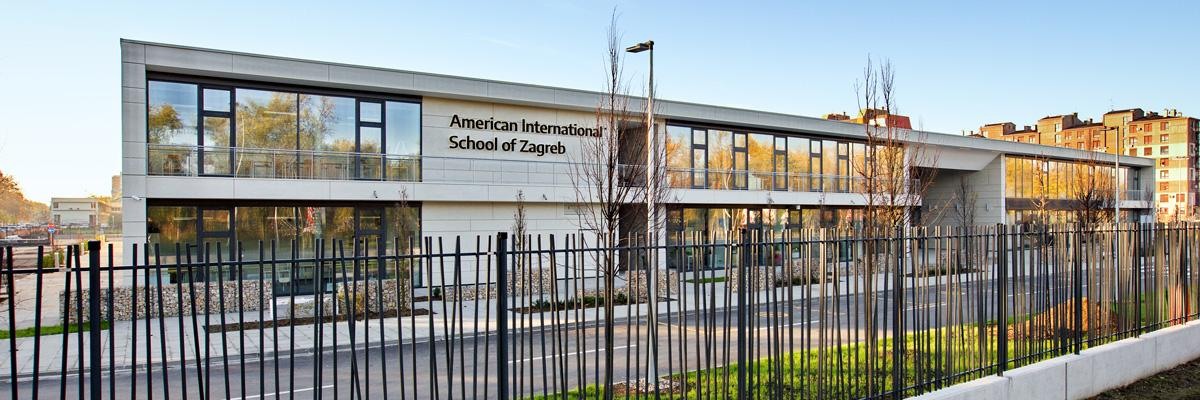
In 2026, school safety and public-space safety remain important considerations in public-facility construction and renovation. School infrastructure upgrades and community-park improvement projects continue, while fencing is increasingly treated not simply as a boundary barrier but as part of the overall planning of schools, parks, and community public spaces.
For schools and parks, a fence is not automatically better simply because it is taller or stronger.
Schools must consider student safety, visual openness, and management between different zones. Parks must balance safety, openness, and landscape quality.
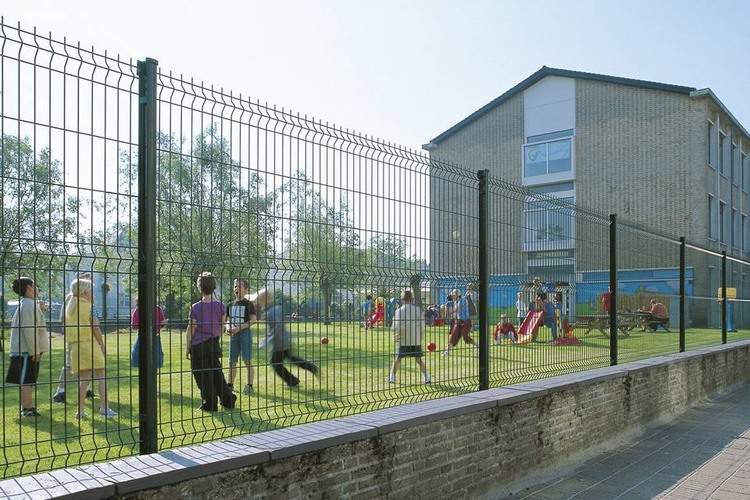 School activity area | 3D welded mesh fence |
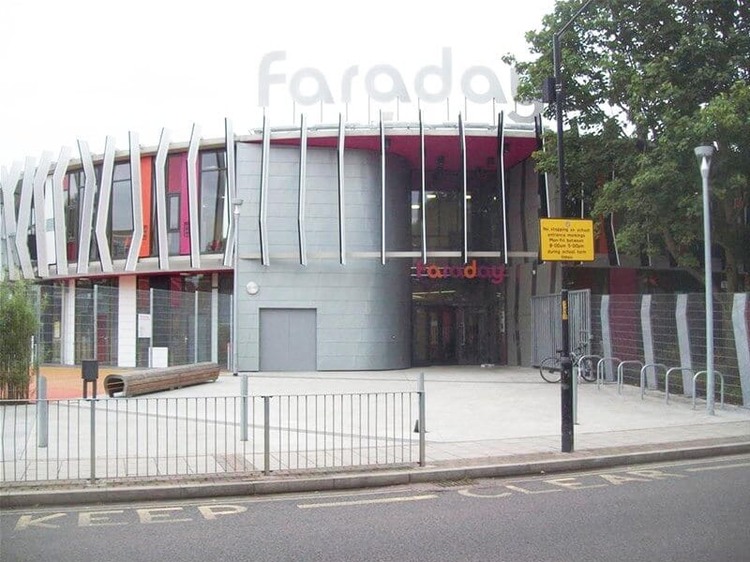 Michael Faraday School | overall school boundary |
1. School Fencing: Safety and Visibility Matter Most
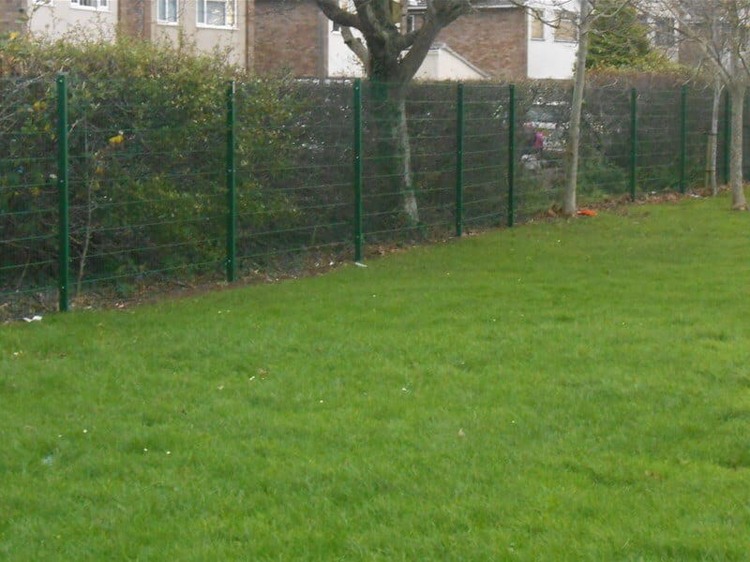 Yatton Junior School | double-wire welded mesh fence |
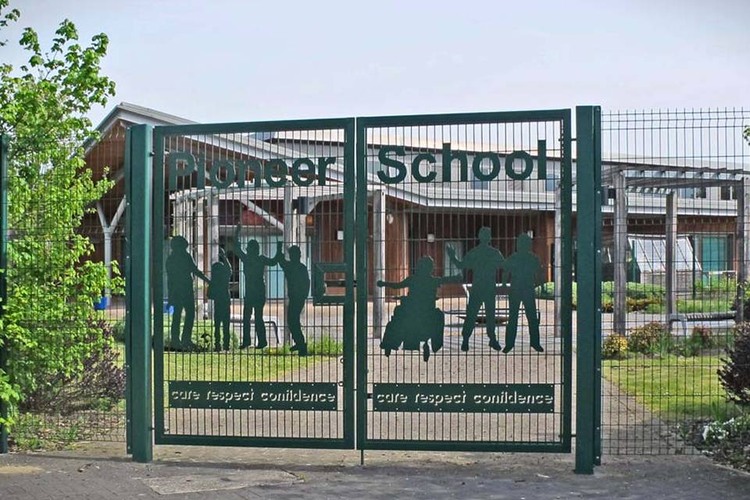 School gate | 2D double-wire mesh fence |
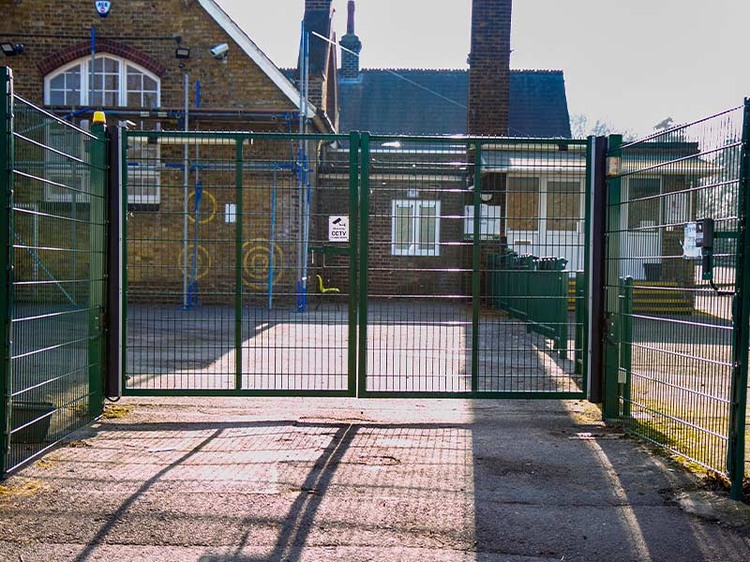 Greenlands Primary School | automatic mesh gate |
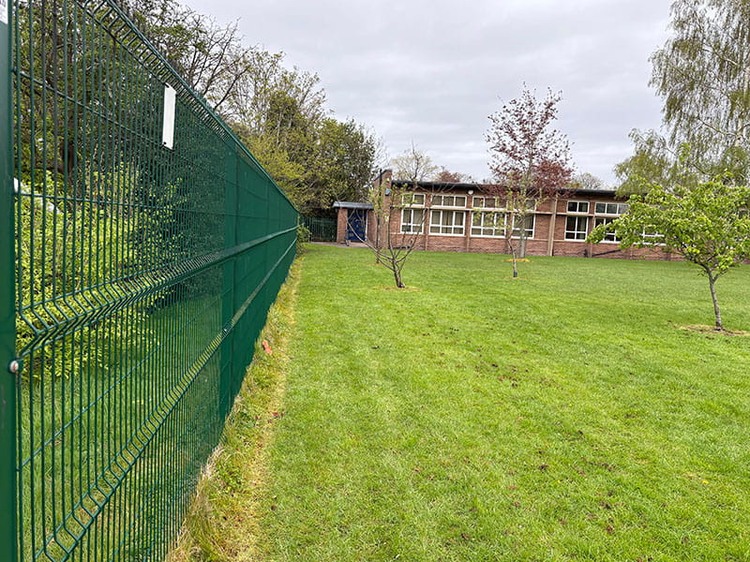 Didsbury Road Primary School | child activity-area safety fence |
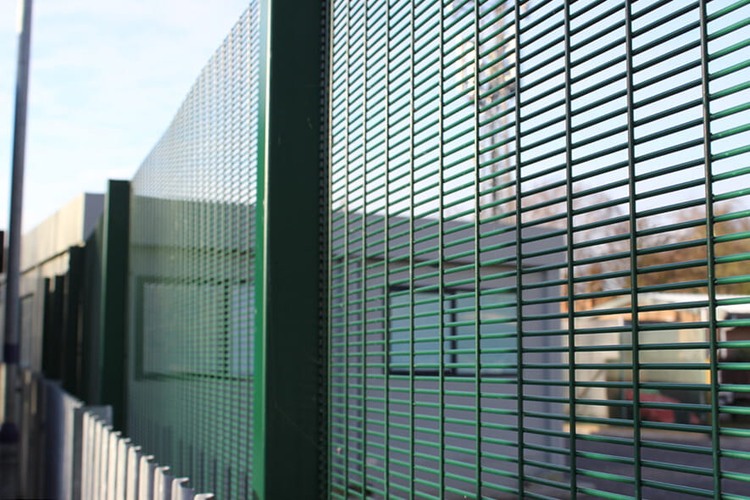 Hope View School | 358 anti-climb fence for a restricted area |
A school fence first needs to establish a clear campus boundary, separating teaching and activity areas from roads, public spaces, and the surrounding environment.
Because schools are busy public environments, fencing cannot be considered only as a means of separation. Primary and secondary schools also need to account for day-to-day student safety and clear sight lines through and across the perimeter.
For ordinary campus boundaries and internal functional areas, 2D welded mesh fencing is a common option. Its double horizontal wires provide good panel rigidity while the open mesh maintains visibility, creating a clear boundary without the visual blockage of a solid wall.
Typical applications include:
- school perimeter boundaries
- teaching-area edges
- playground perimeters
- internal campus roads
- parking areas
- internal functional zoning
Another important school-fencing concern is reducing hazards that students may encounter through normal daily contact.
During product selection and installation, pay attention to:
- avoiding structures that are unnecessarily easy to climb
- controlling the gap below the fence
- avoiding exposed sharp projections
- checking panel-to-post connection details
- selecting a suitable fence height for the students’ age group and the specific use area
For equipment compounds, electrical areas, storage zones, or other restricted locations inside a school, the security level can be increased. Stronger welded-mesh systems may be used, and locations that require greater resistance to climbing can use 358 anti-climb fencing.
A single school project can therefore use different fence grades. Ordinary activity areas prioritize safe visibility, while restricted areas place greater emphasis on protection.
2. Park Fencing: Safety Must Work with the Landscape
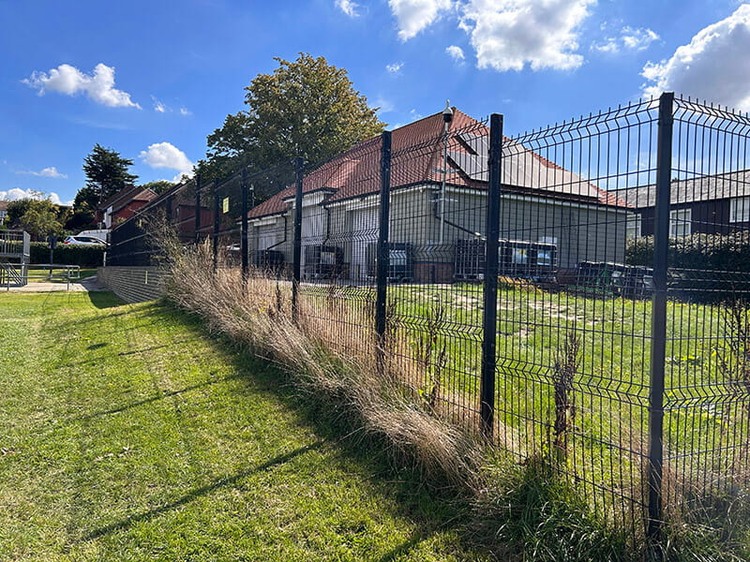 St Michaels Recreation Ground | V-mesh fence around a park equipment area |
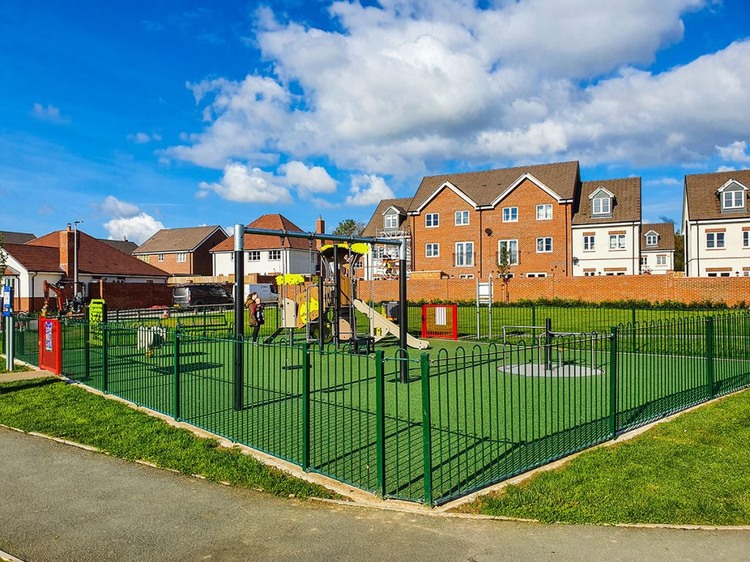 Children’s play area | bow-top safety fence |
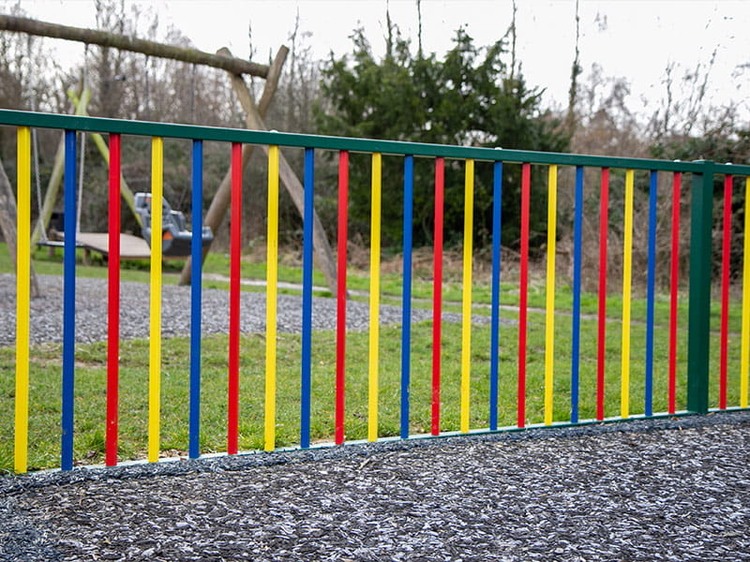 Onslow Recreation Ground | colored safety railing |
Parks operate differently from schools. They are more open public spaces, so fencing must define boundaries while minimizing its visual impact on the landscape.
A fence that feels too heavy or enclosed may satisfy basic separation needs but can also make a park feel unnecessarily closed off.
For general park perimeters, community green spaces, and ordinary separation areas, 3D welded mesh fencing is often a practical choice. The structure is visually open and can be coordinated with the surroundings through different heights and colors.
Common park applications include:
- park perimeter boundaries
- community parks
- children’s activity areas
- landscape and planting divisions
- sports activity areas
- equipment areas
- internal zones where access needs to be limited
Where landscape appearance is a higher priority, steel railings, decorative metal fencing, or other customized metal fence systems can be selected to match the architectural and environmental character.
Park fencing should therefore not be treated as an isolated product. Height, color, mesh pattern, and post style can all be coordinated with planting, paths, roads, and nearby buildings.
3. Sports-Field Fencing in Schools and Parks Needs Separate Planning
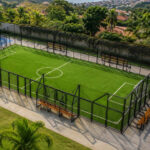
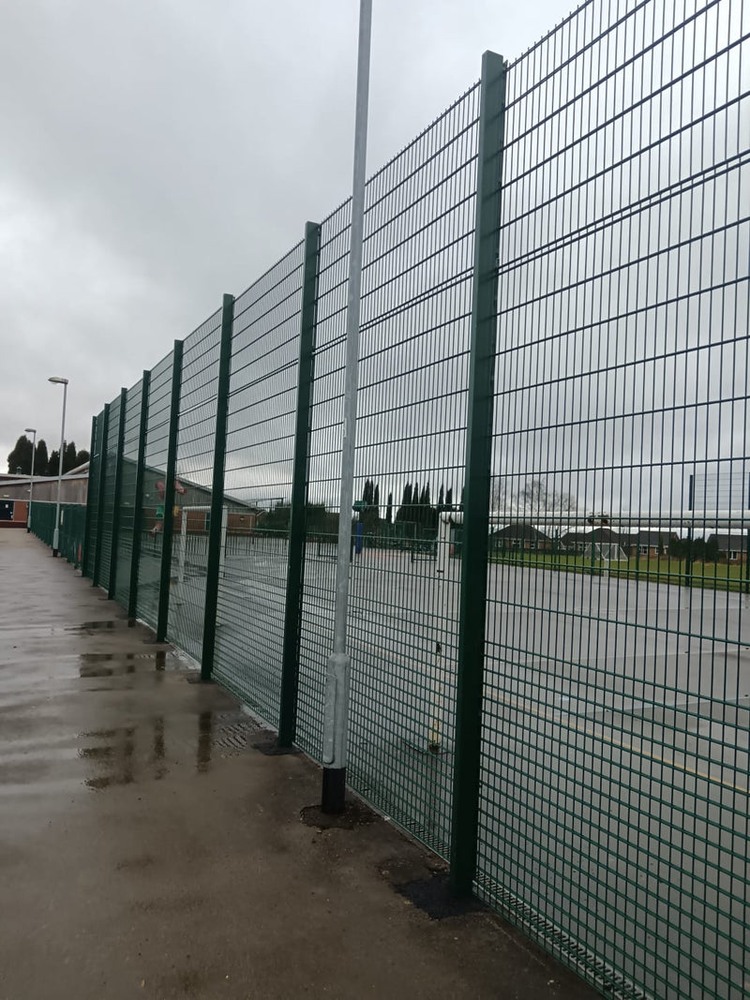 Tunstall School | 4 m high sports-field fence |
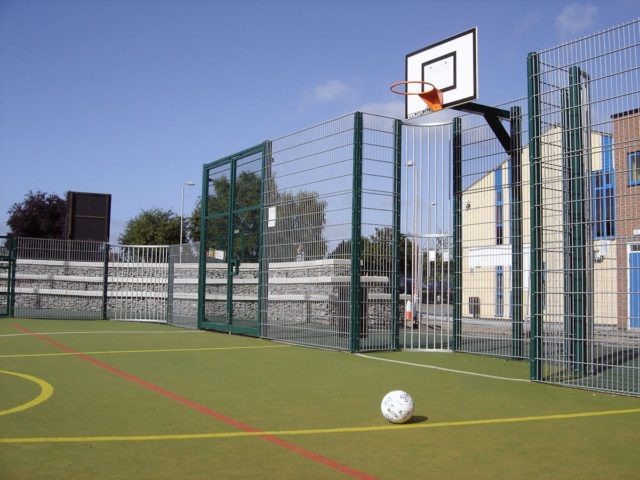 School sports court | MUGA fence |
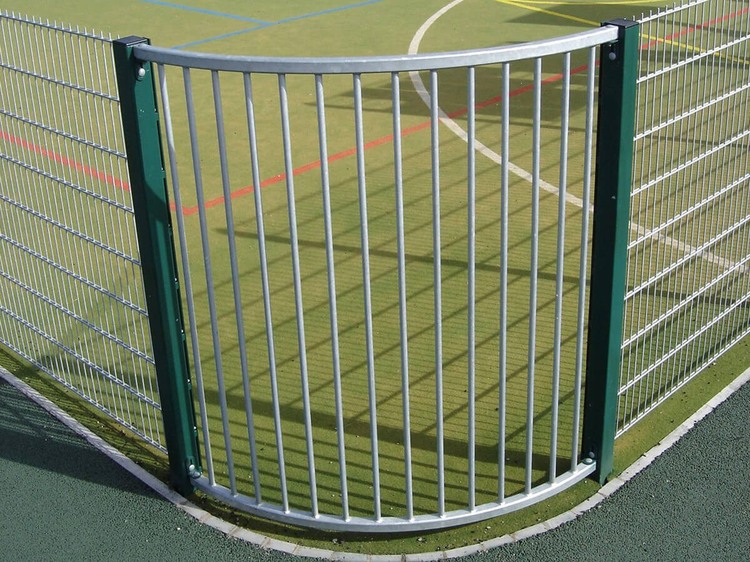 Sports court | MUGA curved corner |
|
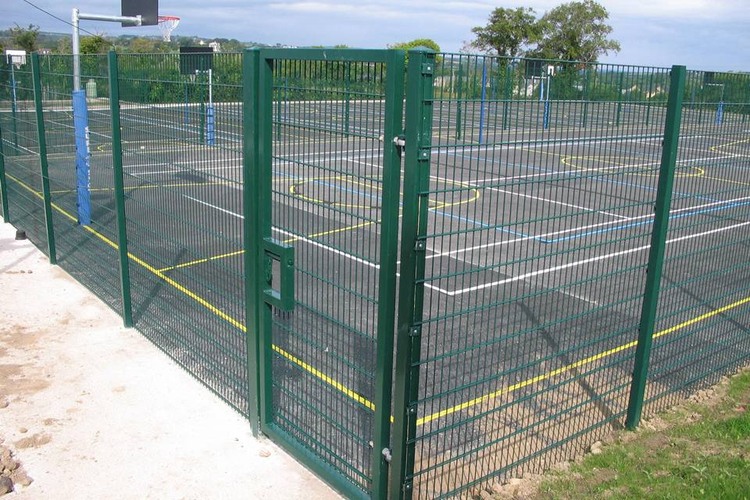
Many schools and parks also include football pitches, basketball courts, tennis courts, multi-use games areas, and community sports spaces. These facilities are part of the same site, but the role of their fencing is different from that of an ordinary perimeter fence.
Sports-field fencing does more than divide areas. It also helps contain ball movement and reduce interference with pedestrians and neighboring activity zones.
The design should consider:
- keeping balls inside the playing area
- maintaining sight lines into and out of the court
- withstanding routine ball impact
- preserving an open feel around the facility
- selecting fence height according to the sport and the local impact zones
Depending on the project, possible systems include chain-link fencing, welded-mesh sports fencing, and customized high-fence systems.
Fence height does not need to be identical around the entire sports area. Behind football goals or at basketball locations where high balls are more likely, taller fencing may be appropriate, while side boundaries can often use a lower height based on actual use.
Adjusting fence height by zone can meet operational requirements while avoiding unnecessary material use.
Two Issues That Need Special Attention in School and Park Fencing Projects
Issue 1: Confirm Ground-Level Changes and the Gap Below the Fence Early
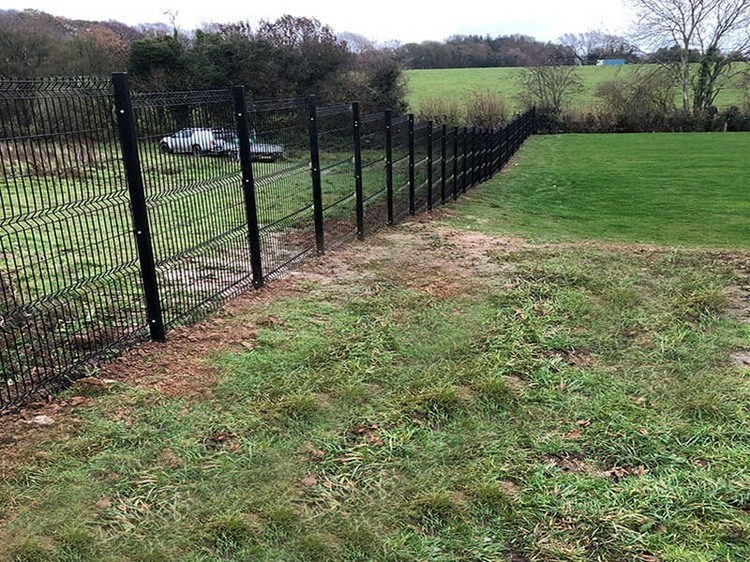 Selsted Primary School | stepped welded mesh fence on sloping ground |
St Michaels Recreation Ground | V-mesh fence around a park equipment area |
This is one of the most easily overlooked issues in school and park projects. Drawings often show a uniform fence height, but real sites are rarely completely level.
Park projects commonly encounter:
- slopes
- lawns
- landscaped areas
- pedestrian paths
- kerbs
- drainage zones
- changes in finished ground level
Schools can have similar level differences between playgrounds, roads, planted areas, and building edges. If these changes are not considered before production and installation, some sections may end up with an excessive gap below the fence. This affects appearance and can also create avoidable safety concerns in school environments.
Before finalizing fence dimensions, confirm:
- whether the fence line includes significant elevation changes
- which areas should follow the slope
- which areas require stepped installation
- the acceptable gap between the fence and finished ground
- whether kerbs, retaining edges, or other landscape features affect the installation
Where ground variation is significant, panel dimensions, post length, or the installation method can be adjusted to site conditions rather than using one identical standard configuration across the entire project.
Issue 2: Match Fence Height, Posts, and Use Area
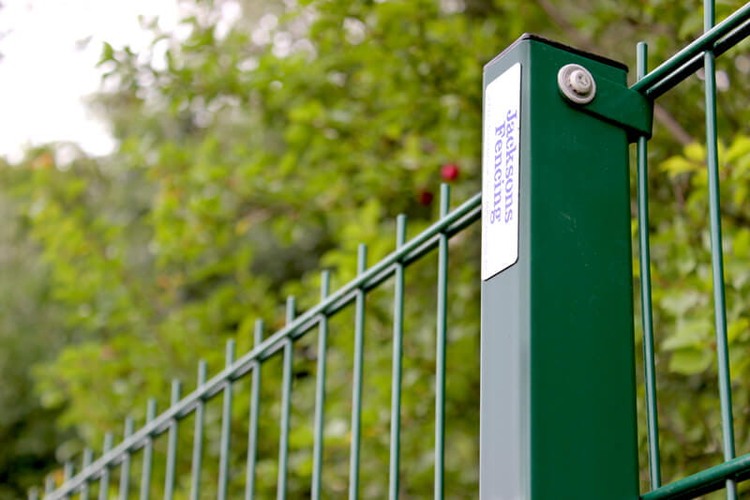 St Georges School | post and connection clip detail |
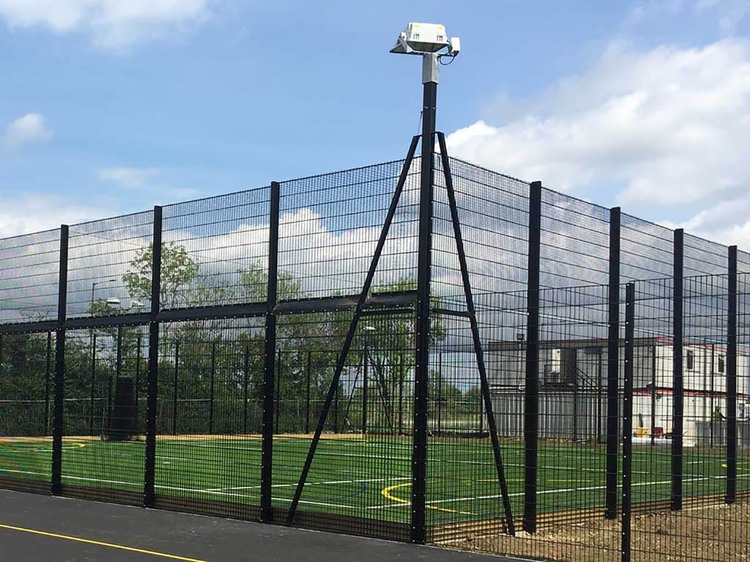 School sports field | high fence and posts |
Tunstall School | 4 m high sports-field fence |
Many projects begin by looking only at the mesh panel: aperture size, wire diameter, and panel height. These specifications matter, but school and park projects also need to consider where the fence is installed and how the area is used day to day.
A low fence used for simple internal park separation does not have the same requirements as a school perimeter. A normal campus boundary is also different from a tall fence around a football or basketball court.
Sports-area fencing must not only maintain a boundary; it is also exposed to repeated impact from footballs, basketballs, and other sports activity. Post size, post spacing, and connection details should therefore correspond to both fence height and real operating conditions.
Ordinary internal park zones: fence heights are usually moderate, so a simpler post and connection configuration may be suitable.
School perimeter zones: the system should combine a clear boundary, stability, and safe day-to-day use.
Sports-field zones: fences are generally taller and exposed to repeated impact, so posts and connections need greater structural stability.
When selecting a system, do not evaluate the mesh panel alone. Consider the panel, posts, and connection components together and select the configuration that fits each functional zone.
4. One Project Does Not Have to Use Only One Fence Type
|
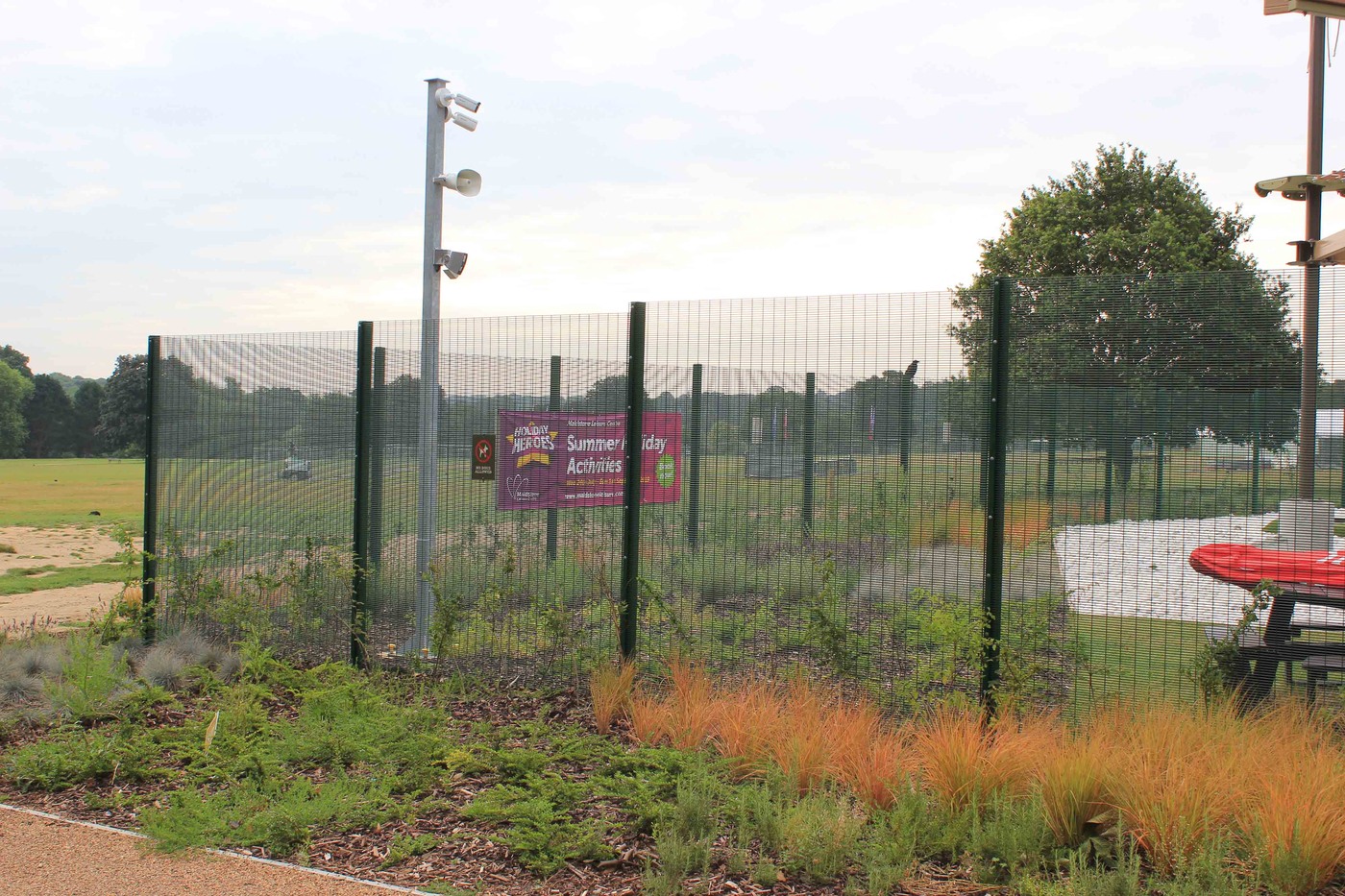
Schools and parks normally contain several functional zones, so using two or even three fence types in one project is completely normal.
A school project, for example, can be configured as follows:
| Use Area | Fence Configuration |
|---|---|
| School perimeter boundary | 2D welded mesh fence |
| Ordinary internal functional zoning | 3D welded mesh fence |
| Equipment or restricted-access zones | Higher-security welded mesh or 358 anti-climb fencing |
| Football, basketball, and other sports areas | Chain-link fence or dedicated sports-field fence |
A park can be divided in the same way:
| Use Area | Fence Configuration |
|---|---|
| General park boundary | 3D welded mesh fence |
| Areas with stronger landscape requirements | Steel railing or decorative metal fence |
| Children’s activity areas | Welded mesh fence |
| Sports activity areas | Chain-link fence or sports fence |
| Equipment and restricted-access zones | Higher-security welded mesh fence |
This zoned approach is more practical than applying one fence type to the whole site because different areas are solving different problems. Some only need basic separation, some place greater emphasis on student and child safety, some need to contain sports activity, and others have stronger landscape requirements.
Matching products to each zone makes it easier to balance safety, usability, appearance, and overall project budget.
Conclusion
For schools and parks, choosing a fence is not simply a matter of finding the strongest product. The important question is what problem the fence must solve in each area.
School perimeters need a clear and safe boundary while retaining visibility. Parks need to balance management with an open environment. Children’s activity areas require greater attention to contact safety. Sports fields need fence heights and structural capacity suited to the activity. Equipment and restricted-access areas can use a higher level of protection.
Before finalizing the project, two practical issues deserve particular attention: how the fence follows ground-level changes and the gap below the fence, and whether fence height and intended use are properly matched to the posts and connection structure. Addressing these issues early is usually easier than correcting them after installation and helps the full perimeter system work more coherently.
About CommandFence
CommandFence focuses on the production and supply of metal fencing, security fencing, and complete perimeter-protection systems, and works with fence distributors, agents, contractors, EPC contractors, and project partners.
Depending on project requirements, support can include technical specification review, product-selection support, customized manufacturing, quality control, and delivery coordination.
For parks, schools, and public activity spaces, CommandFence approaches fencing as a complete system, combining 358 anti-climb fencing, 2D/3D welded mesh fencing, chain-link fencing, posts, and connection components according to the requirements of each use zone. The objective is to balance safety, visibility, environmental appearance, and project cost at the system level.





Leave a Reply