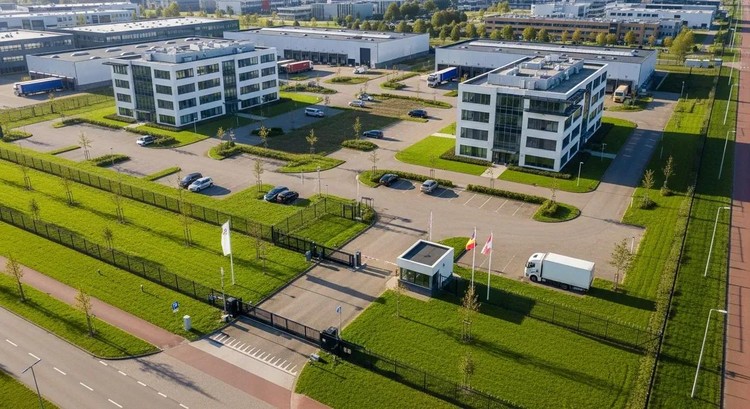
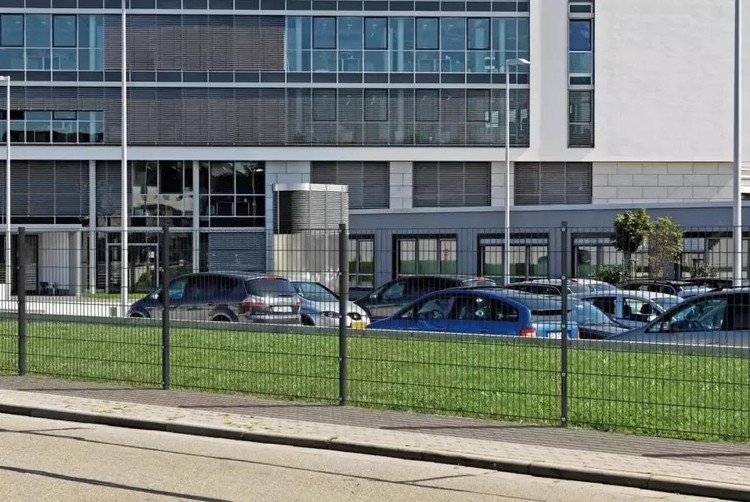
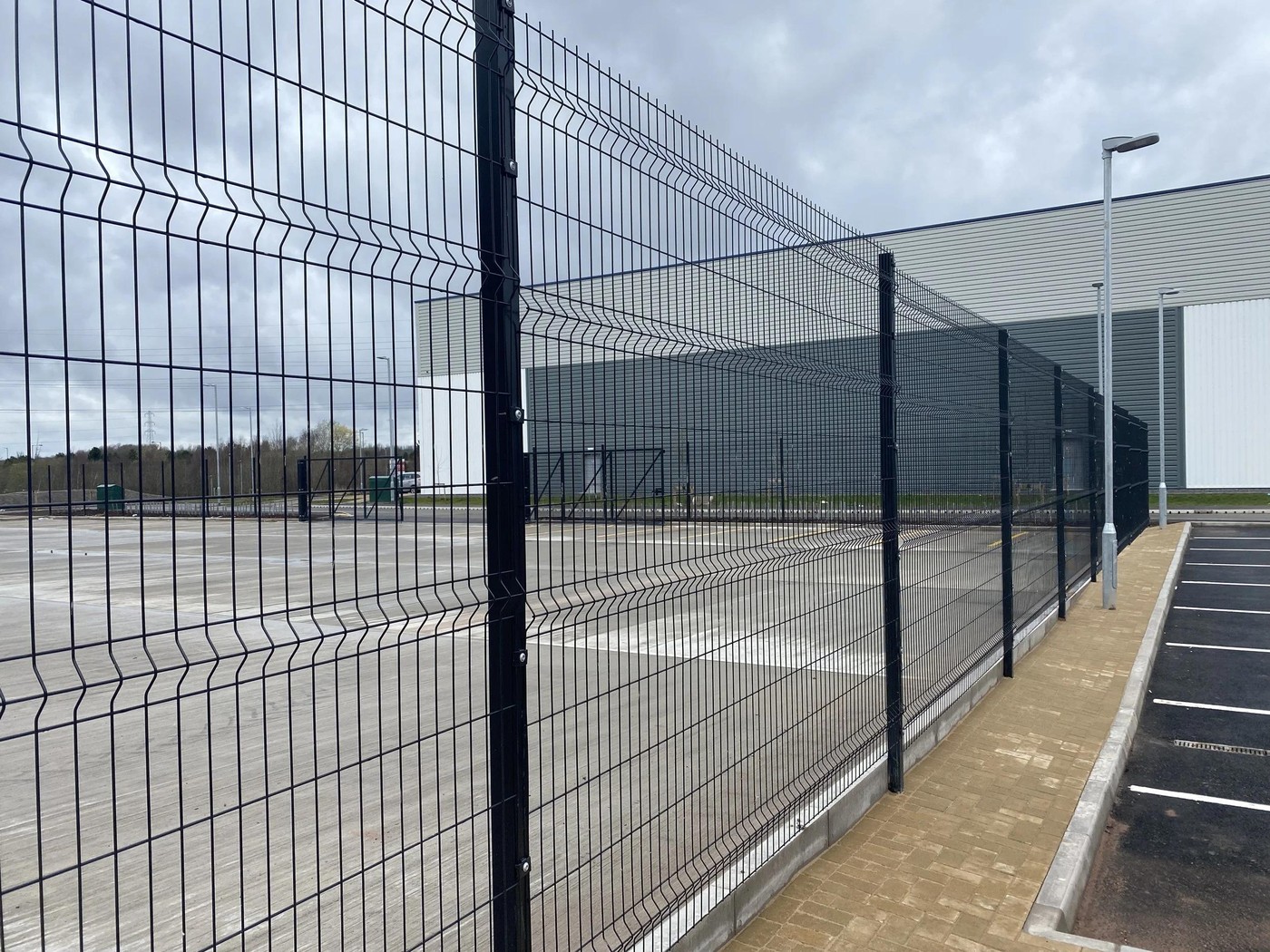
Welded mesh perimeter fence around a modern office campus
As corporate headquarters, technology parks, and integrated business campuses continue to evolve worldwide, the modern office environment is shifting from single office buildings toward more comprehensive campus models.
In recent years, more and more companies have started to pay attention to the overall security management of their office campuses. Beyond the office buildings themselves, a campus usually includes parking areas, visitor entrances, employee access routes, equipment zones, and other supporting facilities. This makes perimeter management an important part of campus planning.
However, unlike traditional industrial facilities, the fence system of an office campus is not simply about pursuing the highest level of protection. An office environment usually needs to satisfy security management, architectural aesthetics, people movement, and long-term use at the same time. Therefore, choosing the right perimeter fence system requires starting from the actual needs of the project and balancing security, functionality, and environmental harmony.
1. Office Campus Fencing Must Balance Security Needs with Open Design
The biggest difference between an office campus and a factory, warehouse, or high-security facility is that it is not only an area that needs protection — it is also part of the corporate image and the public environment.
The fence is usually located at the outer edge of the campus and is one of the first facilities visitors encounter when entering the site. It therefore needs to provide boundary protection and access control while remaining coordinated with the architectural style and the surrounding landscape.
Decorative steel fence at a modern office building entrance
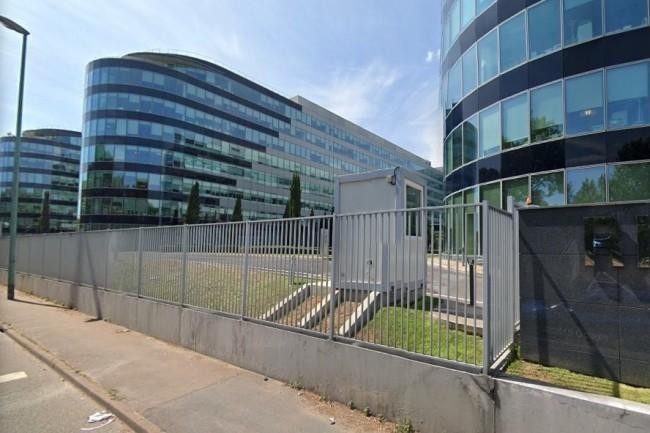
Welded mesh fence along a campus walkway
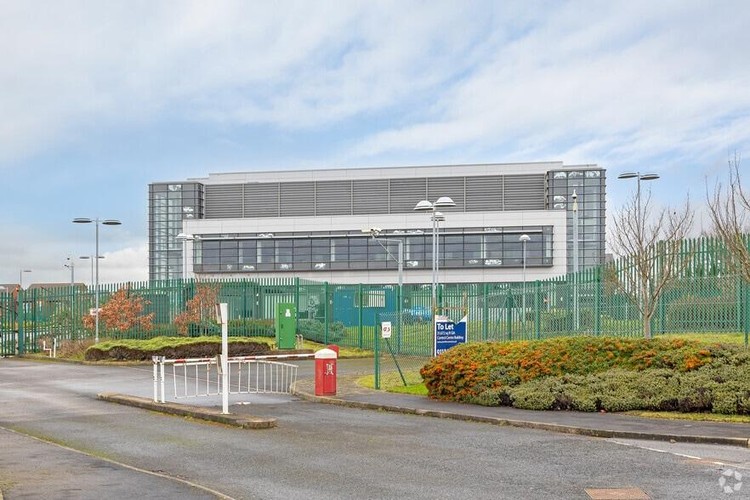
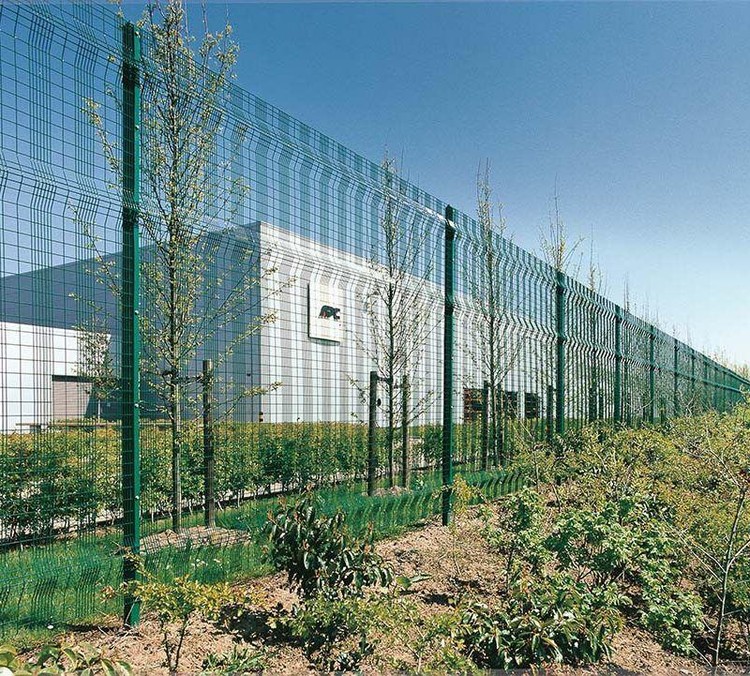
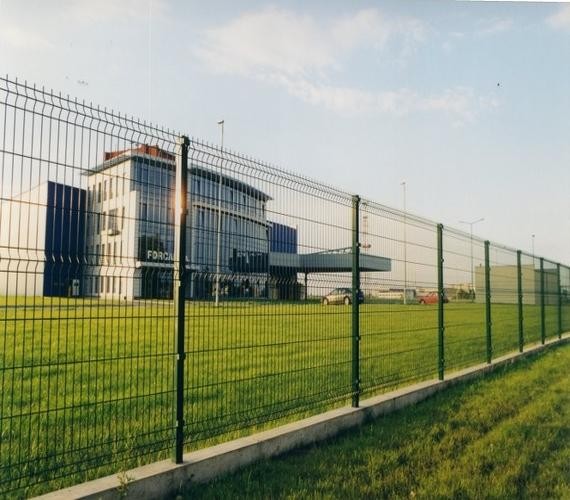
Green welded mesh fence in front of an office building
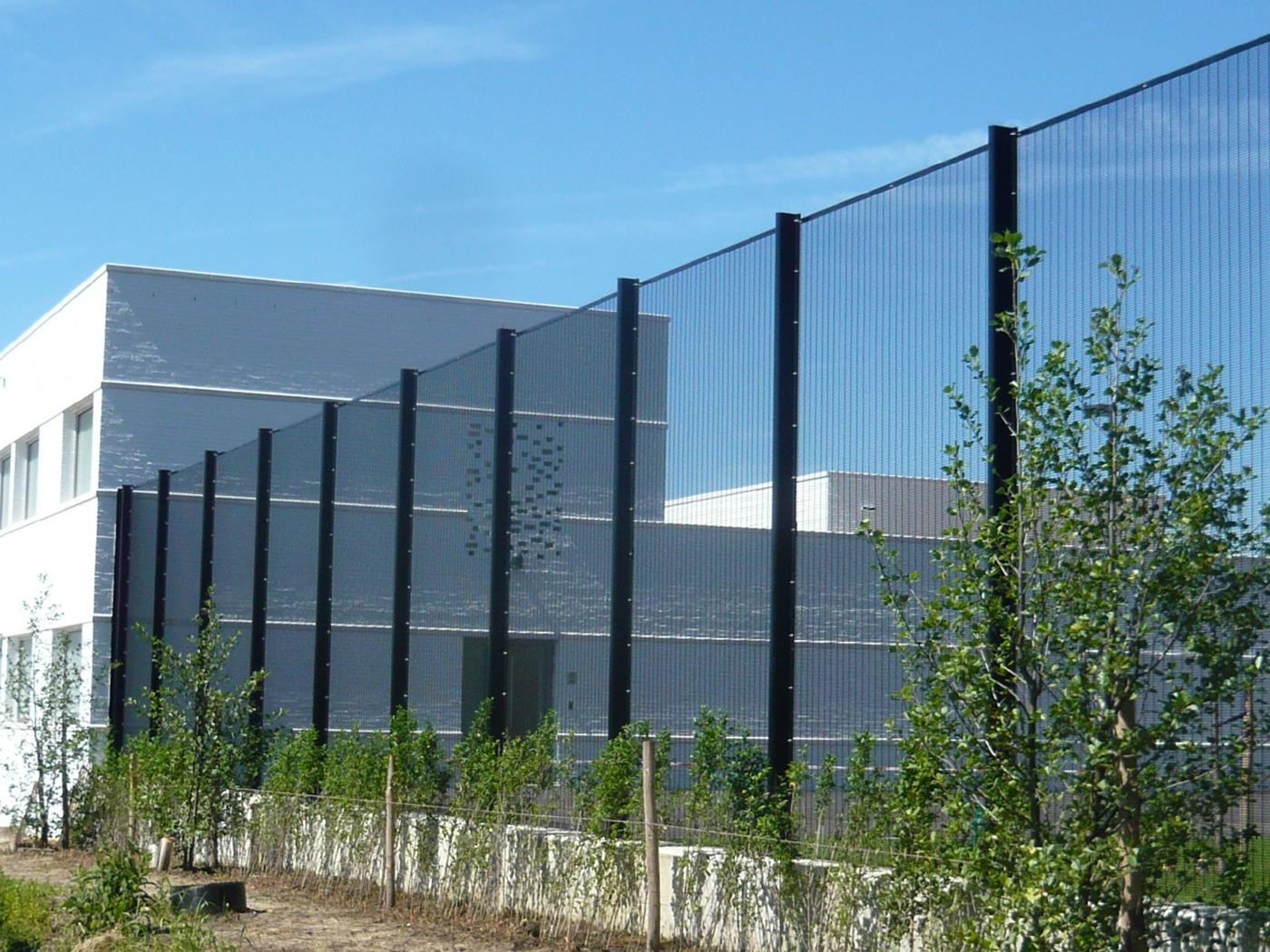
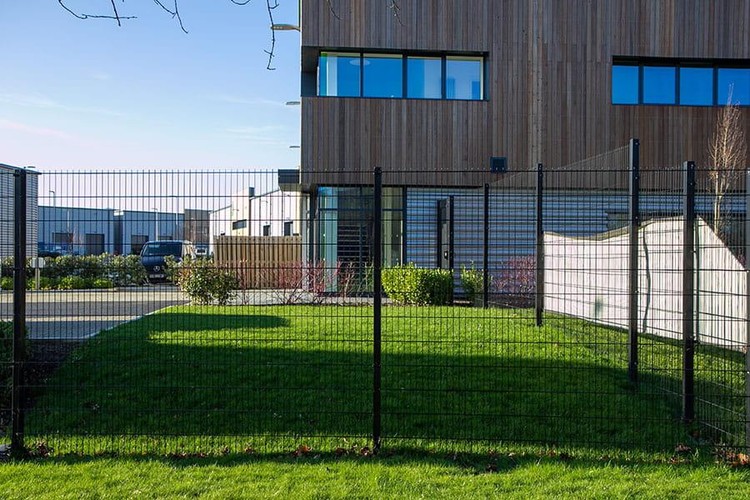
Black welded mesh fence beside a commercial complex
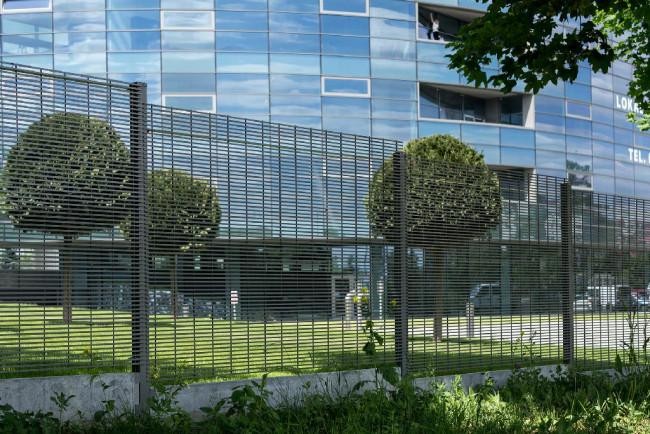
Open-style fence with clear visual transparency
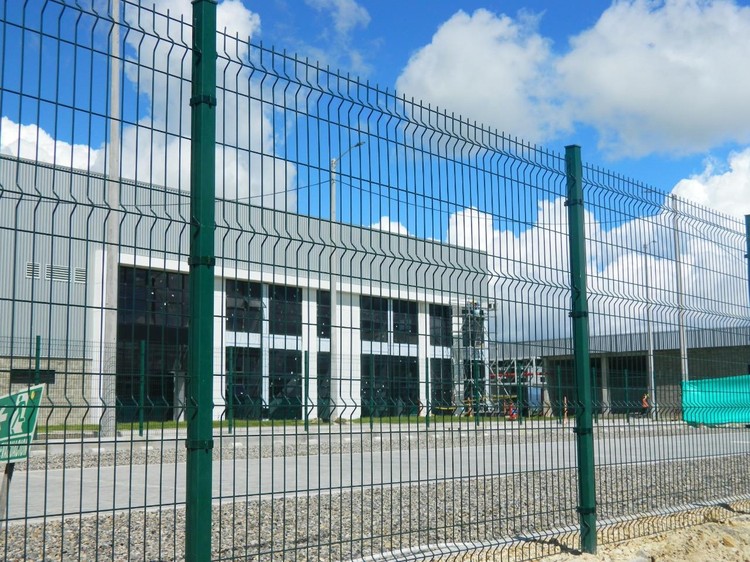
Continuous welded mesh fence along a business park
Different Zones Have Different Security Needs
A complete office campus usually contains multiple functional areas, and their security needs are not the same. For example:
The area around office buildings;
Employee and visitor entrances;
Parking areas;
Logistics and service areas;
Restricted-access zones.
These areas do not necessarily require the same grade of fence system. A reasonable design approach is to divide the campus according to zone function and risk level, rather than applying the highest level of protection uniformly across the entire campus. A perimeter can be segmented into different security zones in the same way as described in hydropower station perimeter fencing by security zone.
The examples below show welded mesh fencing applied to ordinary office and commercial areas.
Welded mesh fence with coordinated landscaping
Welded mesh fence around a modern office building
Welded mesh fence keeping a clean visual line
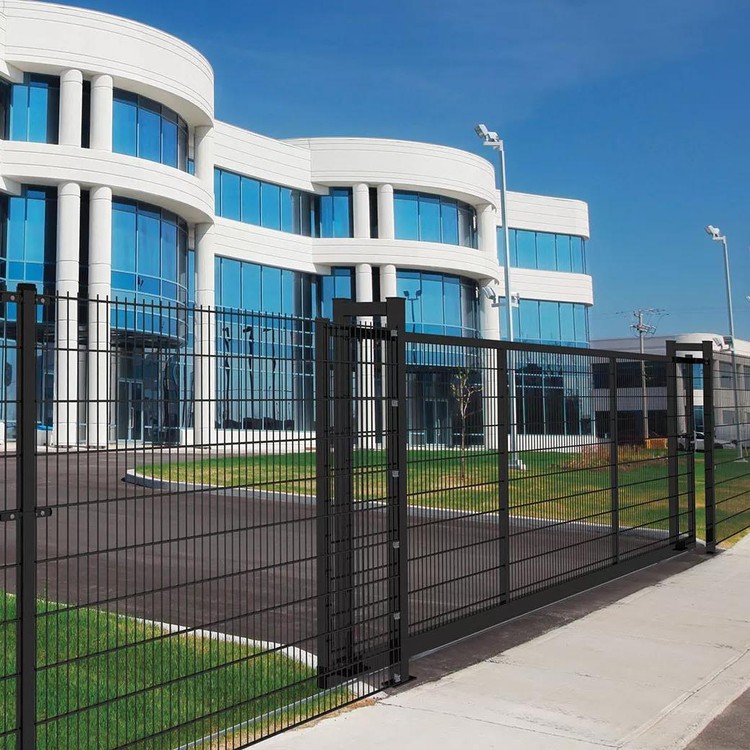
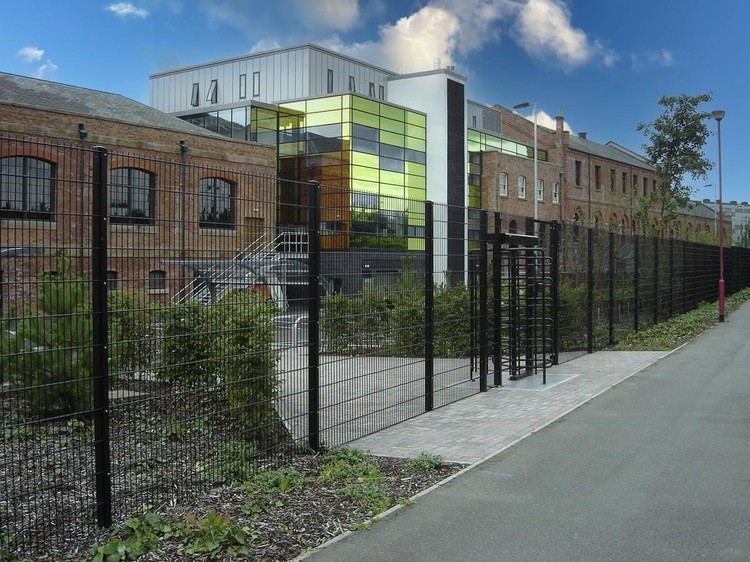
Pedestrian gate integrated into a campus fence
Open-style fence design for an office campus
General Office Areas: Focus on Appearance and Boundary Management
For general office areas, the fence mainly serves the following purposes:
Defining the property boundary;
Managing people entering the site;
Preventing unauthorized access;
Maintaining the overall image of the campus.
For these applications, welded mesh fence is a common choice. Compared with traditional solid walls, welded mesh fence offers:
Stable structure;
A clean, tidy appearance;
Good visual transparency;
Low maintenance requirements.
These characteristics make it suitable for corporate office campuses, business parks, technology parks, and integrated office communities. It provides basic security protection while keeping the campus looking modern and open.
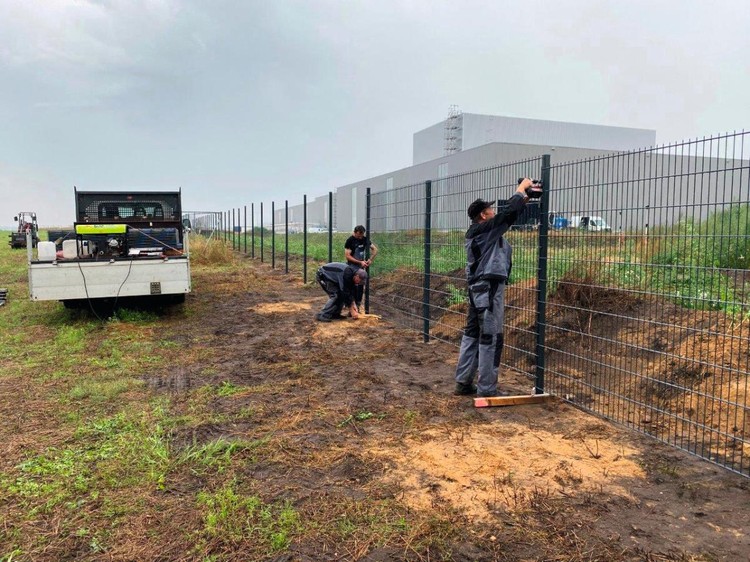
Welded mesh fence installation on a business campus
Green welded mesh fence with a tidy appearance
Welded mesh fence maintaining an open visual effect
Continuous mesh fence along an office perimeter road
High-Security Areas: Focus on Anti-Climb and Intrusion Protection
Some office campuses may contain areas with higher security requirements, such as:
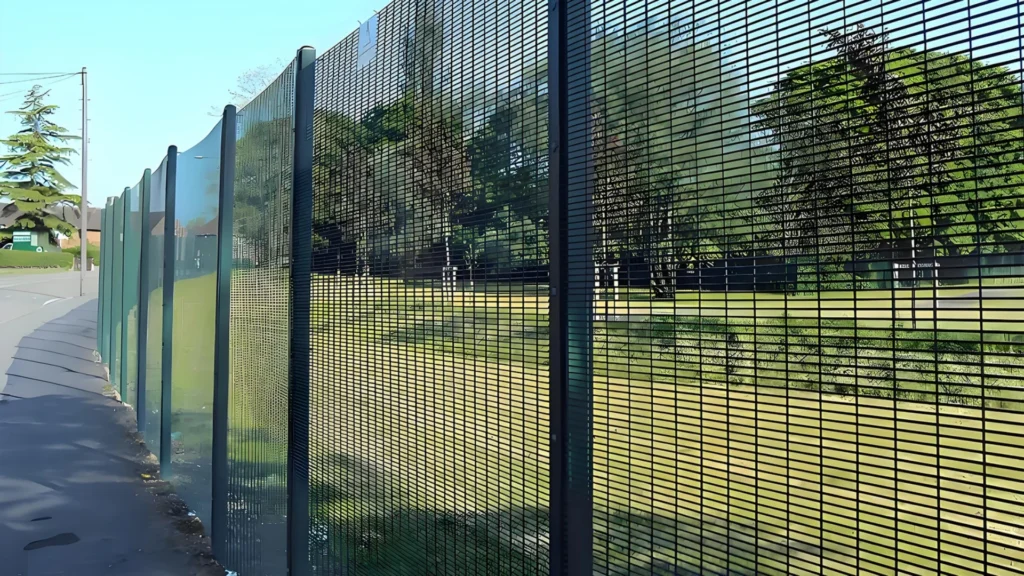
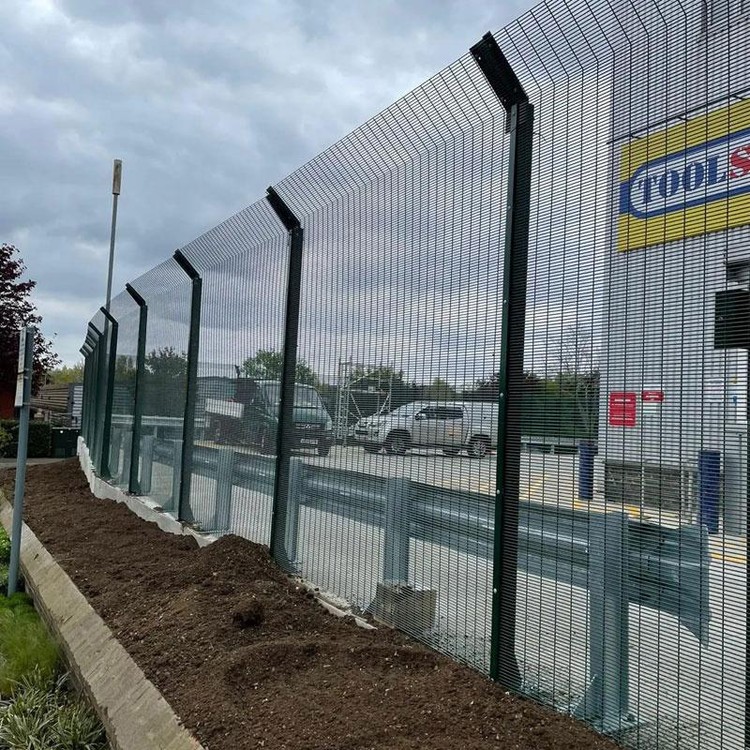
Thanks to its small mesh opening, a 358 fence makes climbing more difficult and increases the effort required to cut or damage the panel, while maintaining good visual observation.
Its high transparency also makes it easy to combine with CCTV surveillance systems, perimeter alarm systems, and access control management systems.
Therefore, for an office campus project, the key to fence selection is not “the higher the security grade, the better.” The right approach is to choose a suitable protection solution according to the actual risk of each zone.
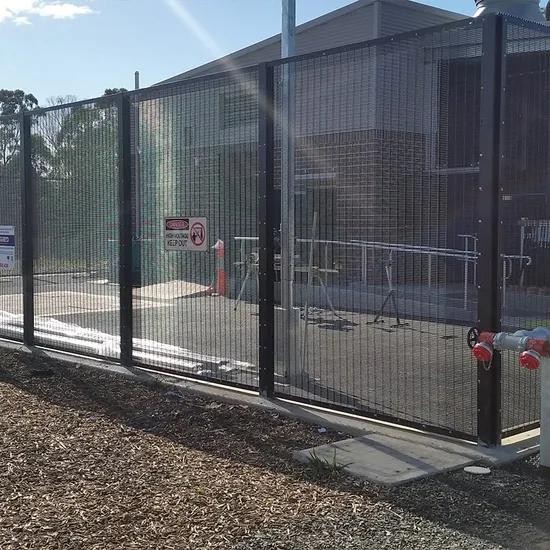
358 anti-climb fence applied to a high-security zone
358 anti-climb fence with dense small mesh openings
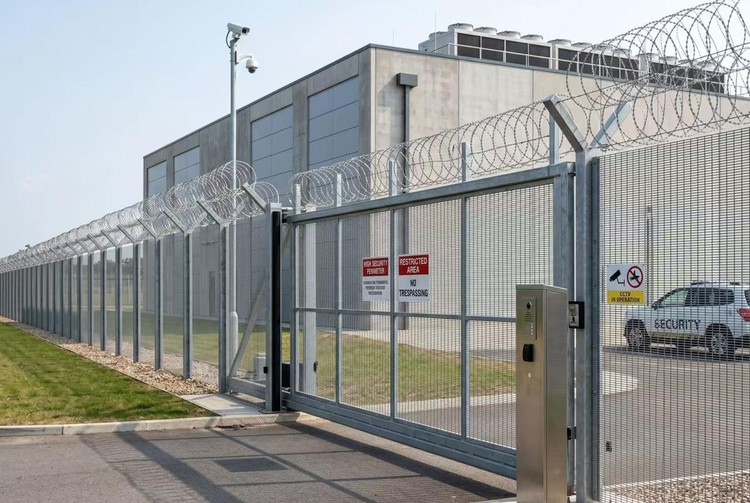
358 fence with additional security features at the top
358 anti-climb fence mesh detail
2. Ensure Long-Term Performance Through Proper System Design
Once installed, an office campus fence is usually expected to operate for many years, so system design at the early stage is critical.
Many projects focus only on the panel style and purchase price when selecting a fence, while overlooking how the components of the fence system match each other, such as:
How the mesh panel connects to the post;
Coordination between the fence and gate dimensions;
Security grades across different zones;
Site terrain and installation conditions.
A complete perimeter system includes not only the fence panels but also:
The post system;
Connection components;
Vehicle gates;
Pedestrian gates;
Foundation structures.
These parts need to be planned as a whole during the project design stage. Details such as the panel-to-post connection directly affect both security performance and long-term stability, which is why the post and connection system deserves separate attention in 358 fence post and connection design.
Fence and Gate System Integration
In office campus projects, the fence and the gates usually need to be designed as one complete system. In real projects, the following problems are common:
Fence and vehicle entrance sizes do not match;
Pedestrian gate locations are poorly designed;
Sloped ground leaves an oversized gap at the bottom;
Gate security grade is inconsistent with the fence.
Therefore, at the project design stage, the following need to be confirmed in advance:
Site layout;
Pedestrian and vehicle flow routes;
Gate opening methods;
Ground conditions;
Installation methods.
For example, main vehicle entrances usually require a sliding gate or a cantilever gate, while employee and visitor entrances need to combine pedestrian gates with an access control system in an integrated plan — a combined physical and electronic approach similar to an integrated smart gatekeeper solution.
A reliable office campus perimeter system is not simply installing a fence. It is a complete solution formed by the fence, the gates, and the actual site conditions working together.
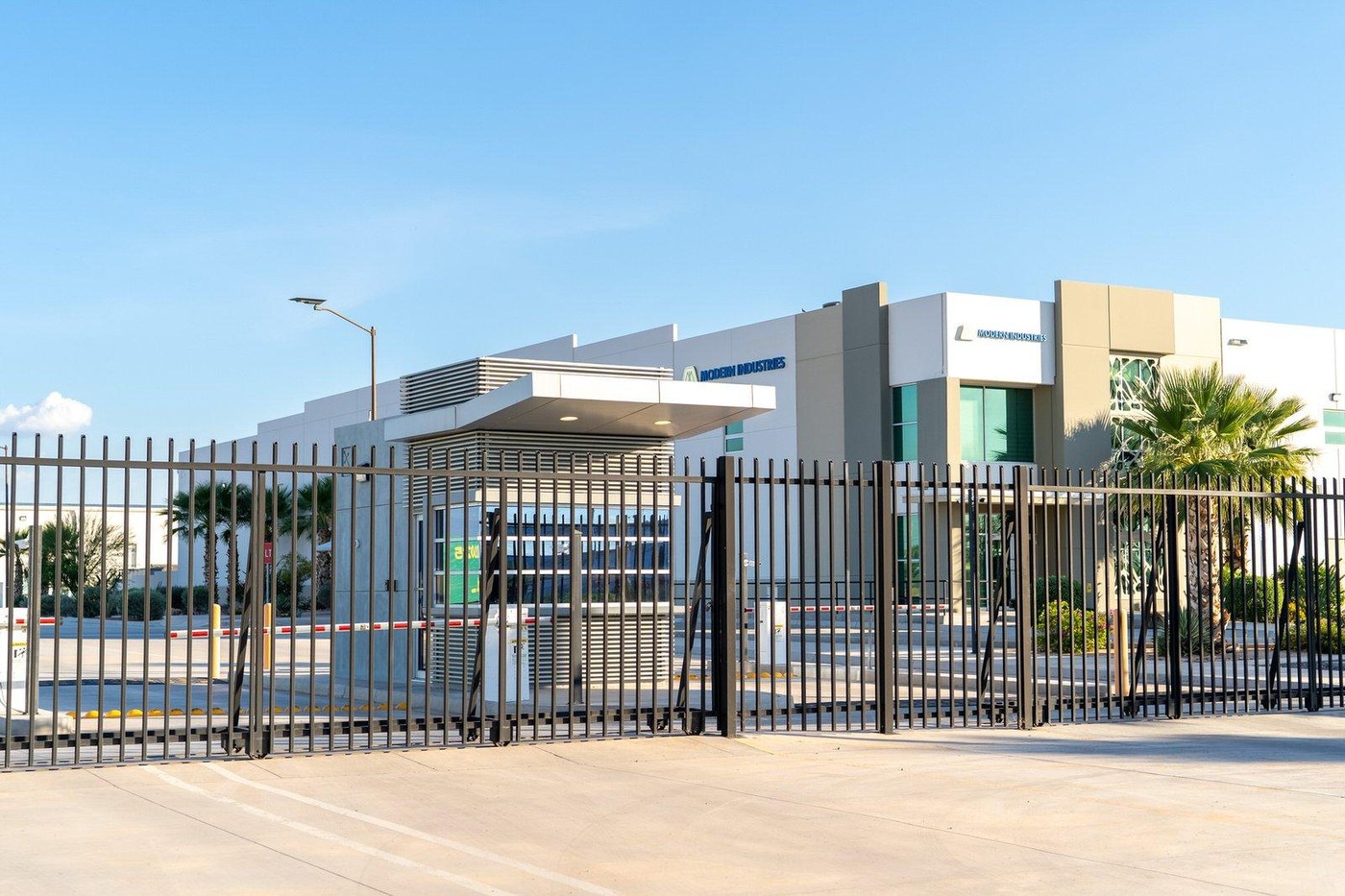
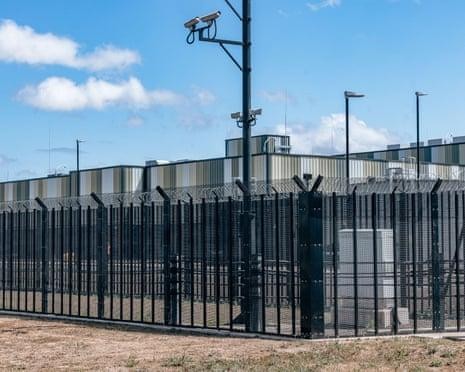
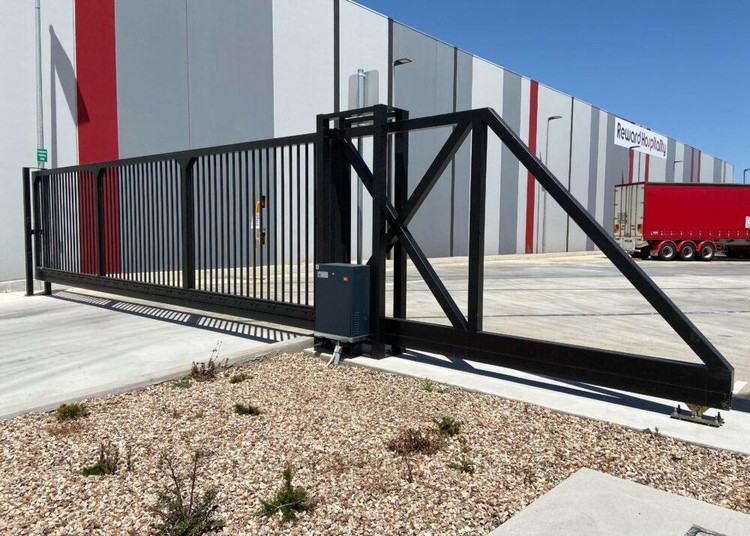
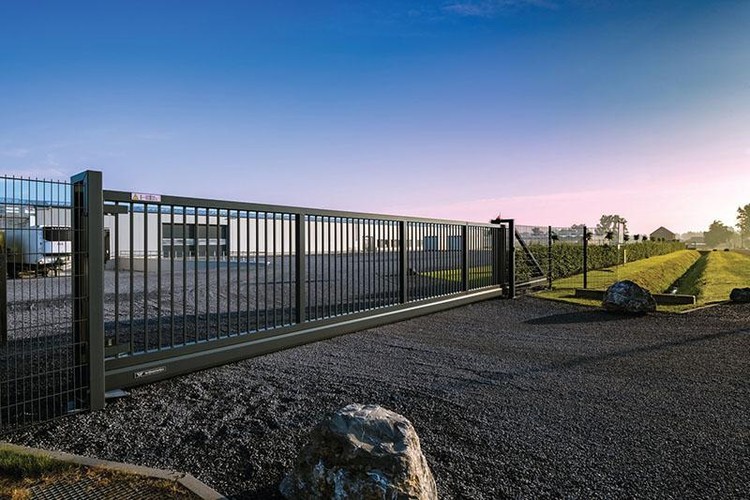
Cantilever vehicle gate at an industrial entrance
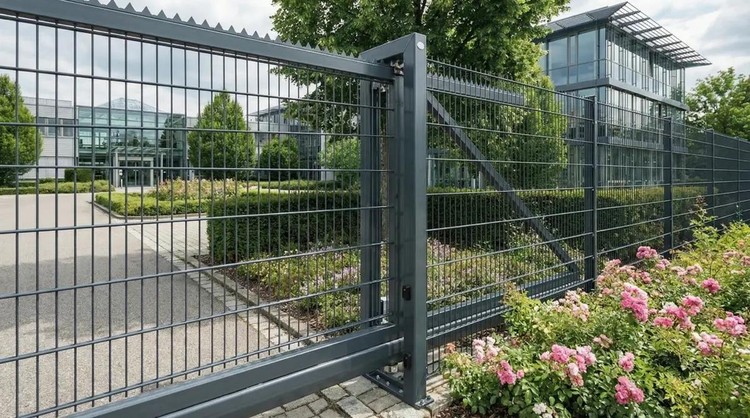
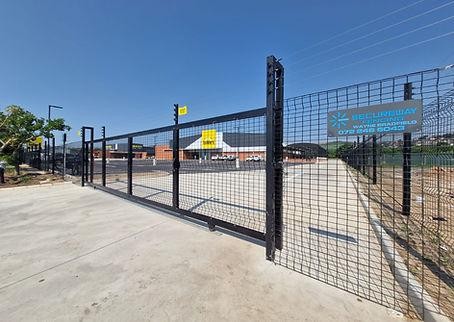
Long welded mesh fence line with a vehicle gate
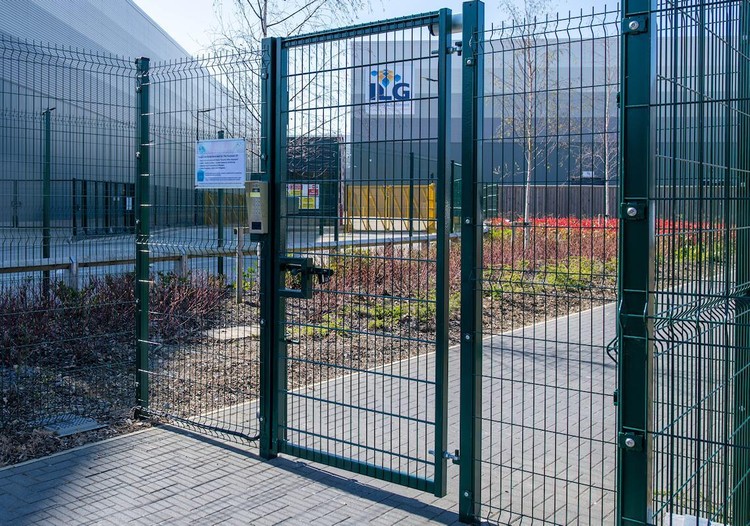
Pedestrian gate integrated with access control
Vehicle entrance gate combined with perimeter fence
3. Choose the Right Fence Manufacturer to Support Your Office Campus Project
For an office campus project, choosing a fence supplier is not just about purchasing fence products. A manufacturer with project experience needs to understand the project requirements and provide support throughout specification confirmation, product selection, manufacturing, and delivery.
CommandFence manufactures and supplies metal fence systems, security fences, vehicle gates, pedestrian gates, and complete physical perimeter protection systems.
For office campuses, corporate headquarters, business parks, technology parks, and other commercial infrastructure projects, CommandFence configures perimeter systems according to the project’s security grade, site conditions, pedestrian and vehicle movement, and environmental requirements.
Depending on different project needs, the following can be selected:
358 anti-climb fence;
Welded mesh fence;
Chain link fence;
Vehicle gates;
Pedestrian gates.
By reasonably combining fence systems and entrance management facilities, the perimeter demarcation, security control, and long-term stable use of the project can be achieved.
CommandFence also works with fence distributors, agents, fencing contractors, EPC contractors, and project partners. According to project requirements, CommandFence provides:
Technical specification review;
Product selection support;
Customized manufacturing;
Quality control;
Delivery coordination.
From initial requirement communication to product manufacturing and delivery, CommandFence is committed to providing reliable perimeter protection solution support for partners worldwide. For office campus projects in particular, CommandFence approaches the perimeter as a complete system — combining 358 anti-climb fencing, welded mesh fencing, posts, gates, and connection components — so that security, appearance, access management, and project budget stay balanced across every zone of the campus.







Leave a Reply