
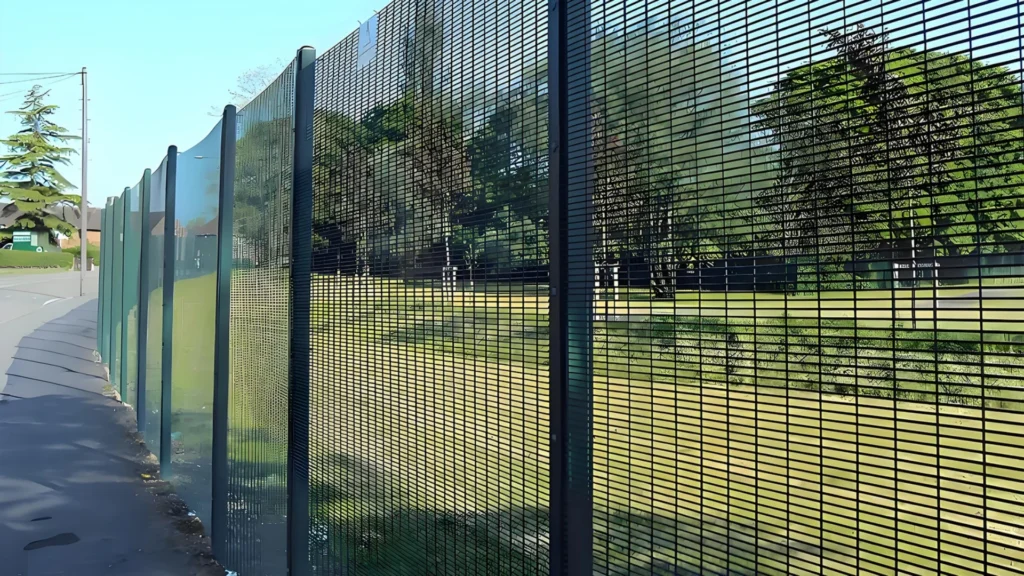
Wenzhou Huagang LNG Receiving Terminal
From engineering design development and system configuration to corrosion protection, manufacturing, and project delivery
Engineered Perimeter Security for High-Standard Industrial Facilities
This case study presents the perimeter fencing system applied at the Wenzhou Huagang LNG Receiving Terminal. It demonstrates how design coordination, product selection, corrosion-protection engineering, fabrication control, and access-system integration were combined into a complete perimeter security solution.
|
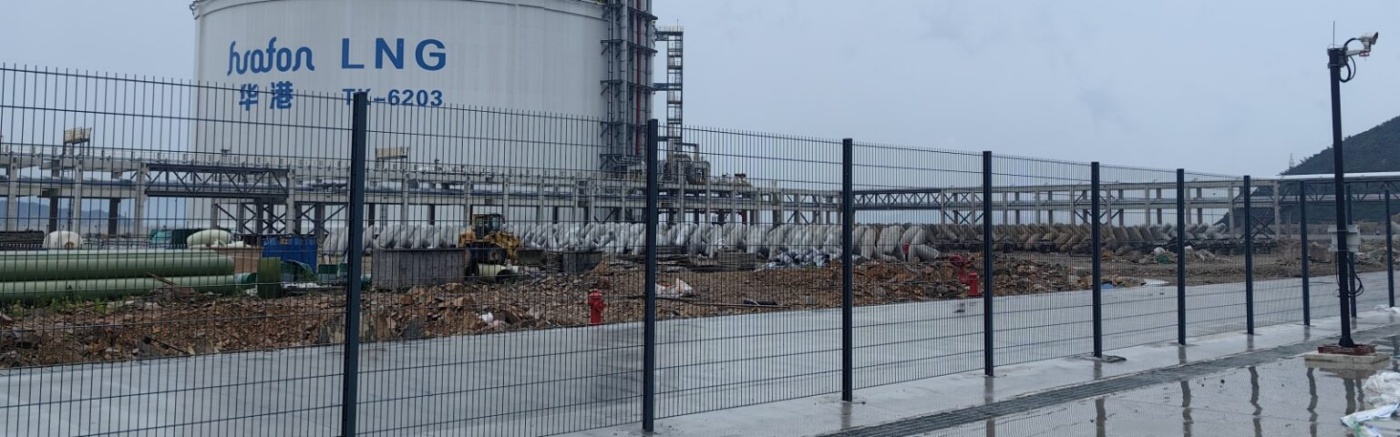
1. Special Requirements for Chemical and LNG Project Fencing
Chemical facilities, and especially LNG receiving terminals, impose substantially higher requirements on perimeter fencing than ordinary industrial or commercial sites. The fence is not only a physical boundary and security barrier; it also affects plant appearance, long-term operation and maintenance, access-control organization, and final project inspection and acceptance.
For an LNG facility such as the Wenzhou Huagang terminal, the perimeter system must provide security, durability, panel flatness, visual consistency, and coordinated operation with pedestrian and vehicle access points. The project requirement is therefore not simply to enclose the site, but to ensure stable long-term service and an installation quality consistent with industrial engineering standards.
- Mesh panels shall remain flat and rigid, with sound welds and straight fence lines after installation.
- Posts and gate frames shall provide sufficient structural stiffness to resist permanent deformation during long-term service.
- The powder-coated finish shall be uniform in color and appearance across the complete project.
- Fence panels, pedestrian gates, and vehicle gates shall form one coordinated structural and visual system.
|
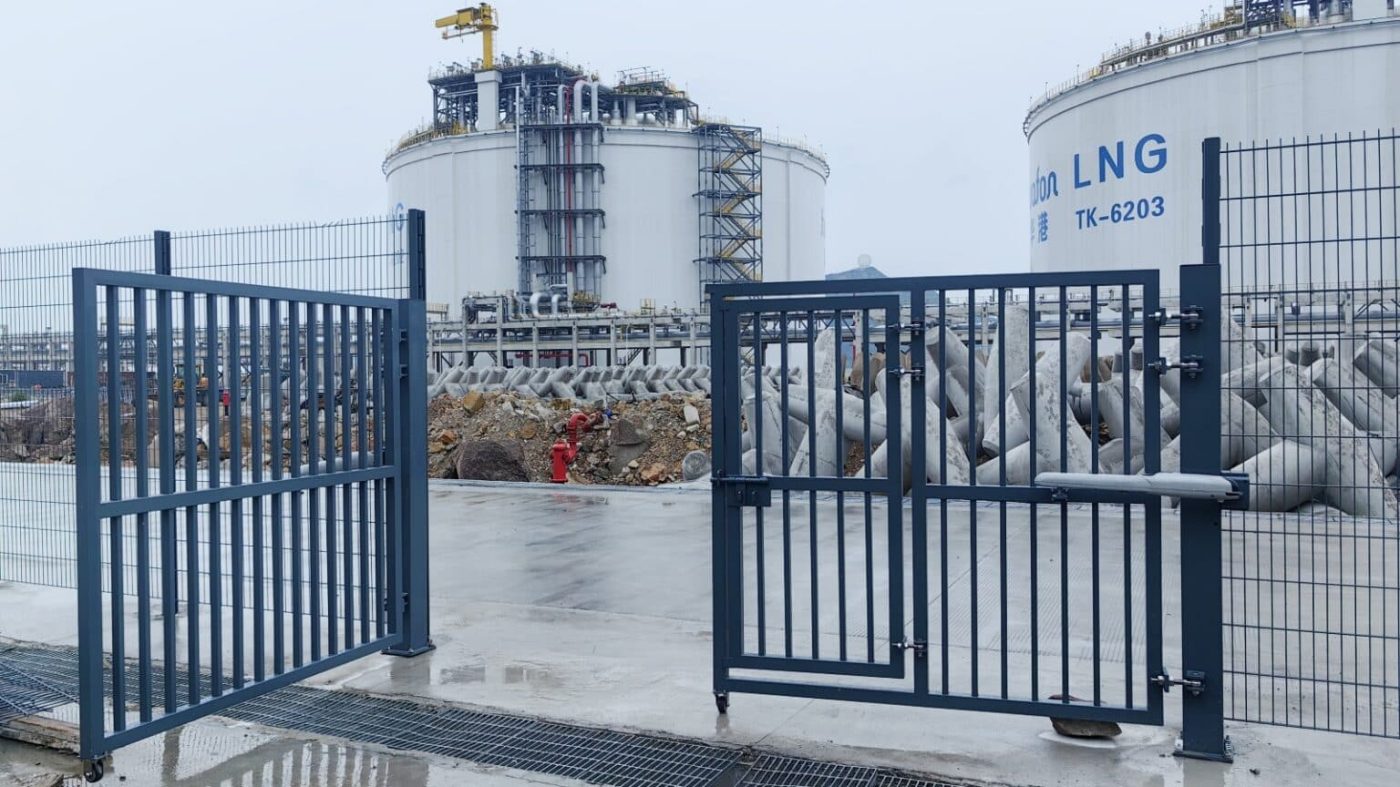
2. Engineering Design Stage: From Master Planning to Construction-Ready Parameters
The perimeter fencing concept should be developed during the early engineering design stage. When preparing the master site plan, the design consultant must coordinate functional zoning, road circulation, access points, security boundaries, fire-engine access, and emergency routes. Because the fence forms part of both the site-layout system and the physical-security system, late product selection can result in unsuitable specifications, restricted installation space, or conflicts between gates, roads, and access-control equipment.
For engineering design institutes and EPC contractors, the most valuable supplier is not a company that only sells standard products, but a technical partner capable of converting drawing requirements into manufacturable and installable details. CommandFence engineers can provide project-specific recommendations covering fence height, mesh configuration, post section, gate clear opening, corrosion-protection system, connection details, and foundation interfaces.
- Define the fence alignment, perimeter limits, and functional security zones during the master-planning stage.
- Coordinate the main entrance, fire access, personnel routes, and perimeter fence system as one integrated layout.
- Convert product specifications, corrosion-protection classes, and foundation arrangements into procurement-ready, fabrication-ready, and installation-ready parameters.
|
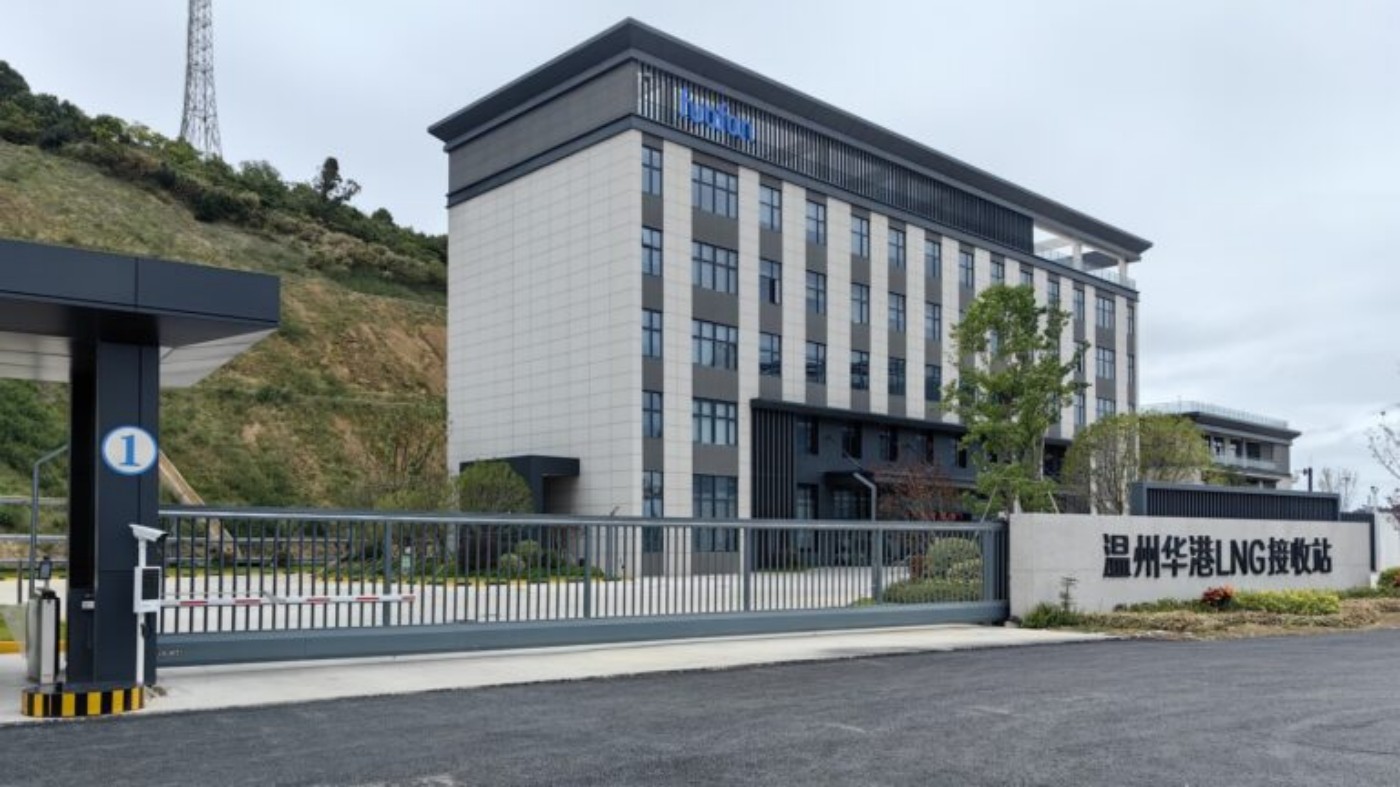
3. Why Owners Apply More Stringent Fence Quality Requirements
Chemical and LNG projects involve high capital investment, long operating lifecycles, and strict management standards. Owners therefore assess perimeter fencing on more than initial purchase price. In continuous outdoor service, deformed panels, leaning posts, coating color variation, or unstable gate operation can directly affect security management and the professional image of the facility.
Typical owner inspection points include coating appearance, material stiffness, panel flatness, post stability, connection details, and gate operating performance. Within the plant, straight fence lines, uniform post spacing, and consistent color provide an immediate indication of fabrication quality and installation control.
|
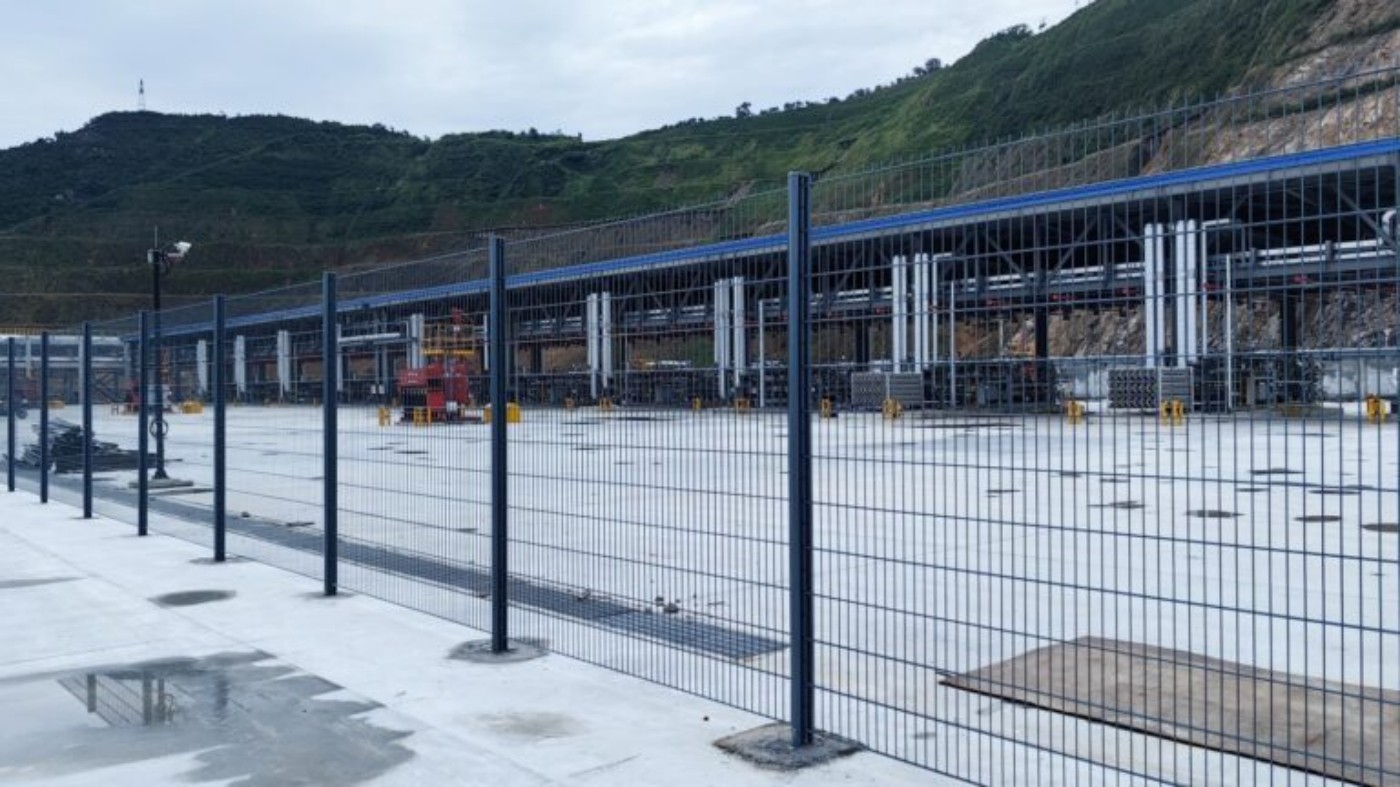
4. Corrosion-Protection System: Designed for Site Exposure and Applicable Standards
Corrosion protection is one of the most critical technical requirements for chemical and LNG facilities. Receiving terminals and process plants are frequently exposed to humid conditions, coastal atmospheres, industrial contaminants, and continuous outdoor weathering. An inadequate protection system may lead to corrosion, gloss loss, coating delamination, and premature maintenance, affecting both safety and appearance.
CommandFence can define the base material, zinc-coating requirement, and external coating system according to the project exposure environment and applicable Chinese national standards and technical specifications. For coastal or highly corrosive sites, panels, posts, gates, brackets, connectors, and fasteners must be engineered as one complete protection system rather than improving the surface treatment of only one component.
- Select the galvanizing process and zinc-coating mass according to the site exposure conditions.
- Use an outdoor-grade powder-coating system with suitable adhesion, weather resistance, and color retention.
- Apply enhanced quality control to cut edges, welded areas, connectors, hinges, and other moving gate components.
- Define the substrate, zinc coating, coating thickness, inspection method, and acceptance criteria in the technical documentation.
|
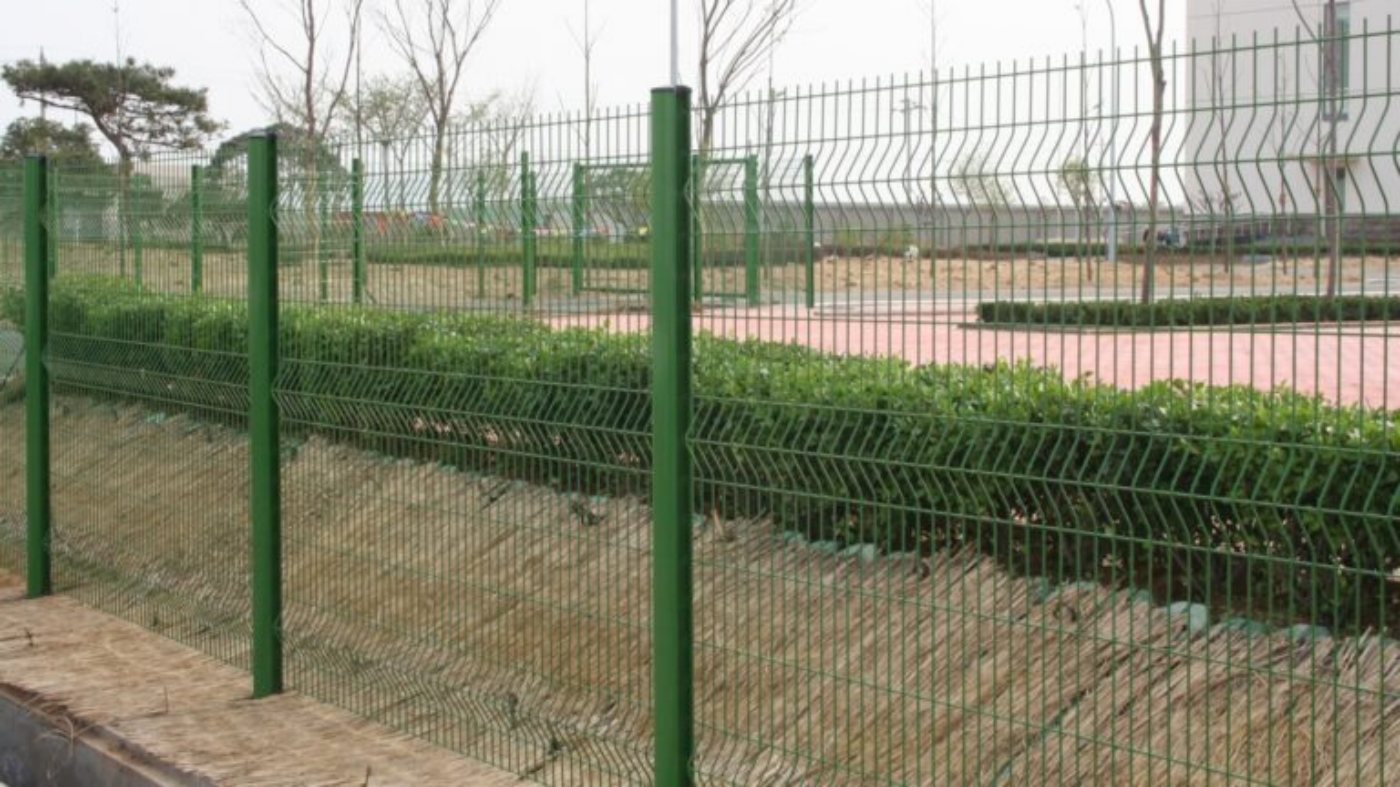
5. Recommended Fence and Access-System Configuration
The Wenzhou Huagang LNG Receiving Terminal does not rely on one standard fence type. Welded mesh fences, reinforced V-bend panels, pedestrian gates, and vehicle gates are combined according to the protection level, traffic function, operating frequency, and visual requirements of each zone.
| Application Zone | Recommended System | Primary Engineering Function |
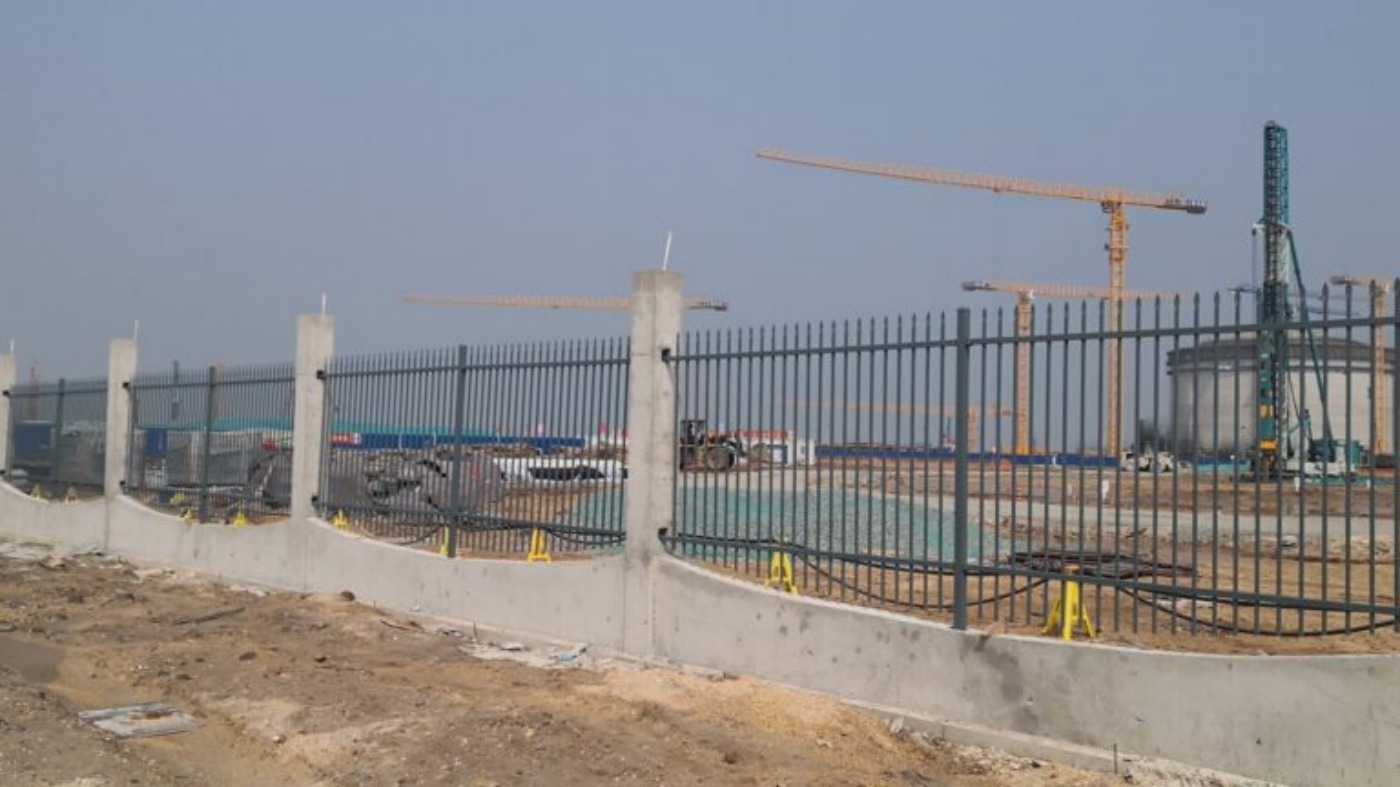
| Main Perimeter, Process Areas, and Tank-Farm Boundaries | 2DT Double-Wire Welded Mesh Fence | High panel rigidity, straight long-distance fence lines, and enhanced resistance to transport and installation deformation |
| Landscaped Areas, Office Zones, and Secondary Internal Boundaries | 3DT V-Bend Welded Mesh Fence | Good visibility, efficient installation, and reinforced panel stability with a lighter visual appearance |
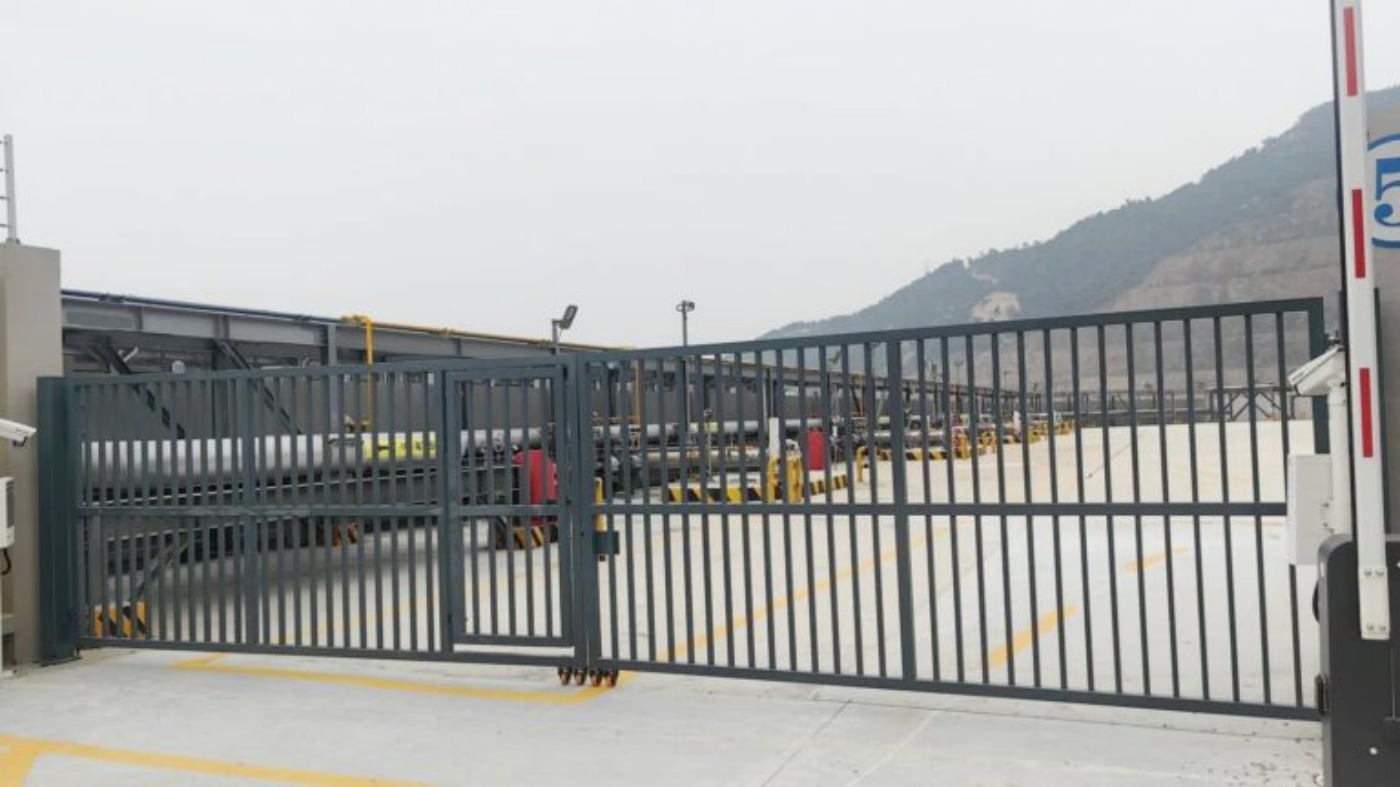
| Main Vehicle Entrance | TCG Trackless Cantilever Sliding Gate | Large clear opening, no ground track, stable automated operation, and compatibility with access-control systems |
| Fire Access, Maintenance Routes, and Equipment Transport Openings | DSG Double-Leaf Swing Gate | Flexible clear opening, reinforced gate framing, and manual, semi-automatic, or powered operation |
| Personnel Access, Inspection Routes, and Emergency Egress | SSG Single-Leaf Pedestrian Gate | Controlled personnel movement, hardware integration, and visual continuity with adjacent fence panels |
5.1 2DT Double-Wire Welded Mesh Fence
The 2DT system uses twin horizontal wires to increase panel stiffness and overall flatness. It is suitable for LNG site perimeters, process-area boundaries, tank-farm protection, and other locations where a straight and rigid fence line is required. The double-wire structure reduces distortion of large panels during transport and installation.
- High panel rigidity for long industrial perimeter runs.
- Flat and upright appearance suitable for high-standard chemical projects.
- Compatible with dedicated posts, connection fittings, pedestrian gates, and vehicle gates.
- Recommended for key process areas, storage zones, and principal perimeter protection.
|
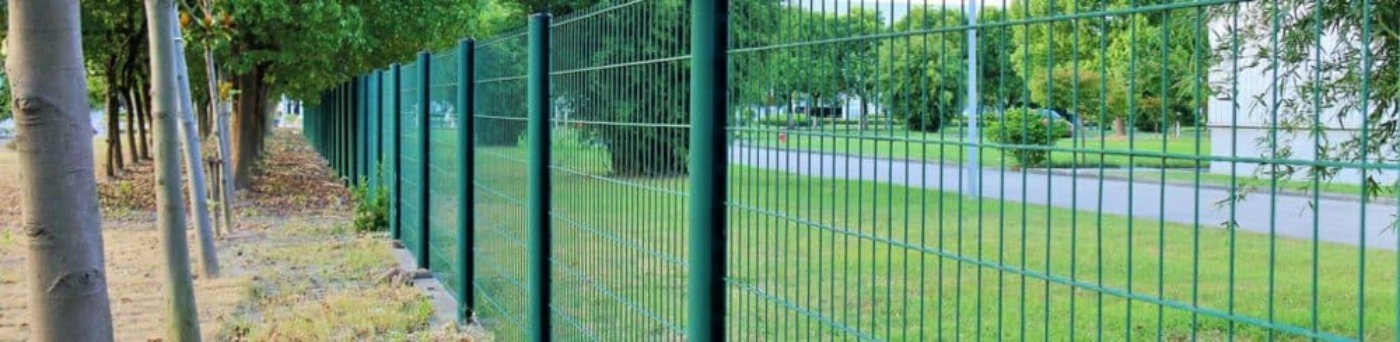
5.2 3DT V-Bend Welded Mesh Fence
The 3DT fence incorporates formed V-bends that act as reinforcing ribs, improving panel stability while maintaining efficient material use. Its clean lines and good visibility make it suitable for landscaped zones, office perimeters, auxiliary facilities, and general internal separation.
- Formed reinforcement bends improve panel resistance to deflection.
- Open and lightweight appearance for areas requiring both separation and visual integration.
- Efficient modular installation for long secondary boundary sections.
|
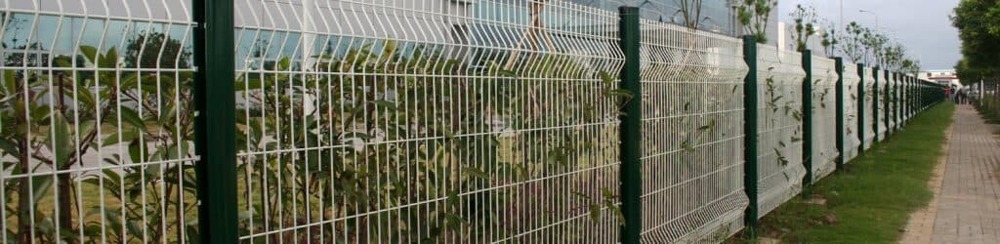
5.3 TCG Trackless Cantilever Sliding Gate
For the main vehicle entrance, a trackless cantilever sliding gate avoids the drainage, contamination, and maintenance issues associated with a ground rail. The self-supporting gate structure is suitable for LNG entrances requiring stable operation, a wide clear opening, and automated access management.
- No ground track, reducing the effects of standing water, sediment, and uneven pavement.
- Suitable for wide vehicle openings and high-frequency traffic.
- Can interface with access control, remote operation, vehicle identification, and safety-protection devices.
- Gate framing, color, and linework can be coordinated with the adjacent perimeter fence.
|
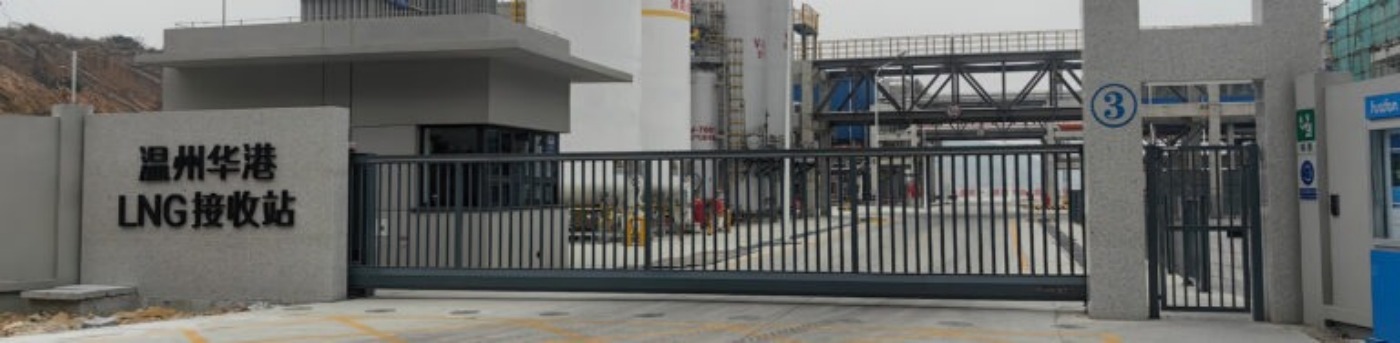
5.4 DSG Double-Leaf Swing Gate
The DSG double-leaf swing gate is suitable for fire-engine access, equipment-maintenance routes, and auxiliary vehicle entrances requiring a large clear opening. The two leaves provide flexible opening width and can be configured for manual, powered, or semi-automatic operation according to site conditions.
- Suitable for emergency access, maintenance traffic, and equipment transport routes.
- Clear opening can be customized according to road geometry and vehicle envelope.
- Gate frame, gate posts, and hinges can be reinforced according to operating frequency and wind loading.
- Can be equipped with drop bolts, mechanical locks, electromagnetic locks, or project-specified locking hardware.
|
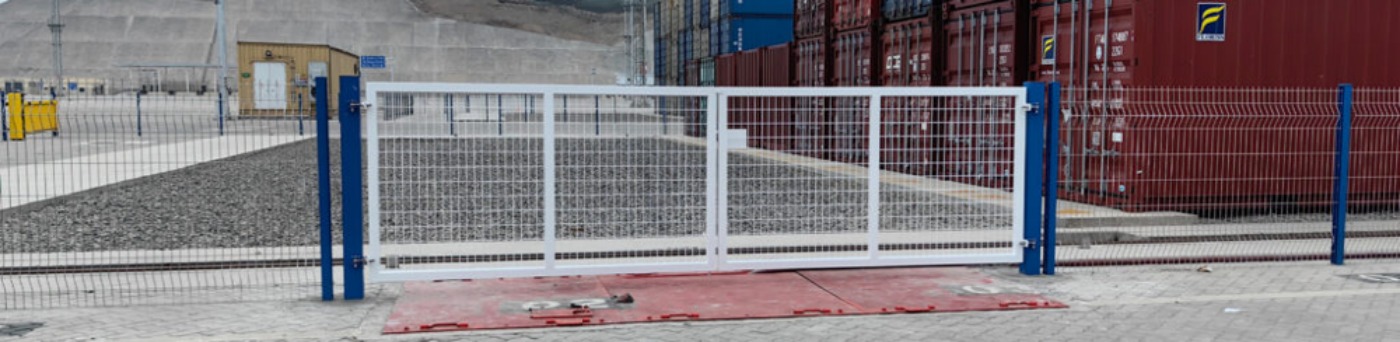
5.5 SSG Single-Leaf Pedestrian Gate
The SSG single-leaf pedestrian gate is intended for routine personnel access, inspection routes, controlled internal zones, and emergency egress. In chemical projects, the gate must operate smoothly while remaining consistent with the adjacent fence height, mesh pattern, coating color, and access-control requirements.
- Suitable for personnel access, inspection routes, and local management zones.
- Can be fitted with lever locks, drop bolts, electromagnetic locks, panic hardware, or door closers.
- Adjustable hinges and reinforced gate posts support alignment and long-term durability.
- Manufactured as part of the complete fence system to maintain a consistent project appearance.
|
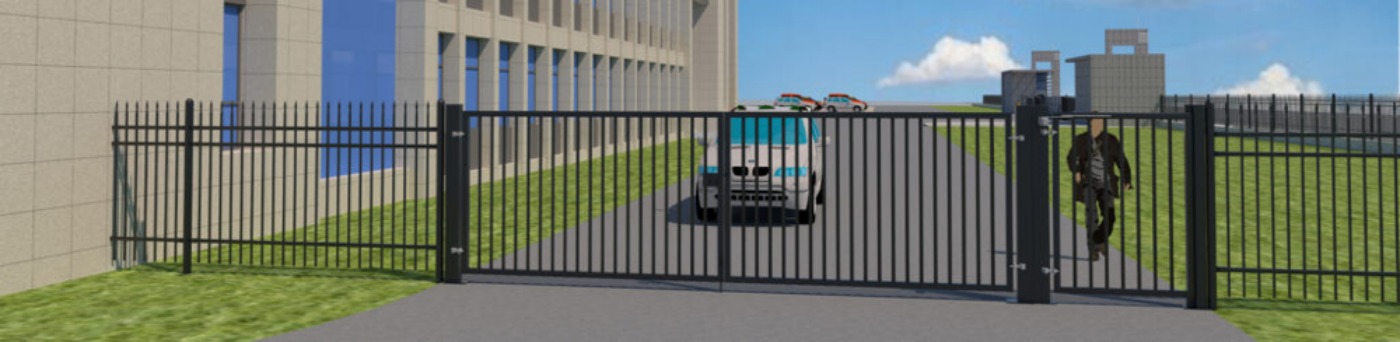
System Integration Note: The 2DT, 3DT, TCG, DSG, and SSG products should not be treated as unrelated standalone items. They should be configured as one complete perimeter system. The design consultant defines protection levels and traffic requirements, while CommandFence develops the connection details, dimensions, corrosion protection, gate interfaces, and manufacturing specifications.
|
|
6. CommandFence Design Development, Manufacturing, and Delivery Process
For chemical projects, the value of a fencing manufacturer extends beyond product supply. It includes the ability to coordinate technical development, manufacturing, packing, and site delivery. Based on the design documents and project requirements, CommandFence can assist in defining fence types, gate arrangements, dimensions, structural details, corrosion-protection configurations, and installation interfaces before production begins.
- Requirement Review: Review drawings, perimeter lengths, gate clear openings, functional zoning, and environmental exposure conditions.
- Engineering Development: Confirm mesh panels, posts, connection nodes, foundations, gate structures, and equipment interfaces.
- Sample and Color Approval: Verify material, coating color, finish, hardware, and critical construction details.
- Manufacturing Control: Control welding quality, panel flatness, post straightness, dimensional tolerances, and gate-frame accuracy.
- Packing and Delivery: Organize classified packing according to transport requirements and the planned site-installation sequence.
| Project Stage | Engineering Output |
| Design Coordination | Fence alignment, security zoning, gate locations, clear openings, foundation interfaces, and access-control coordination |
| Technical Development | Panel specification, post section, connection details, gate structure, coating system, fasteners, and installation requirements |
| Manufacturing and Inspection | Dimensional inspection, weld quality, panel flatness, post straightness, gate operation, coating inspection, and system compatibility checks |
| Packing and Delivery | Component identification, phased packing, transport protection, installation-sequence organization, and project documentation |
7. Core Advantages of CommandFence for Chemical and LNG Projects
- Engineering Design Coordination: Ability to convert master-planning and security requirements into fence and gate parameters.
- Understanding of Chemical-Plant Exposure: Integrated consideration of safety, durability, corrosion resistance, and project appearance.
- Complete System Configuration: Coordinated development of panels, posts, pedestrian gates, vehicle gates, fittings, and access-control interfaces.
- Manufacturing and Delivery Control: Focus on panel flatness, post rigidity, gate accuracy, coating quality, packing, and installation sequence.
- Standards-Based Production: Manufacturing and quality control organized according to applicable standards and project technical specifications.
CommandFence Engineering Value
|
|
|
|
8. Conclusion
The Wenzhou Huagang LNG Receiving Terminal demonstrates that perimeter fencing in a chemical project is not a minor accessory purchase. It must be coordinated throughout the complete project cycle, from early design and product selection to corrosion-protection engineering, fabrication, delivery, and site installation. A successful perimeter solution must provide reliable security separation and long-term durability while maintaining a clean and professional industrial appearance.
As a Chinese metal-fencing manufacturer with project-engineering capability, CommandFence provides more than standard fence products. By combining 2DT and 3DT welded mesh fencing with TCG, DSG, and SSG access products, CommandFence can support design institutes, EPC contractors, and owners with a complete perimeter security system for LNG terminals, chemical plants, energy facilities, and other high-standard industrial projects.





Leave a Reply