
Airport perimeter security has once again become a global focus. The U.S. Federal Aviation Administration confirmed that on August 29, 2026, a vehicle breached the perimeter fence at Portsmouth International Airport in New Hampshire, entered an aircraft parking area, and struck a parked aircraft. The incident is another reminder that perimeter fencing is not simply a boundary marker; it is one of the most fundamental layers in an airport’s physical security system.
So what should airport owners, designers, and contractors really focus on when selecting perimeter fencing? Instead of stacking up isolated specifications, the decision can be reduced to two practical questions.
1. Can the perimeter system effectively reduce climbing and unauthorized entry risk?
2. Years later, can the fence, gates, posts, and connection system still operate reliably?
|
1. Different Airport Zones Need Different Fence Security Levels
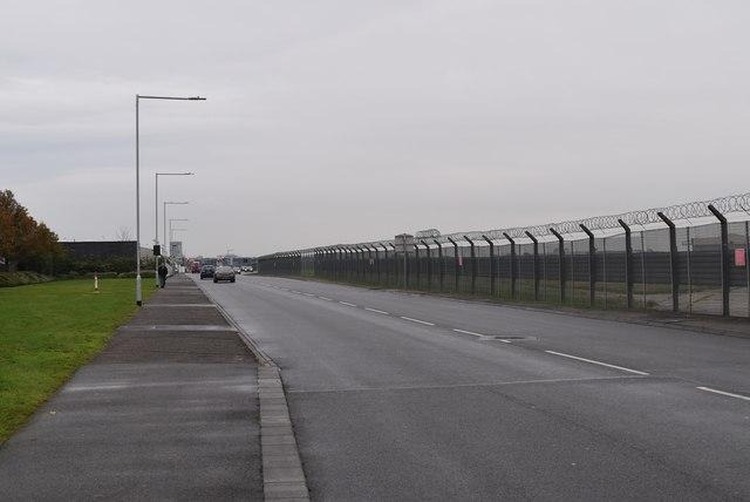
Airports cover large areas and often have very long boundaries. The risks around a runway, aircraft operating area, fuel storage zone, electrical infrastructure, service road, and remote outer boundary are not the same. For that reason, an airport perimeter should not automatically use one high-security fence type everywhere. Fence selection should be zoned according to security level, terrain, operating conditions, and budget.
High-Security Zones: 358 Anti-Climb Fencing
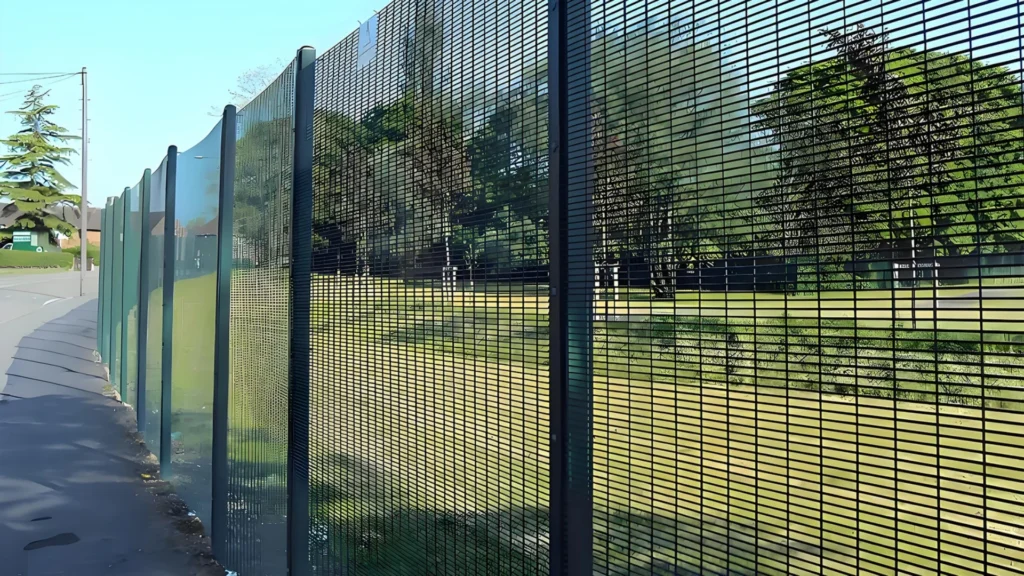
Areas close to runways, aircraft movement zones, fuel storage, substations, critical equipment, and other restricted facilities require stronger resistance to climbing and unauthorized access. These locations can use 358 anti-climb fencing for high-security perimeter protection. A typical 358 mesh opening is approximately 76.2 × 12.7 mm. The narrow aperture makes it difficult for fingers and footwear to obtain effective climbing points while still maintaining useful visibility for CCTV, lighting, and intrusion-detection systems.
|
General Perimeters and Long-Distance Boundaries: Chain-Link Fencing
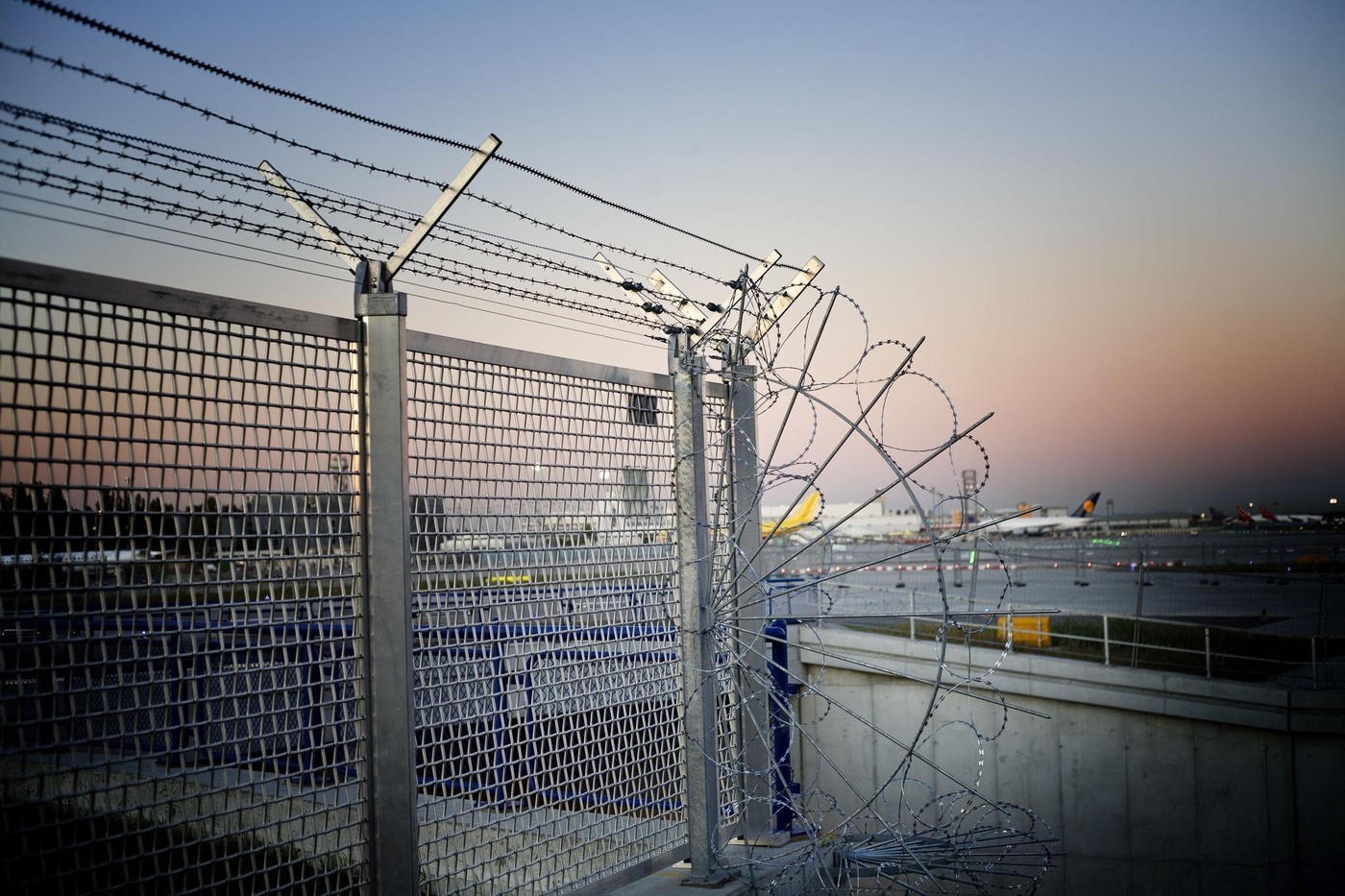
Not every part of an airport requires 358 fencing. For general perimeter sections, long boundaries far from critical facilities, and areas with uneven terrain, chain-link fencing can be a highly practical solution. Its structure is simple, visually open, adaptable to slopes and irregular ground, and suitable for continuous installation over long distances. Depending on project requirements, barbed wire or razor wire can be added at the top, while hot-dip galvanizing or PVC coating can improve corrosion resistance.
The real question is therefore not whether 358 fencing is always “better” than chain-link fencing. High-risk zones should receive a higher protection level, while general zones should balance security requirements with installation conditions, terrain, lifecycle needs, and total project cost.
|
2. Airports Should Evaluate the Entire Perimeter System — Not Just the Mesh Panel
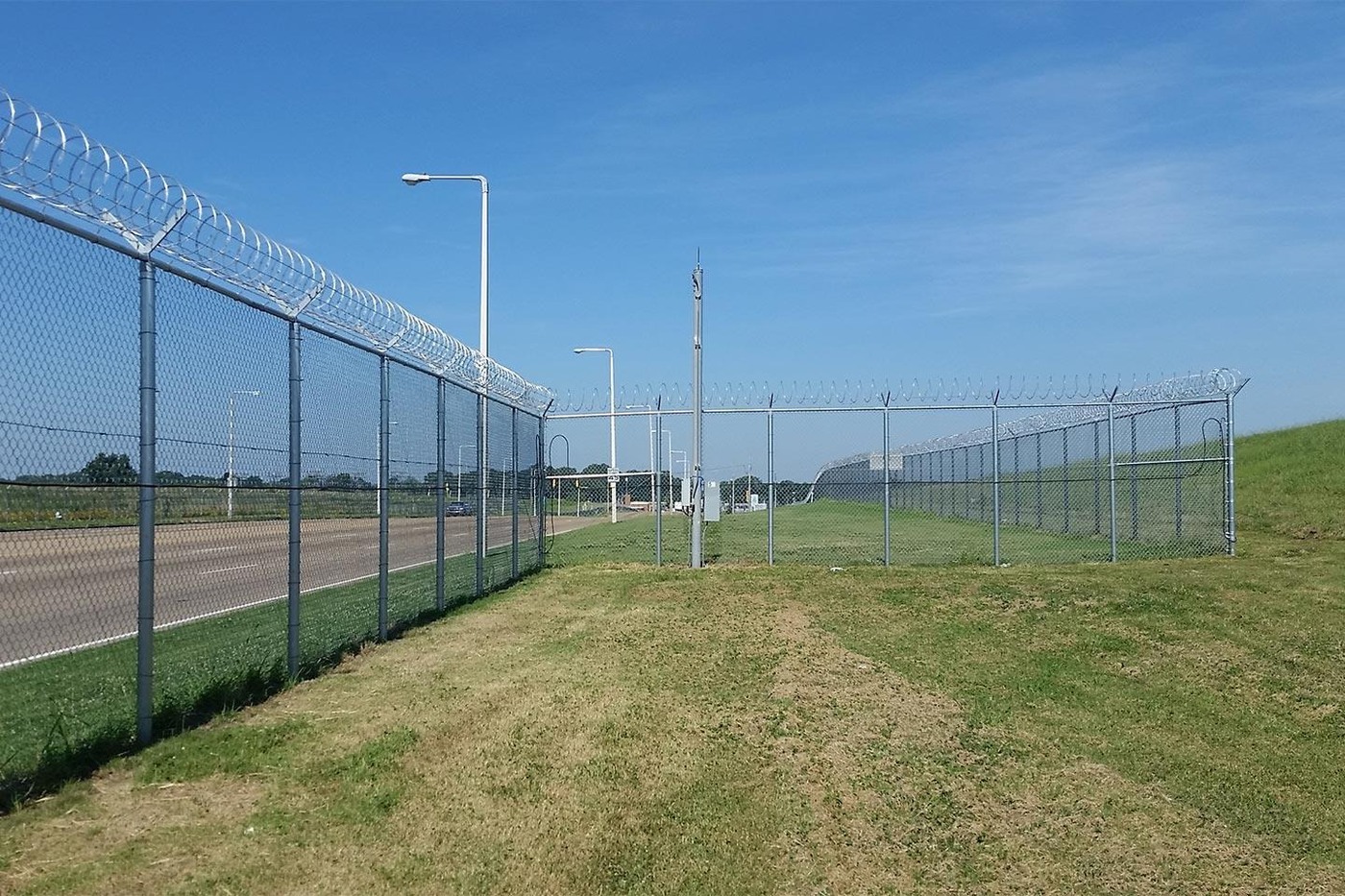
Even when the right fence type is selected, the perimeter can still be compromised if gates, posts, foundations, fasteners, or other connection points are weaker than the fence itself. Airport fencing should therefore be considered as a complete system that includes mesh panels, posts, foundations, connections, top protection, vehicle gates, and pedestrian gates. The same principle applies to fence post and panel connection design: a strong panel is only as effective as the structure that supports and secures it.
Vehicle-access points deserve particular attention. If the outer perimeter uses a high-security fence but the vehicle gate is structurally weak, has simple locking hardware, or leaves significant gaps between the gate and adjacent fencing, a single weak node can undermine several kilometers of perimeter protection. Where vehicle-ramming risk exists, the project should separately evaluate bollards, crash-rated barriers, guardrails, or other vehicle-stopping measures. Ordinary metal fencing should not be treated as a substitute for a dedicated vehicle-impact system.
Gate control also needs to work with the wider security architecture. For airport projects combining physical barriers with monitoring, alarms, and controlled access, an integrated physical protection and access-control approach can help avoid isolated weak points between the fence line and access nodes.
Airport fencing is also exposed for years to salt spray, heat, humidity, rain, snow, and strong ultraviolet radiation. Corrosion protection should therefore be selected for the local environment, using systems such as hot-dip galvanizing, powder coating, PVC coating, or hot-dip galvanizing plus powder coating. Experience from corrosion-sensitive chemical and LNG perimeter environments is especially relevant where long-term coating durability is a major project concern. For long-life infrastructure, the meaningful comparison is not only the price per square meter today, but whether the fence, posts, gates, and connection system can still function reliably years from now.
|
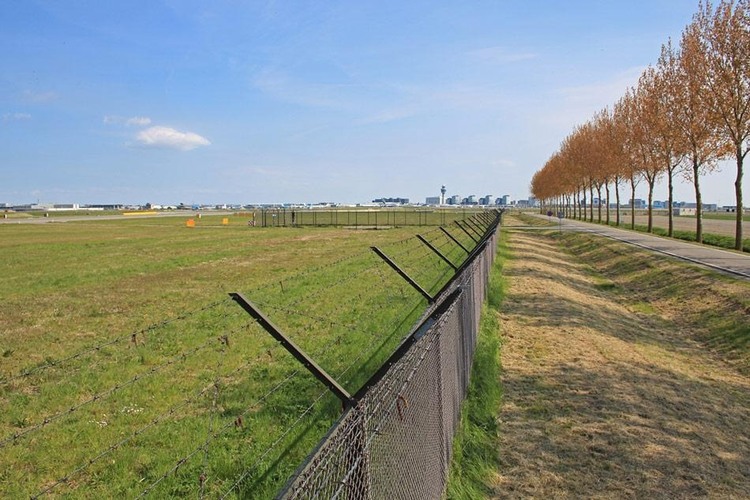
Airport perimeter selection ultimately comes back to two questions: Can the system reduce climbing and unauthorized-entry risk effectively? And can the fence, gates, posts, and connections continue to perform reliably after years of exposure and operation?
What an airport needs is not one isolated fence product, but a physical perimeter protection system configured around security level, terrain, access requirements, environmental exposure, and long-term operation.
About CommandFence
CommandFence manufactures and supplies metal fencing, security fencing, vehicle gates, pedestrian gates, and complete physical perimeter protection systems. For airports, air-logistics parks, airport equipment zones, and other infrastructure projects, the system can be configured according to security level, terrain, vehicle and pedestrian movement, and environmental corrosion conditions, using 358 anti-climb fencing, chain-link fencing, welded mesh fencing, vehicle gates, and pedestrian gates as appropriate.
CommandFence also works with fencing distributors, agents, engineering contractors, and project partners on perimeter-security projects, supporting product selection, custom manufacturing, and delivery coordination according to project requirements.







Leave a Reply