This power distribution project is located in a fog-prone mountainous area of Rwanda. The customer specified hot-dip galvanizing for both fences and gates, with a zinc coating thickness requirement of 85 μm. On fence panels, the factory needs to check coverage at welds and connections. On gates, it must also verify that the galvanized parts fit together and that each gate leaf opens and closes smoothly.
Fences and gates face repeated condensation in the mountains
Even without rain, moisture in the air can condense into droplets on cooler steel surfaces at a foggy mountain site. Repeated condensation keeps the steel surface wet for longer. Water can also linger on lower gate rails and at overlapping connection plates. Where steel is exposed at these locations, corrosion can develop. The customer therefore made corrosion protection a priority across the enclosure, applying the same zinc coating thickness requirement to the fence panels and gate frames.
How an 85 μm zinc coating protects steel
When a steel component is immersed in molten zinc, the clean steel reacts with the zinc to form zinc–iron alloy layers bonded to the substrate. The coating separates the steel from moisture and air. If a small scratch exposes steel, nearby zinc corrodes preferentially and helps protect the exposed area. In a mountain environment with repeated condensation, the zinc is gradually consumed in service. The project specified 85 μm to provide a reserve against that gradual loss.
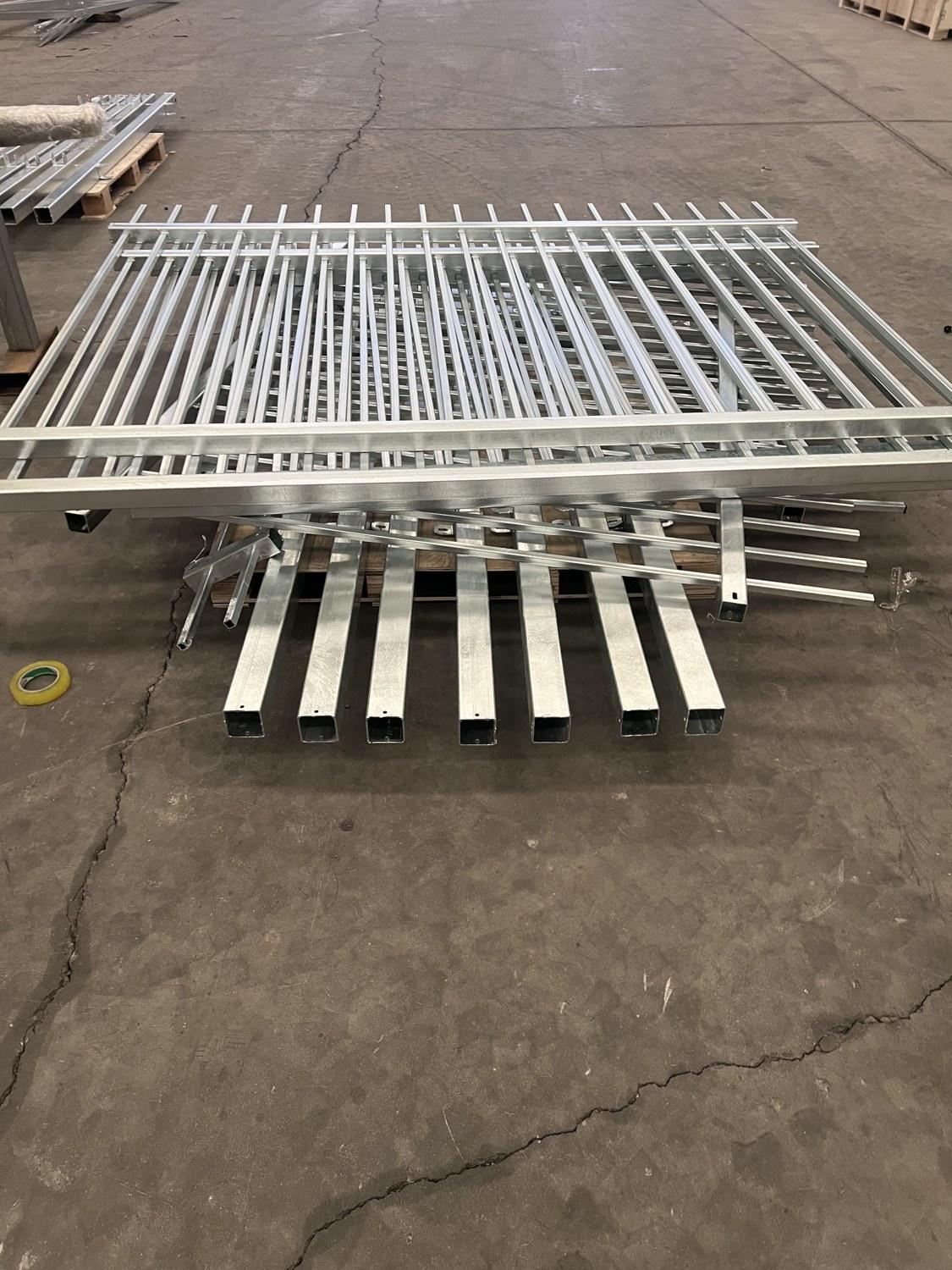
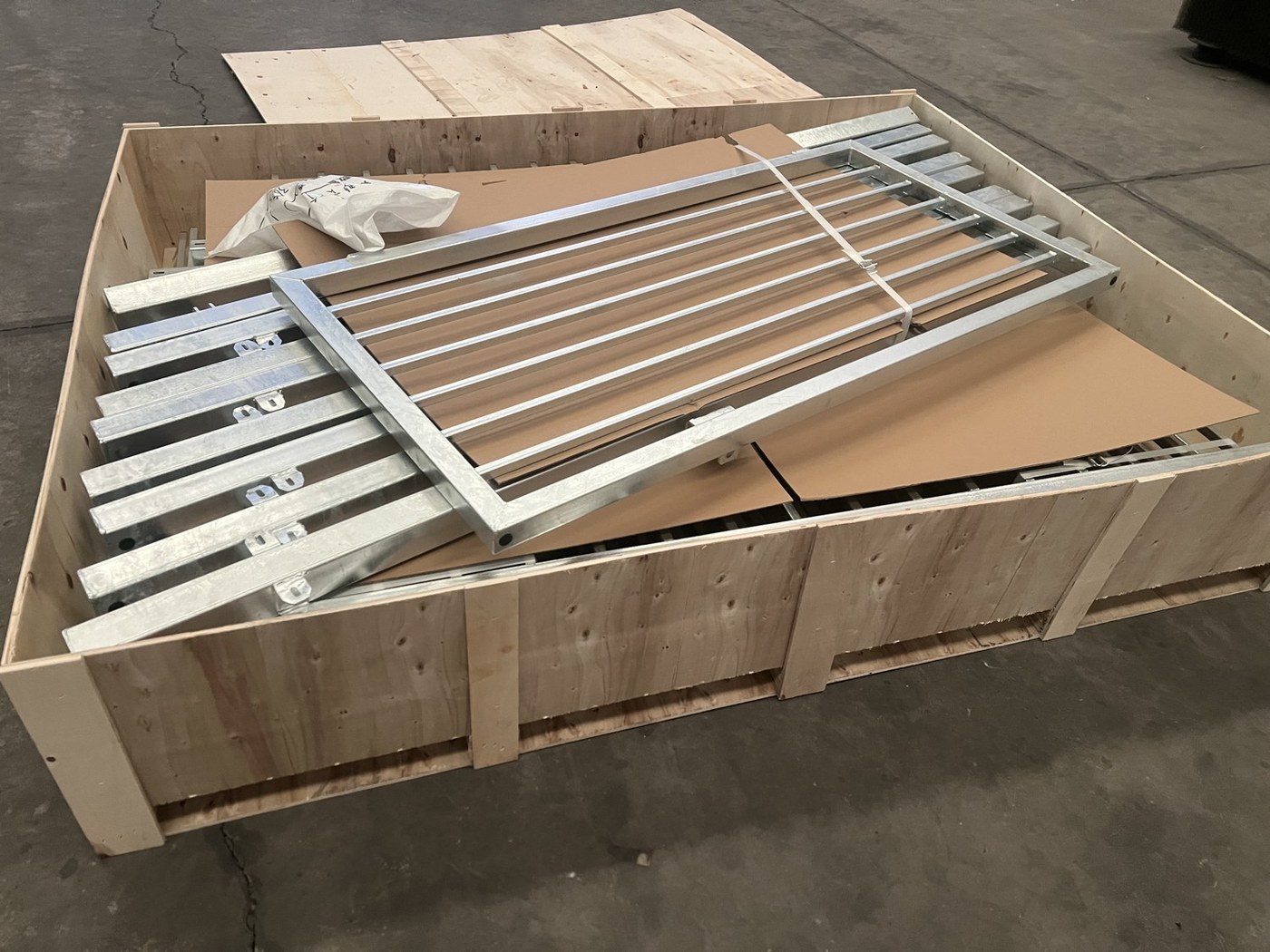
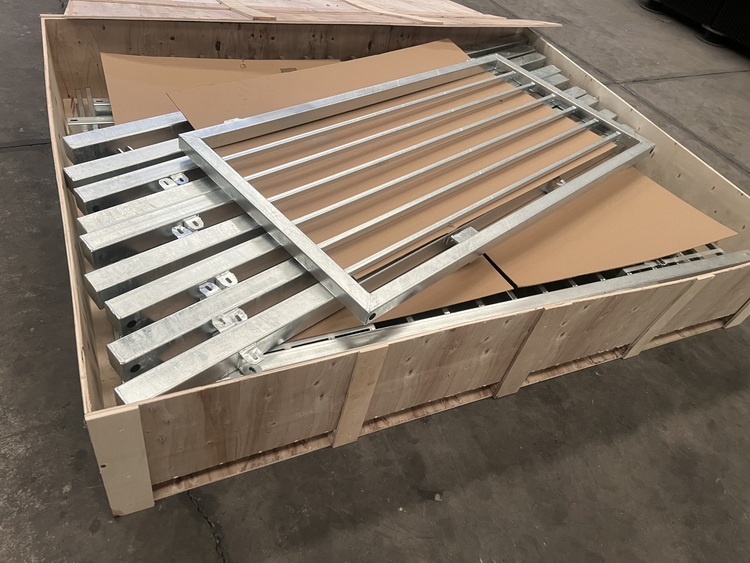
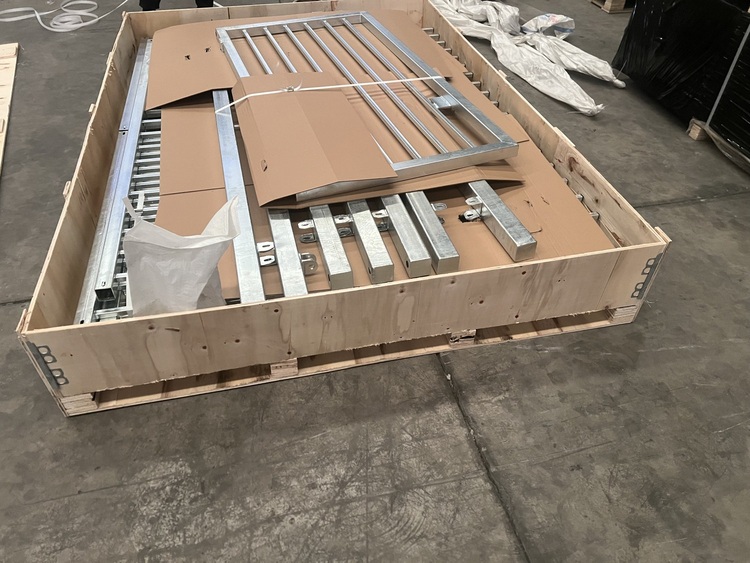
Figure 1. Galvanized steel components ready for packing and fence panels inside a wooden crate.
Fence panels are welded before the complete assemblies are galvanized
After the mesh and frames are welded, slag and spatter must be removed from the weld areas. Degreasing removes oil, and pickling removes rust and mill scale. The assemblies are then rinsed, fluxed and dried before being immersed in molten zinc. Surface preparation is critical to continuous coverage. Leaving a part in the bath longer will do little to coat steel shielded by residual slag. As each assembly comes out of the bath, excess zinc must drain freely back into the kettle. Check the lower frame edges and mounting holes for buildup that could prevent fittings from seating correctly.
Hollow gate frames need clear paths for venting and drainage
Vent and drain holes should be positioned for the orientation in which the gate frame will be suspended. During immersion, air must escape at high points so molten zinc can enter the hollow sections. During withdrawal, excess zinc must drain at low points. If welding rails and uprights together creates separate cavities, check the venting and drainage path for each cavity. After galvanizing, check frame diagonals, hinge alignment and how the latch engages. These checks reduce the need to grind away fresh coating to make a gate fit on site.
How to interpret the coating thickness readings
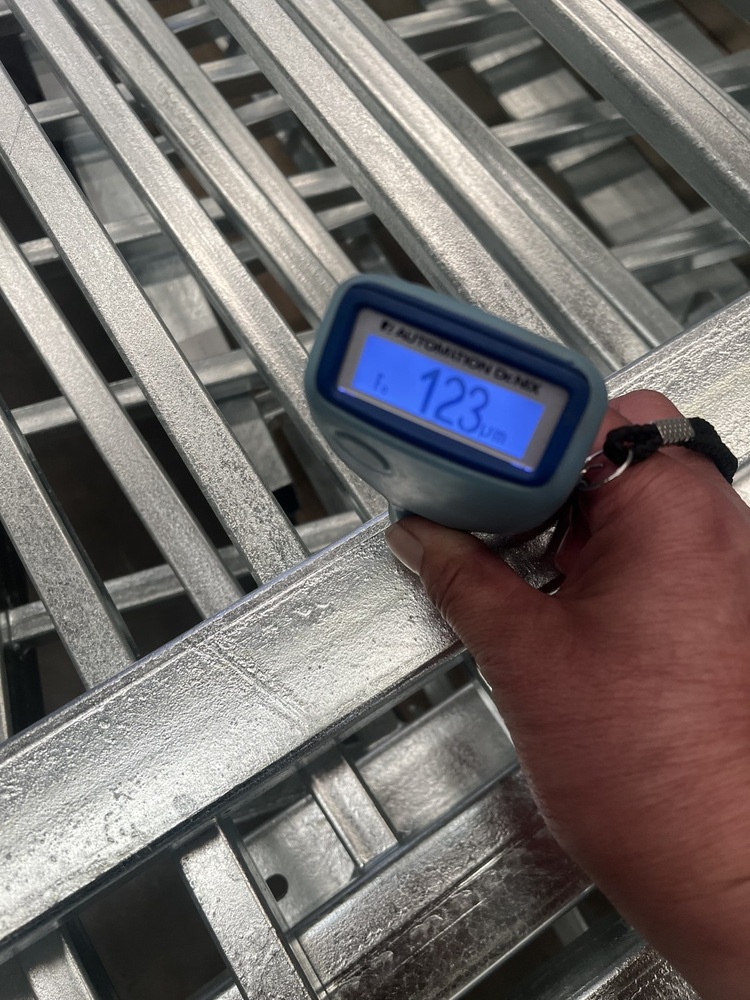
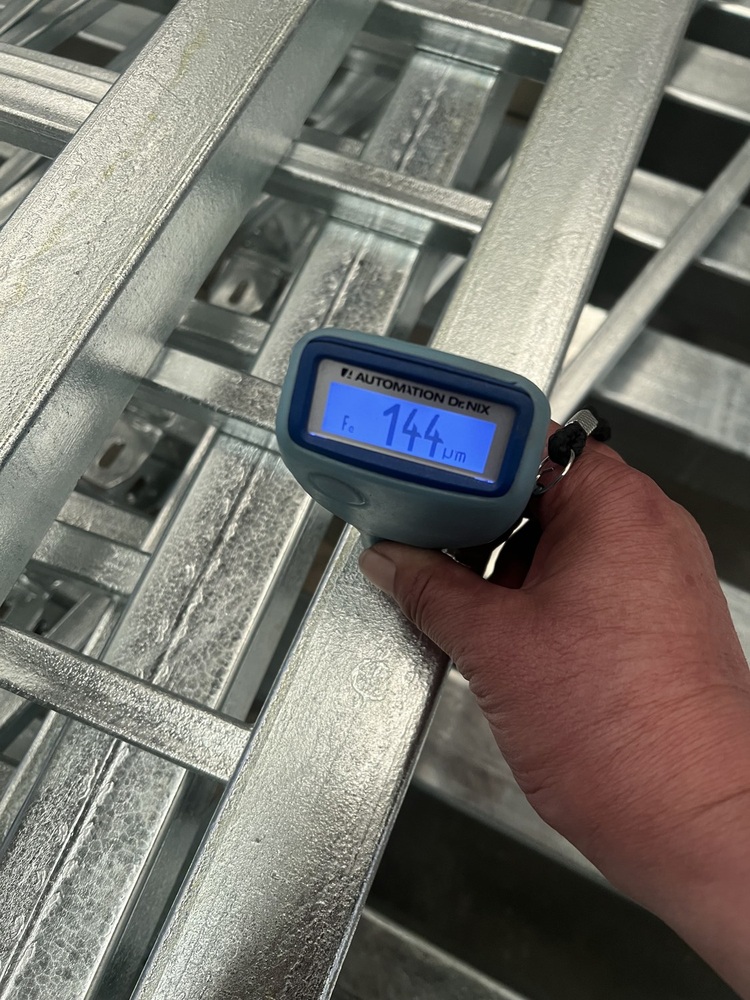
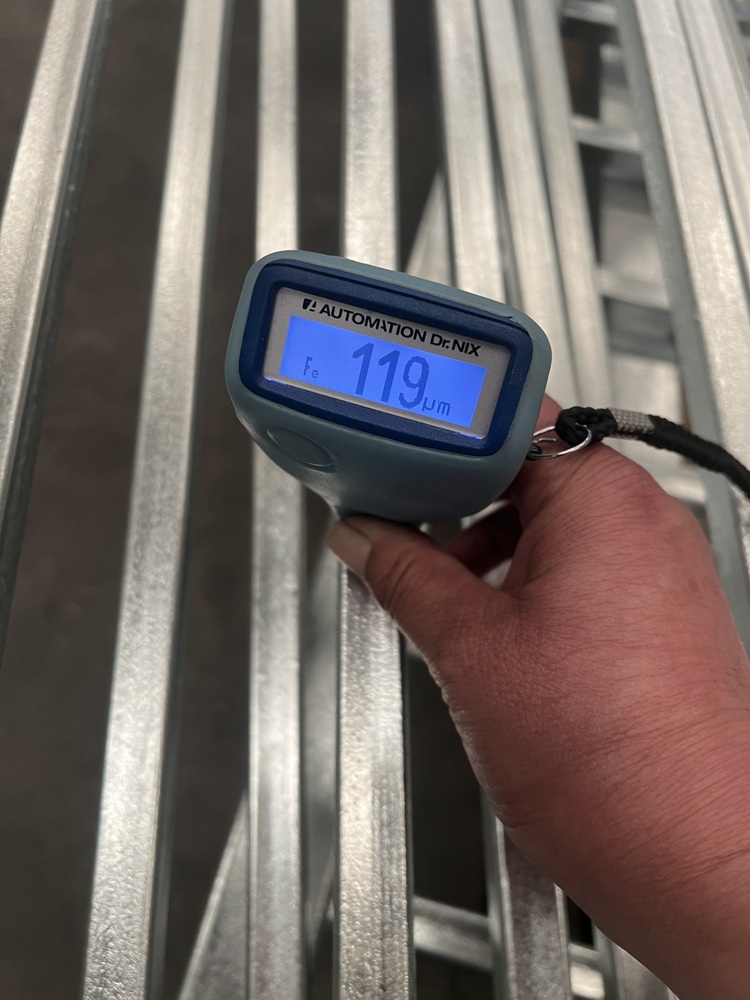
After galvanizing, inspect welds, corners and connection plate edges for uncoated areas, then measure coating thickness using the agreed sampling and assessment method. The gauge in the photo shows a reading at a single point. To assess compliance with the 85 μm requirement, confirm whether the contract specifies local or mean coating thickness, then record each measurement area, reading and component ID. This lets the buyer review the fence panel and gate leaf records and trace them to the delivered batch.
Figure 2. Coating thickness measurements from the project. The photos show individual readings. Acceptance of a batch is based on the inspection records.
Packing components for delivery to the mountain site
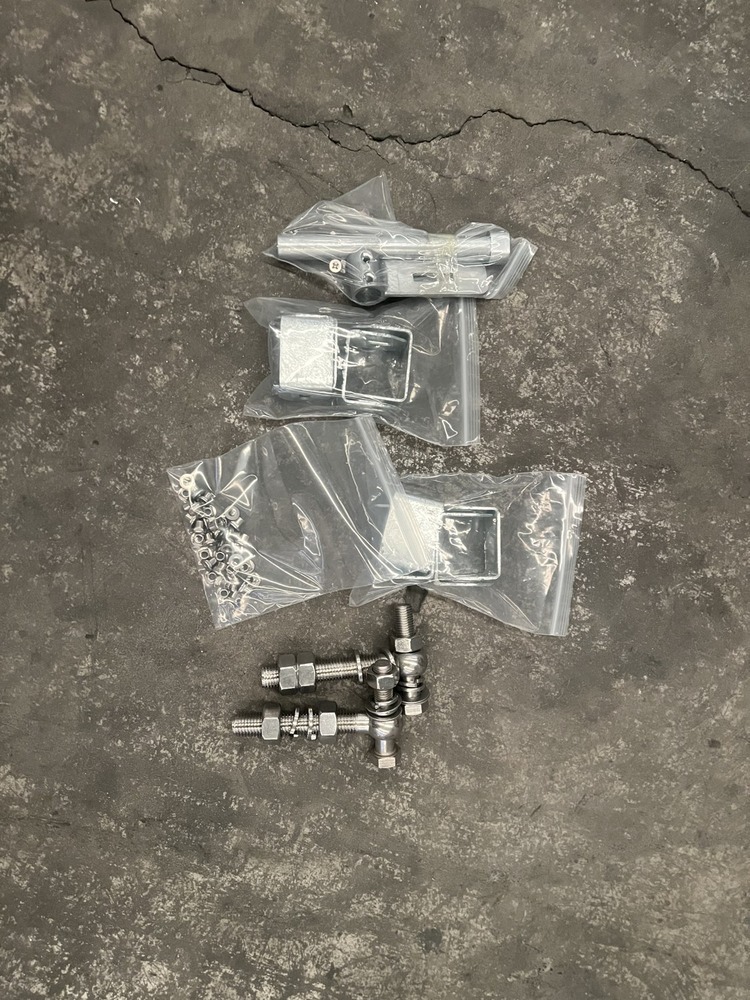
The fittings and packed components shown below connect factory preparation with site installation. A packing list should identify which fence section or gate each crate serves and where the matching fittings are packed. Separate galvanized surfaces where they could rub in transit. If parts arrive wet, separate them to allow air to circulate.
Figure 3. Matching connection fittings and components packed in wooden crates.
Check the gate leaves and connections at site handover
Once a gate leaf is installed, move it through its full swing to check for bottom-edge contact, then inspect the hinges, latch and connecting bolts. Along the fence line, pay particular attention to lifting contact points and areas modified on site. Repair any exposed steel using the agreed method and record the location so it can be revisited during routine inspections.
Plan your next power site enclosure with CommandFence
If you are preparing a fencing procurement package for a power distribution project, send CommandFence your site plan, fence length and height, and clear vehicle entrance width. We can work with your engineering team to review the fence panels, posts, gate leaves and fittings section by section and turn the layout into an itemized supply list for quotation and review.
For sites with frequent condensation or prolonged damp conditions, include the exposure conditions and coating acceptance criteria in your inquiry. During drawing review, CommandFence can discuss gate frame drainage, assembly after galvanizing and packing by installation section, so the factory preparation supports the work on site.









Leave a Reply