Long fence runs may pass roads, retaining walls and different ground conditions, while also experiencing temperature changes and settlement in service. Projects therefore often ask whether expansion joints should be provided at regular intervals. The answer starts with the fence construction, not its overall length alone.
Separate mesh panels between individual posts have different restraint conditions from continuous rails, continuous bases or members attached to a building. Matching locations where movement may occur to the movement that each connection permits is more useful than applying a fixed joint spacing.
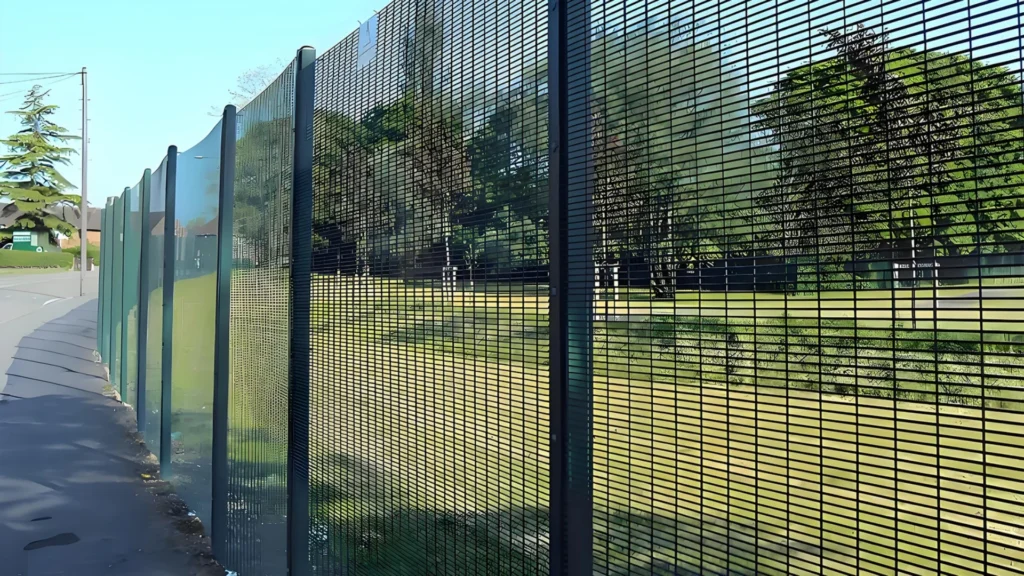
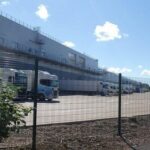
Figure 1. A mesh fence installation in the UK. This photograph does not establish whether movement joints are provided or required.
Identify which members are genuinely continuous
Although ordinary panel fencing appears to form one continuous line, it may consist structurally of many separate bays. The panel-to-post fixing arrangement affects whether thermal movement is transferred between adjacent bays. The number of panels alone does not establish that the whole fence acts as one continuous member.
Continuous rails, full-length clamping bars, continuous foundations and wall-top installations may introduce different restraints. Identify the panels, posts, horizontal members and foundations separately, and check where they are welded, bolted or adjustable before developing the design.
Assess thermal movement against material properties and restraint
In a simplified free-expansion model, the change in length depends on the material coefficient of thermal expansion, continuous length and temperature change. Installed members are not necessarily free to move: connections, foundations and adjoining structures may restrain deformation.
This type of simplified estimate helps explain the tendency to expand or contract; it does not directly determine a construction gap. Quantitative design requires the actual material properties, installation temperature range and construction conditions, together with checks on whether movement could affect panel restraint or create abnormal stresses.
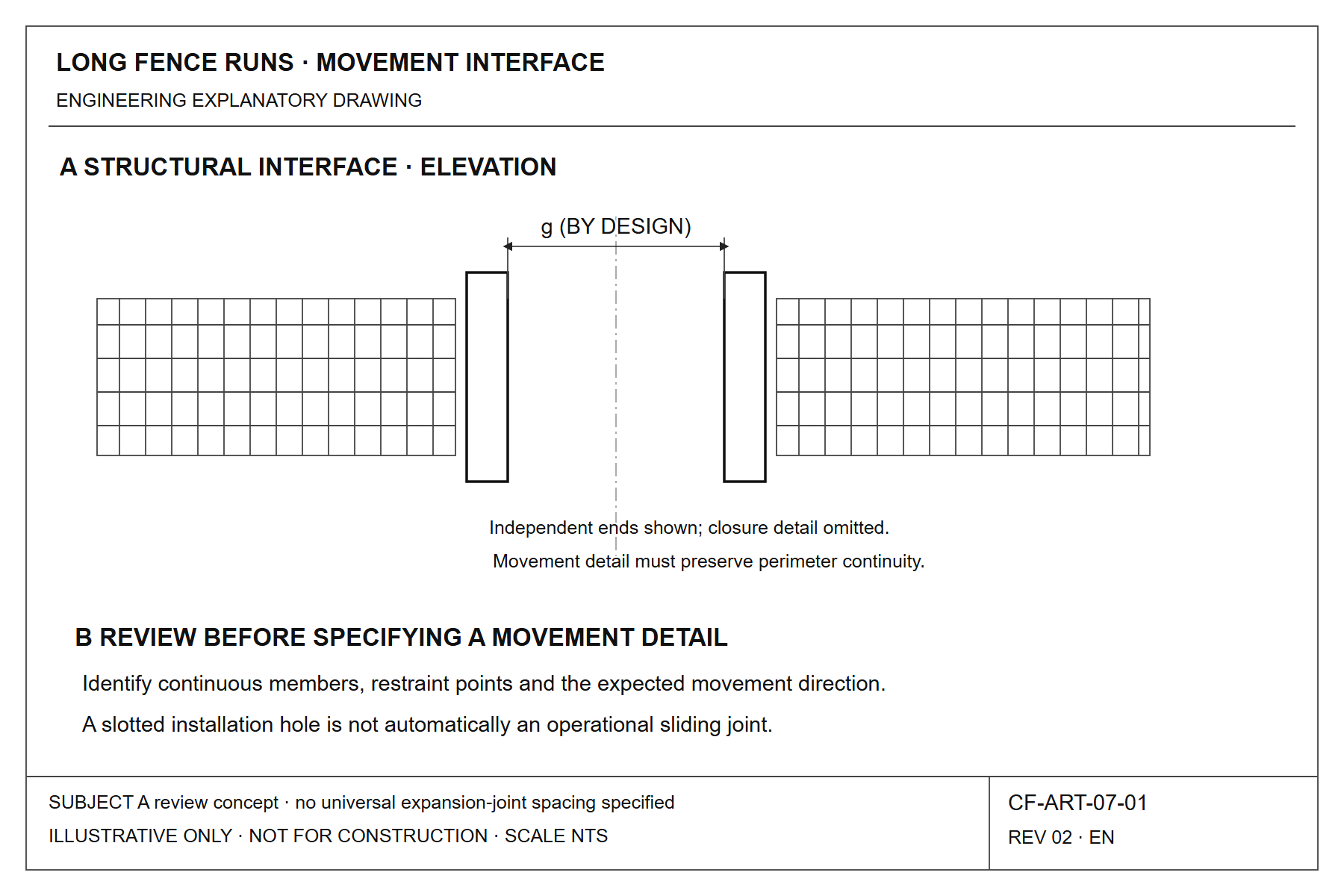
Figure 2. Conceptual independent fence ends at a structural interface. The closure detail is omitted; this is not a universal joint requirement or a construction detail.
Distinguish settlement and structural interfaces from thermal movement
Transitions between backfill and undisturbed ground, separate retaining-wall sections and locations near bridges or culverts may experience different ground movements. These locations deserve individual review even where temperature changes are modest.
Where fencing crosses an existing structural movement joint, establish whether a rigid panel or continuous rail is permitted to connect both sides. If load-carrying members need to be separated, a closure detail that accommodates the required movement must also preserve perimeter continuity. Independent end posts, overlaps or dedicated details must suit the structural interface. Loosening ordinary clamps is not a substitute for a designed arrangement.
Installation allowance in a slotted hole is not service movement capacity
A slotted fixing hole may be provided only to assist positioning. Once the connection is tightened, the contact surfaces may be clamped against sliding in the intended direction. The remaining space in the slot may also be insufficient for structural movement.
If the design relies on sliding at a connection, define the movement direction, fixed points, sliding points and travel limits, and check the panel edges and continuity of protection. Do not omit bolts, reduce the clamping area or leave nuts loose merely to obtain movement.
Review changes in the layout and supporting structures
Review long straight runs, corners, gate areas and building connections separately. Gate posts carry different actions from ordinary line posts, and attachment points on a building may move differently from fencing supported by the ground.
Mark the locations requiring review on the site plan and connection schedule, then coordinate them with the civil and structural designers. A trial assembly can check constructability, while maintenance inspections should look for connection deformation, fastener condition and unusual panel bending.
Ask CommandFence to configure materials around confirmed details
Providing CommandFence with the fence layout, the form of continuous members and the locations where movement must be considered helps coordinate panel segmentation, end posts, connection accessories and surface treatment. Special connections can be detailed separately for confirmation before production.
For projects with a large total fence length, resolve the relationships between bays and between the fence and adjoining structures before totalling standard materials. This supports efficient installation and helps avoid leaving every interface problem to the site team.