
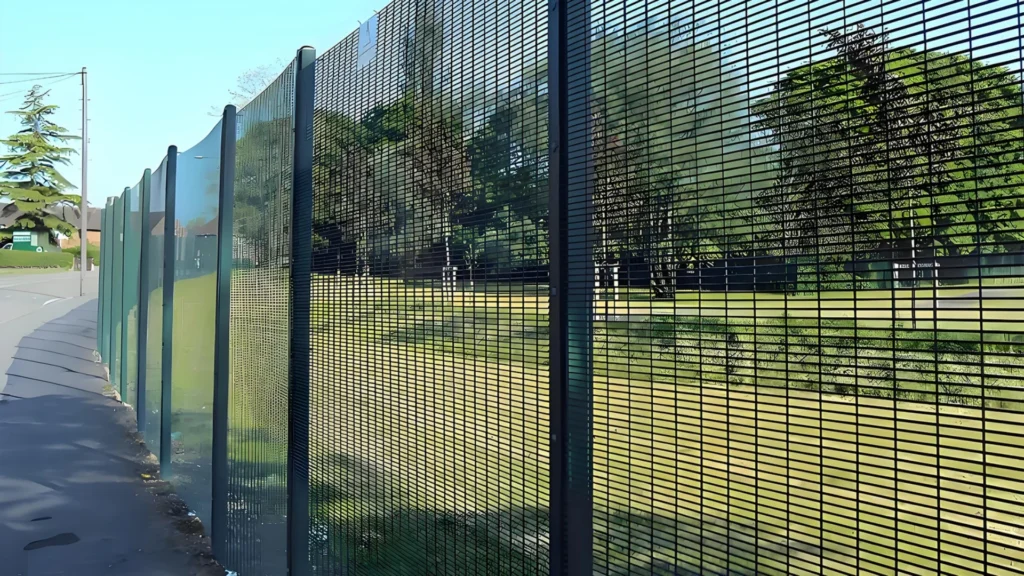
When purchasing fencing, it is easy to compare panel height, wire diameter and price per metre. In service, however, rust at welds, blistering on posts or early corrosion of fittings can lead to repair costs that outweigh the initial price difference. For industrial parks, ports, energy facilities and long-term outdoor perimeter projects, corrosion protection deserves attention during product selection.
The long-term condition of a fence depends on its materials, fabrication, surface treatment and installation details. Salt spray testing can reveal surface weaknesses that are difficult to notice in routine visual checks, moving corrosion-protection assessment beyond appearance towards testing under defined, documented conditions.
Check Corrosion Protection Before Delivery
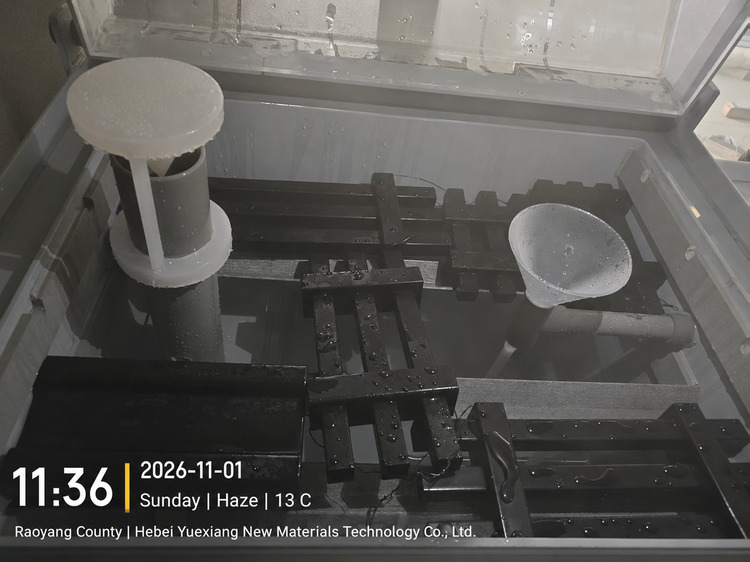
Salt spray testing exposes metal materials and their protective layers to a specified salt-fog environment. For coated metal components, inspection should consider more than visible rust. Blistering, coating detachment and corrosion spreading from edges or local defects also deserve attention.
The photographs show metal components of different shapes inside the test chamber. The moist conditions and visible fabrication details offer a practical view of corrosion-protection assessment for fencing. Looking at the actual fabricated components, rather than only the colour of a finished product, is closer to the questions engineering buyers need to resolve.
|
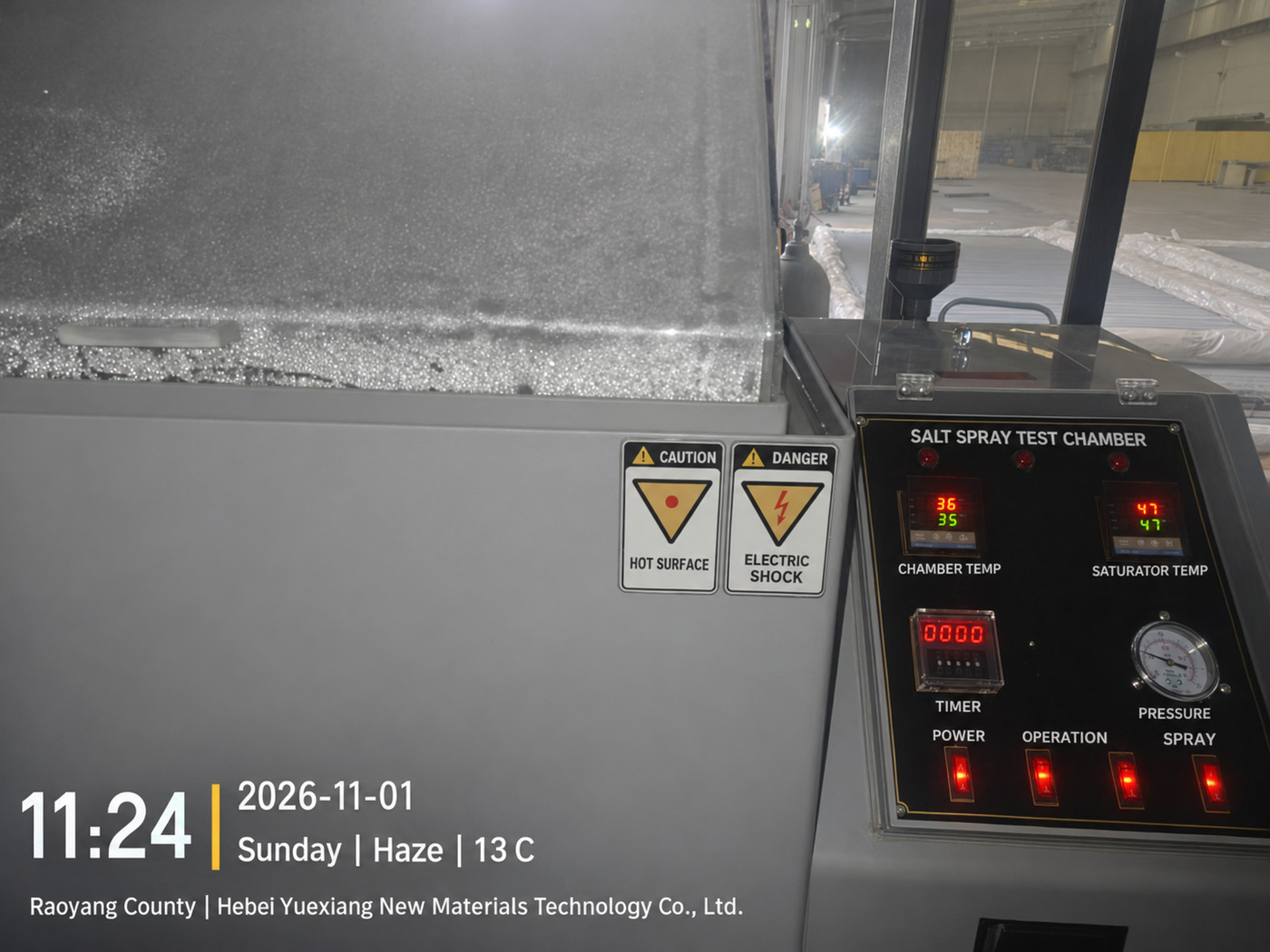
See the Salt Spray Test Chamber in Operation
The site video shows the control panel, droplets on the transparent chamber lid and the equipment in operation. Together with the photographs, it helps explain the equipment arrangement and observation process. The focus should be on how test conditions and observations are recorded, rather than assigning a corrosion-protection rating from a display reading at one moment.
For project buyers, this type of assessment provides another opportunity to identify problems before supply. Linking each specimen to its surface treatment and evaluation requirements helps reveal weak points in manufacturing and provides a basis for process review and delivery discussions.
Pay Attention to Every Weld and Hole Edge
A fence is not a flat steel sheet. Mesh panels contain many welded intersections; posts require cutting and drilling; brackets, base plates and gate frames involve bending, welding and assembly. Components that look similar may have different local protection conditions because of their manufacturing sequence.
Where components are fabricated before hot-dip galvanizing, the galvanizing process needs to suit the geometry of the finished parts. Where pre-galvanized material is fabricated afterwards, attention is needed at the processed areas and at the interface between any subsequent coating and the substrate. A corrosion-protection specification should therefore describe more than a colour or the name of a finish.
|
Connections between panels and posts are equally important. Clamps, bolts, nuts and gate fittings form part of the perimeter system. If attention is limited to the panels while the materials and finishes of fittings are overlooked, those smaller parts may become recurring maintenance points.
Explore galvanizing choices and duplex corrosion protection for engineering fencing
Match the Protection System to the Project Environment
Coastal sites need to account for salt deposition and moisture. Industrial parks require consideration of the actual contaminants and maintenance conditions. Public facilities also need to balance appearance, frequency of use and ease of future repairs. The same fence structure may require different surface treatments in different environments.
Galvanizing and organic coatings can provide different protective functions. Where a zinc layer is combined with powder coating, pretreatment, coverage and curing quality need to suit the materials and process. Adding another surface treatment does not remove the need for sound fabrication at welds, hole edges and connection points.
This is why fencing should be selected as a system. Panels, posts, fittings and gates should be reviewed together so that the protection arrangement suits the project environment. Alongside the initial quotation, procurement comparisons should consider how easily the installed system can be inspected, repaired and replaced.
Read about corrosion-resistant 358 fencing for coastal projects
Use Documented Inspections to Support Clearer Quality Discussions
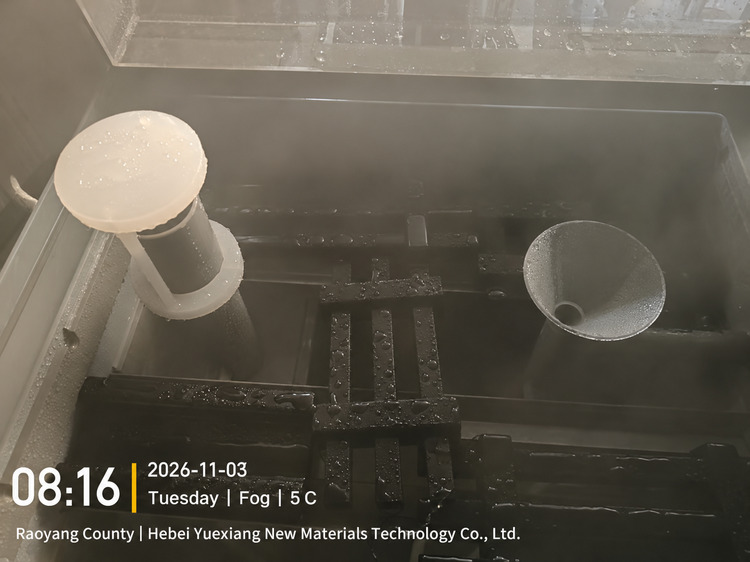
Photographs of the same component at different observation stages can help track local surface changes. Retaining images alongside specimen identification, test conditions and evaluation records gives the customer and manufacturer a shared basis for discussion, rather than relying on a general statement that the surface looks normal.
|
Salt spray testing should be used alongside checks of metallic or organic coating thickness, adhesion, dimensions and appearance. It shows performance under the specified test conditions and cannot be directly converted into years of outdoor service. For an engineering project, the useful starting point is to define the product requirements, then select inspection methods that can verify them.
Quality control also extends through packaging, transport and installation. Handling damage, on-site cutting and drilling can change local surface conditions. Post-delivery inspection and repair arrangements should therefore connect with the corrosion-protection approach established during manufacturing.
Configure a CommandFence System Around Your Project Requirements
CommandFence, Hebei Kemande Metal Product Co., Ltd., supplies welded mesh fencing, 358 anti-climb fencing, chain-link fencing, posts, fittings and complementary gates. For engineering procurement, we can review suitable manufacturing routes against customer drawings, steel and wire specifications, surface-treatment requirements and non-standard component designs.
Whether the project calls for hot-dip galvanizing after fabrication or pre-galvanized material combined with powder coating, our focus is the compatibility of the complete fence system. Panel and post specifications, connection methods, colour and corrosion-protection requirements should work together to suit the intended application.
If you are sourcing fencing for an industrial park, port, energy facility or public site, send your project drawings, fence height and length, mesh opening and wire diameter, post requirements, surface treatment and delivery location. CommandFence can use this information to review the proposed configuration and prepare a quotation, helping clarify the product, process and procurement requirements before an order is placed.




Leave a Reply