
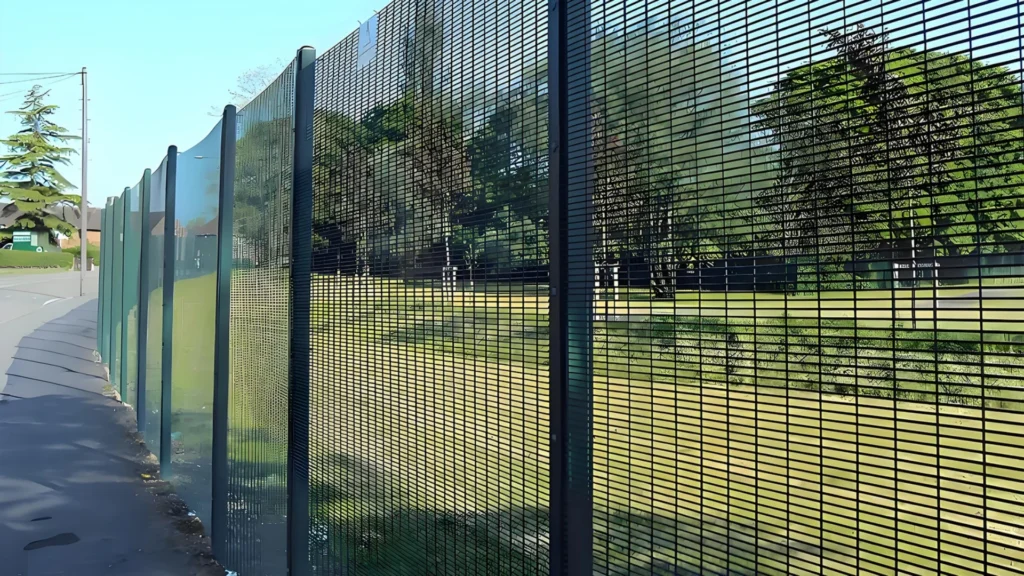
PV power station perimeter fencing serves as essential infrastructure for boundary isolation, anti-intrusion security and asset protection. Faced with global diversified terrain, climate corrosion and regional certification codes, a matrix-based selection approach is adopted.
It well optimizes fencing solutions by integrating site conditions, security grade, anti-corrosion specification, meteorological adaptability, international compliance, prefabricated installation and project budget. This guideline delivers professional, standardized fencing selection references for global PV projects.
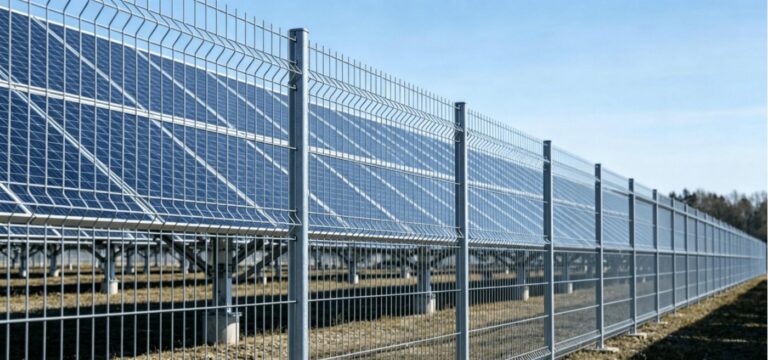
1、Site Conditions & Terrain Adaptability
Terrain & Landform
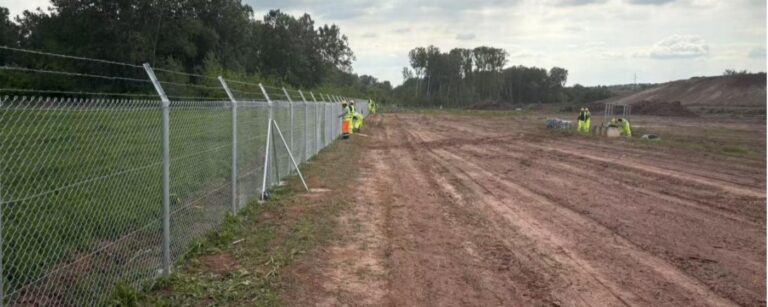
Mountain sites adopt flexible slope-adaptable chain link fence. Low-lying and waterside areas prioritize corrosion resistance and anti-climbing performance.
Enhanced Protection for Key Zones
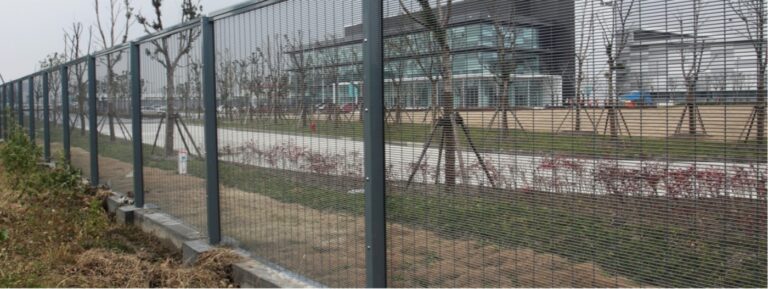
Besides overall perimeter fence, high-security 358 welded mesh fence is recommended for power distribution, box transformer and energy storage zones.
Foundation Conditions
Select appropriate fence foundation type according to different geological conditions. Common installation methods include screw pile foundation, independent column foundation and strip foundation.
2、Considerations for Protective Function Requirements
Anti-Intrusion & Security
Anti-Trespass Protection: Adopt 3D curved welded mesh fence with height ≥2.0m, equipped with single cantilever arm + barbed wire or double cantilever arm + barbed wire + razor coil for anti-climbing performance.
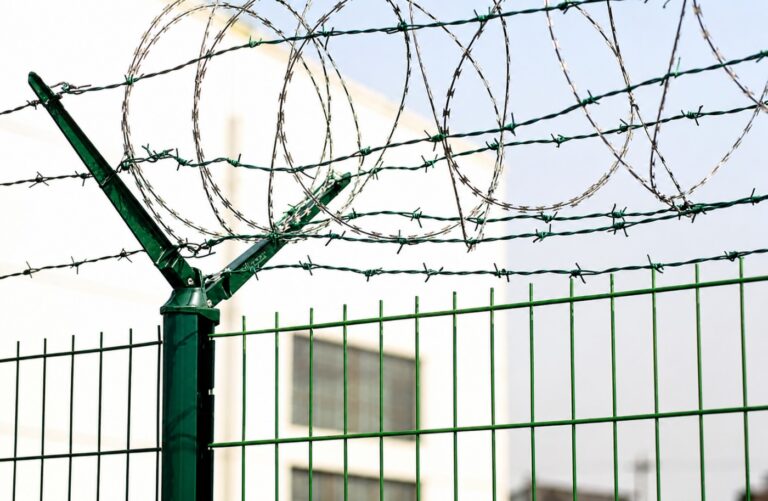
Livestock & Wildlife Intrusion Prevention: Adopt dense mesh and reinforced posts for pastoral and mountainous areas.
Anti-Theft Protection: For critical protection zones, adopt high-strength 358 welded wire mesh fence with superior anti-theft performance.
Zoning & Partition
The entire PV site requires zoned management to separate public areas from operational zones, including maintenance passages, equipment zones and PV array zones.
For areas adjacent to roads and villages: install warning signs and anti-collision structures; comply with insulation protection requirements for high-voltage equipment zones.
3、Material & Anti-Corrosion Selection
PV projects operate in open-air conditions with intense sunlight, rain erosion, large temperature differences and long sunshine hours. Anti-corrosion performance is a core factor for fencing; you may select the most suitable option according to your specific application environment.
TPYE 1 :Hot-dip galvanized material, zinc coating≥275g/m2,适suitable for environmental grade C2 and below;
TPYE 2 :Hot-dip galvanized material, zinc coating ≥500g/m², suitable for environmental grades C2–C3;
TPYE 3 :Hot-dip galvanized material, zinc coating ≥610g/m², suitable for environmental grades C4–C5;
TPYE 4 :Hot-dip galvanized + PVC/PE organic coating, zinc coating ≥120g/m², coating thickness ≥80μm, suitable for environmental grades C1–C3;
TPYE 5 :Hot-dip galvanized + PVC/PE organic coating, zinc coating ≥275g/m², coating thickness ≥80μm, suitable for environmental grades C4–C5;
4、Meteorological & Environmental Adaptation
Wind Load Considerations: Adopt ventilated mesh panels (to reduce wind resistance), reinforced posts with closer spacing, and diagonal braces for stability.
Temperature & Humidity: For frigid regions: use low-temperature resistant materials with anti-brittle welds; for high-temperature and intense sunlight areas: use UV-stabilized coatings with anti-aging and color-fast properties.
Sand, Wind, Rain & Snow: In sandy areas, avoid overly small mesh openings to prevent sand accumulation; in snow-prone areas, ensure structural load capacity meets standards with designs that prevent snow buildup and blockages.
5. Standards, Compliance & Project Specifications
5.1、Applicable Standards in China
GB 50797-2012 (2024 Edition)
Design Standard for Photovoltaic Power Station
A fence is recommended for the PV array area, and steel wire guardrail mesh can be adopted; the solid wall of the booster station / switch station shall be ≥2.2m high.
GB/T 35694-2025 Safety Code for Photovoltaic Power Station (Effective 2026-04-01)
The PV area must be enclosed by a solid fence with a height ≥1.8m, and lockable swing gates shall be installed at the entrances and exits.
High voltage warning signs and No climbing signs shall be installed mandatorily.
GB/T 26941.1-2011 Guardrail fences – Part 1: General specifications
Hot-dip galvanized coating ≥85μm, plastic coating ≥1.0mm;
Impact resistance: No deformation under a transverse force of 100kg.
5.2、European Union (EU) + United Kingdom (UK)
EN 13537-1: Anti-climb fence (mesh opening ≤75mm, anti-cutting)
EN 10245: Welded mesh / steel wire (Q235 / galvanized, wire diameter ≥3.0mm)
EN 60335-2-76: Electric fence (CE marked, energy ≤5J)
BS 1722-14: High security fence (anti-cut, anti-climb, recommended height 2.4m)
5.3 North America (USA & Canada)
ASTM A123: Hot-dip galvanizing (zinc coating ≥85μm, 20-year outdoor performance)
ASTM F1166:ASTM F1166: Welded mesh fence (wire diameter ≥3.0mm, mesh opening 75×150mm)
ASTM A392: Hot-dip galvanized chain-link fence
ASTM F668: Double-coated chain-link fence
5.4、Australia / New Zealand (AS/NZS)
AS/NZS 60335.2.76: Electric fence (energy ≤5J, EMC compliant)
AS 2423: Welded mesh fence (wire diameter ≥3.0mm, corrosion protection ≥85μm)
NZS 3407: Fence installation (wind-resistant, earthquake-resistant)
Height: ≥1.8m, ≥2.0m in remote areas
5.5 Middle East / Saudi Arabia / UAE (SASO/ESMA)
SASO 2925: Welded mesh fence (material Q235, galvanized ≥85μm)
ESMA 5001: Electric fence safety (energy ≤5J)
Sand / corrosion resistance: C5-M environment (salt spray ≥1500h)
Height: ≥2.0m (anti-climb, anti-intrusion)
5.6 Southeast Asia (BS)
BS 1722-14 (Southeast Asia reference): Security fence
Height: ≥1.5m (agri-PV projects) / ≥1.8m (power stations)
6.Installation, Operation & Maintenance, and Construction Schedule
Modular and prefabricated structural design to improve installation efficiency, facilitate transportation, and simplify later maintenance and replacement.
Damage resistance: Install crash posts and use thicker pipes in areas prone to collisions with O&M vehicles and construction machinery.





Leave a Reply