Railway infrastructure continues to expand worldwide as high-speed rail lines, integrated transport hubs, and station renovation projects move forward. Fencing may account for only a small part of the overall project, but it directly affects personnel separation, equipment-area management, and long-term maintenance.
For many high-speed railway station applications, 3D welded mesh fencing provides a practical balance between structural stability, installation efficiency, visibility, and long-term maintenance. From an engineering perspective, two questions matter most: whether the fence can form a stable and reliable complete system, and whether it can continue to perform outdoors with manageable maintenance requirements over its service life.
1. Railway Fencing Should Be Considered as a Complete System, Not Just a Mesh Panel
When purchasing 3D welded mesh fencing, buyers often focus first on wire diameter, mesh aperture, and panel height. These parameters are important, but the stability of a complete fence is not determined by the mesh panel alone. A complete system normally includes mesh panels, posts, connectors, anti-tamper bolts, foundations, and gates, and these components should be considered together.
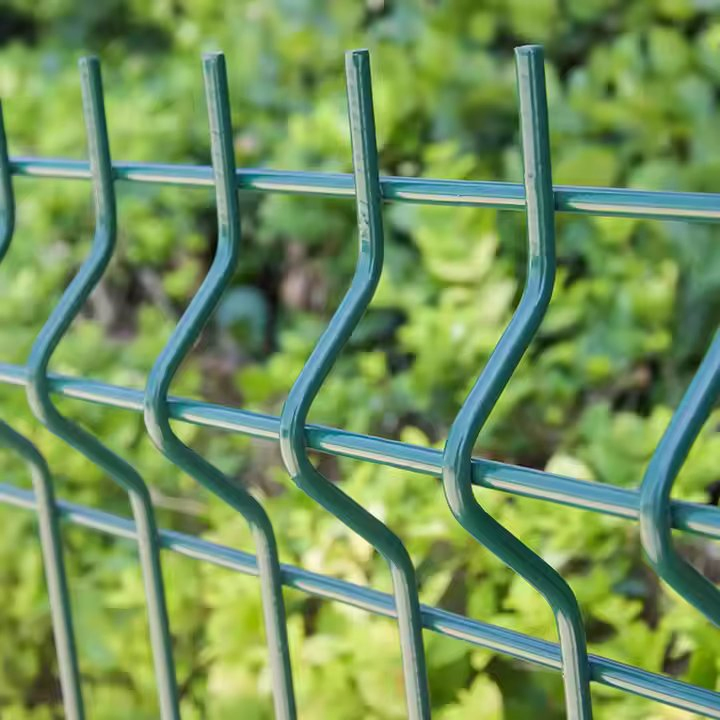
One of the main differences between 3D welded mesh and ordinary flat welded mesh is the V-shaped reinforcement bends formed in the panel. These bends act like reinforcing ribs and increase panel stiffness. For taller fences, insufficient panel rigidity can lead to deformation or movement during transport, installation, and long-term use. Railway fencing projects can extend for hundreds or even thousands of meters, so panel stability directly affects the alignment and overall performance of the entire fence line.
Figure 1 | V-shaped reinforcement detail of a 3D welded mesh panel.
Connection Details and Foundation Conditions Matter
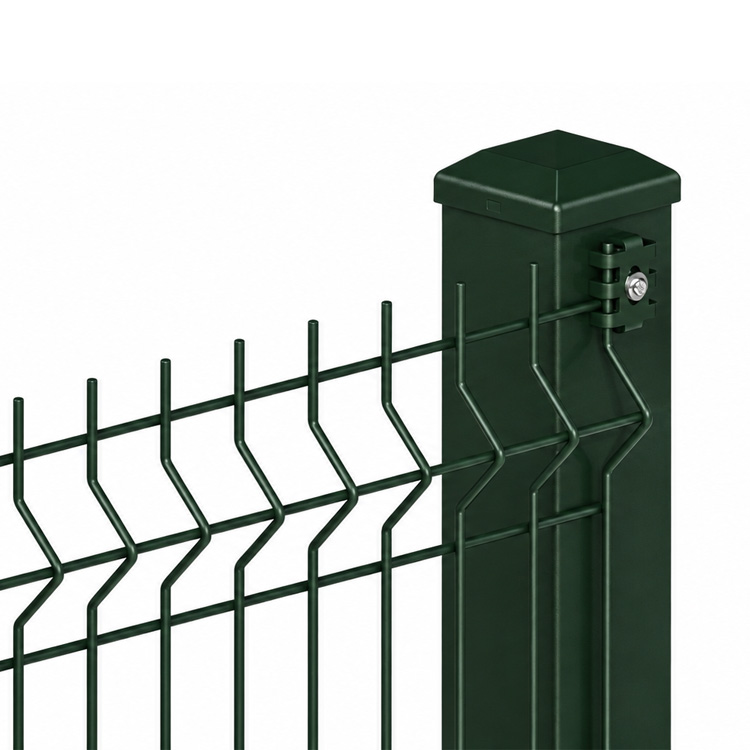
A strong panel alone does not guarantee a stable fencing system. In real projects, problems are often more likely to occur at the connection points between the mesh panels and posts. If there are too few connectors, the fasteners are easy to remove, or the post section and spacing are unsuitable, the fence can still loosen over time even when relatively heavy wire is used.
Before production, the project team should confirm the post specification, post center-to-center spacing, number of fixing points per panel, connector type, and anti-tamper fastening method. This system-level approach is also discussed in CommandFence’s article on fence-post and connection-system design.
Figure 2 | Connection detail between a welded mesh panel and fence post.
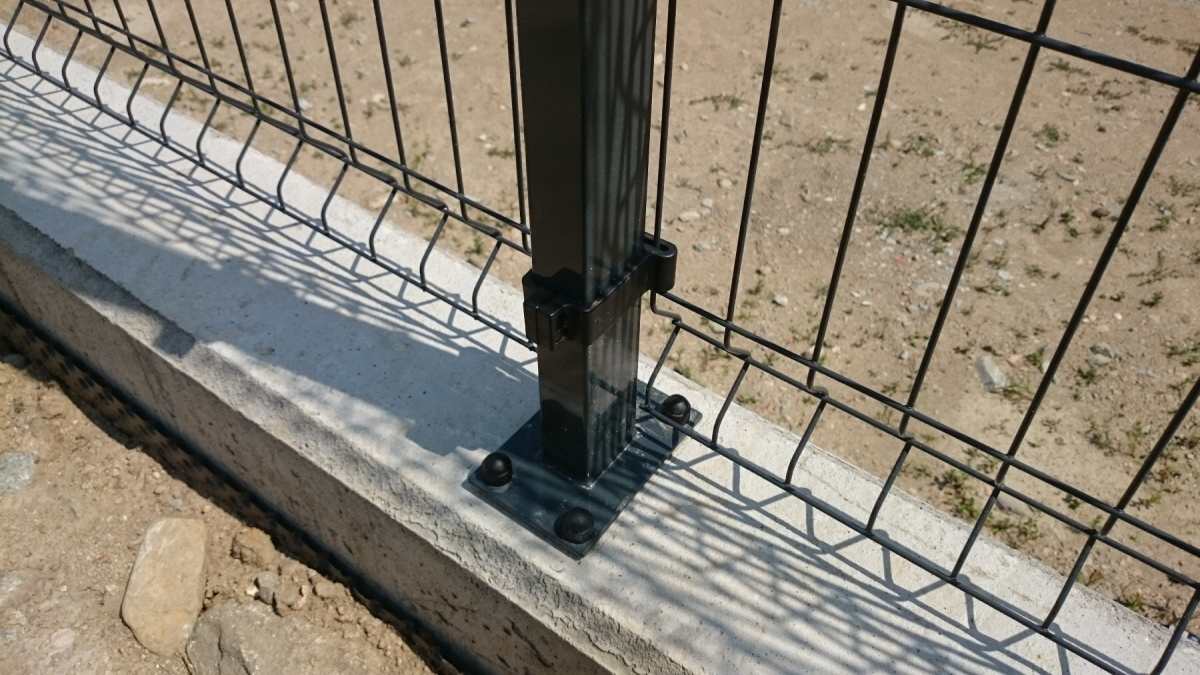
The foundation is another part of the system that is often underestimated. Posts can be embedded directly into concrete foundations, or they can be installed on existing concrete slabs, retaining walls, or other structures using base plates and anchor bolts. Each installation method requires different post lengths, foundation dimensions, and structural considerations.
For embedded posts, the project should consider embedment depth, foundation dimensions, site soil conditions, and finished levels. For base-plated posts, the condition of the existing concrete and the anchor-bolt arrangement should be verified. For long fence runs, it is more practical to determine the site foundation conditions, installation method, and post spacing before production, and then finalize the panel dimensions, rather than modifying large quantities of finished panels on site.
Figure 3 | Base plate and anchor-bolt fixing on a concrete foundation.
Visibility and Security Balance for Railway Facilities
High-speed railway stations often need to provide separation without unnecessarily blocking visibility. Equipment areas, staff passages, maintenance zones, and certain restricted areas may need to work together with CCTV, lighting, and access-control systems. Welded mesh fencing maintains good sight lines and avoids the large visual obstruction created by solid walls, making it practical for many medium-security separation areas.
However, 3D welded mesh fencing is not suitable for every railway security zone. Where a higher level of intrusion resistance and stronger anti-climb performance is required, the project may need 358 anti-climb fencing or another higher-security system. A more practical engineering approach is to select fencing by security zone rather than using one fence type throughout the entire station.
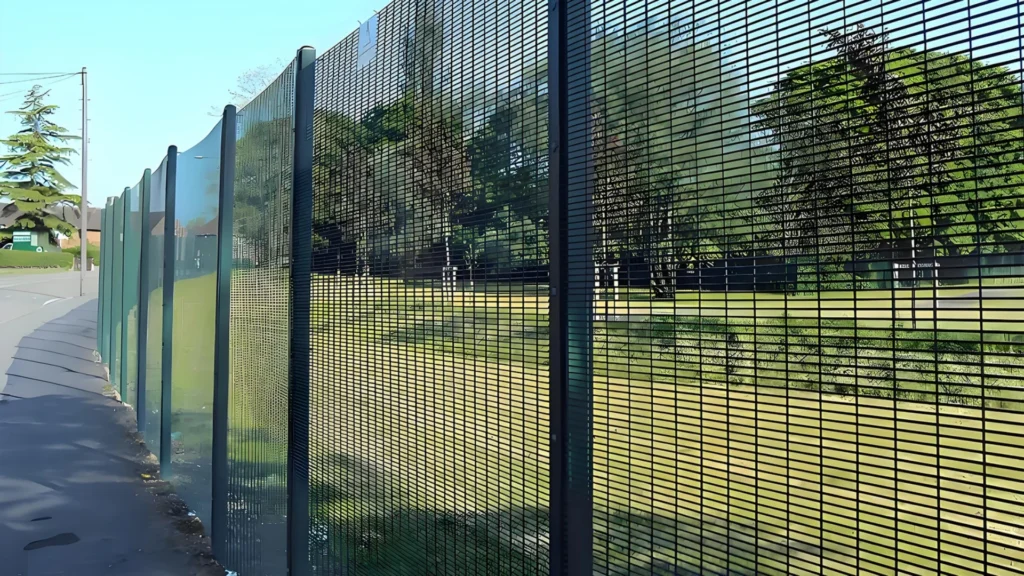
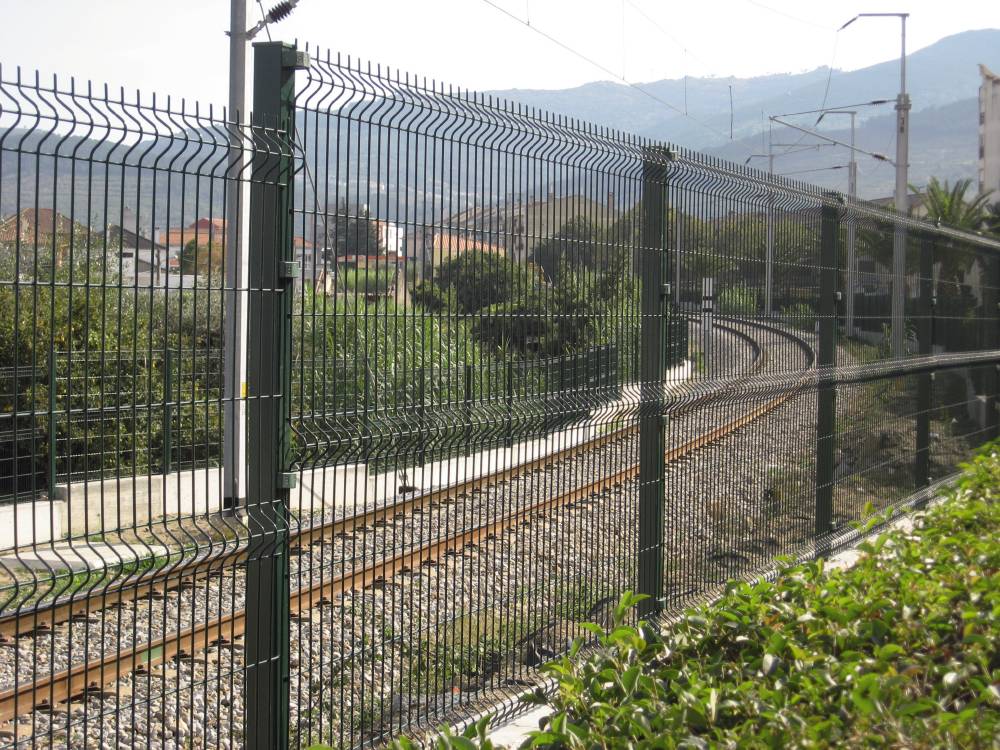
Figure 4 | Railway-side 3D welded mesh fencing installation.
2. Corrosion Protection and Long-Term Maintenance Drive Lifecycle Cost
Completing the installation does not mean the project is finished. For long-term operating facilities such as high-speed railway stations, a more important question is whether the fence can remain in good condition five, ten, or more years later.
Railway fencing is continuously exposed to rain, humidity, temperature changes, dust, and corrosive factors in the atmosphere. Corrosion can become more severe in coastal, high-humidity, or industrially polluted environments. For this reason, fence procurement should not compare only wire weight and price per meter; the surface-treatment system is also an important engineering parameter.
Common 3D welded mesh fencing can use hot-dip galvanizing, galvanizing followed by powder coating, or higher-grade corrosion-protection systems when the environment requires them. The zinc layer protects the steel, while an external coating can provide color and add another barrier between the steel and the environment. Inland and coastal environments do not necessarily require the same corrosion-protection configuration, so the technical requirement should be defined early in the project.
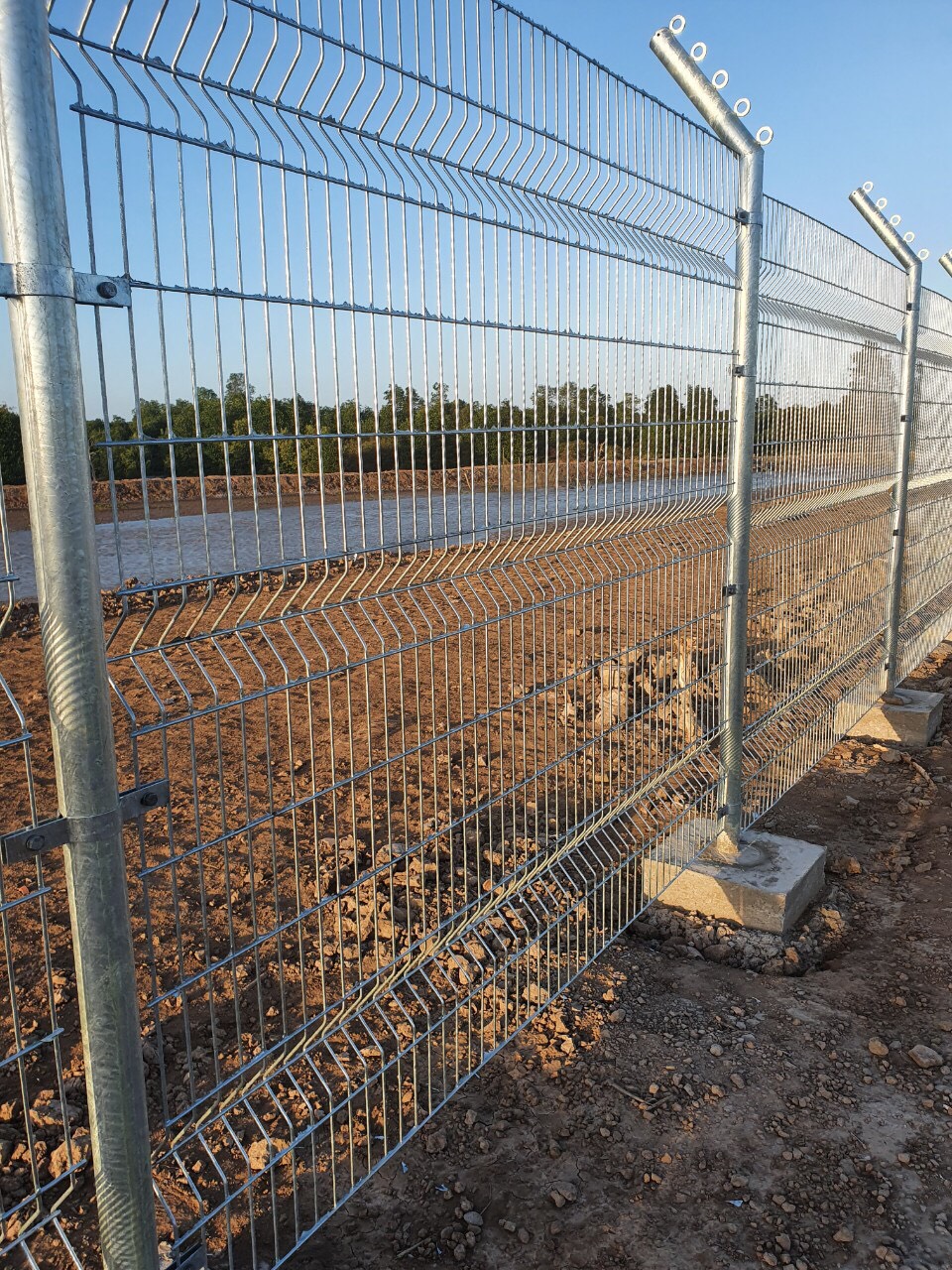
Figure 5 | Outdoor galvanized and coated welded mesh fencing.
Corrosion protection should also be evaluated across the whole fence system rather than only on the mesh surface. Welds, cut edges, post-weld areas, base plates, connectors, and bolts all need compatible protection. A highly protected mesh panel will not deliver the intended service life if the connection hardware begins to corrode much earlier.
From a maintenance perspective, the standardized combination of panels, posts, and connectors used in 3D welded mesh fencing also provides an advantage. If a panel or post is damaged years later by a vehicle, construction equipment, or another external impact, the damaged component can normally be replaced locally without removing a large section of the fence.
For an operating railway station, this matters because maintenance cost includes more than the price of a replacement panel. Labor, equipment, work-zone closure, traffic organization, and disruption to normal station operations all contribute to lifecycle cost. A modular system that limits the repair area can therefore reduce long-term maintenance impact.
Railway Fencing Should Ultimately Be Evaluated as a Complete System
Why is 3D welded mesh fencing frequently used at high-speed railway stations? Not because it delivers the highest level of performance in every category, but because it can provide a practical balance of panel rigidity, installation efficiency, visibility, corrosion protection, and maintainability in many general separation and management areas.
Once a project enters the detailed selection stage, the question is no longer simply whether to use a 3D fence. The project should define the fence height, wire diameter, aperture size, number of V-bends, panel width, post section, post spacing, connection method, anti-tamper requirements, foundation type, and surface-treatment level.
These parameters should be determined from the project drawings, site environment, installation conditions, and required security level rather than by comparing only one product parameter or the price per meter.
CommandFence Project Support
CommandFence can supply 3D welded mesh fencing, posts, connectors, gates, and related components for high-speed railway stations, railway yards, maintenance areas, rolling-stock facilities, and other railway infrastructure projects.
If project drawings are available, the fence length, height, foundation condition, surface-treatment requirements, and site environment can be reviewed together so that the panel, post, connection, gate, and installation system can be configured around the actual project conditions.







Leave a Reply