
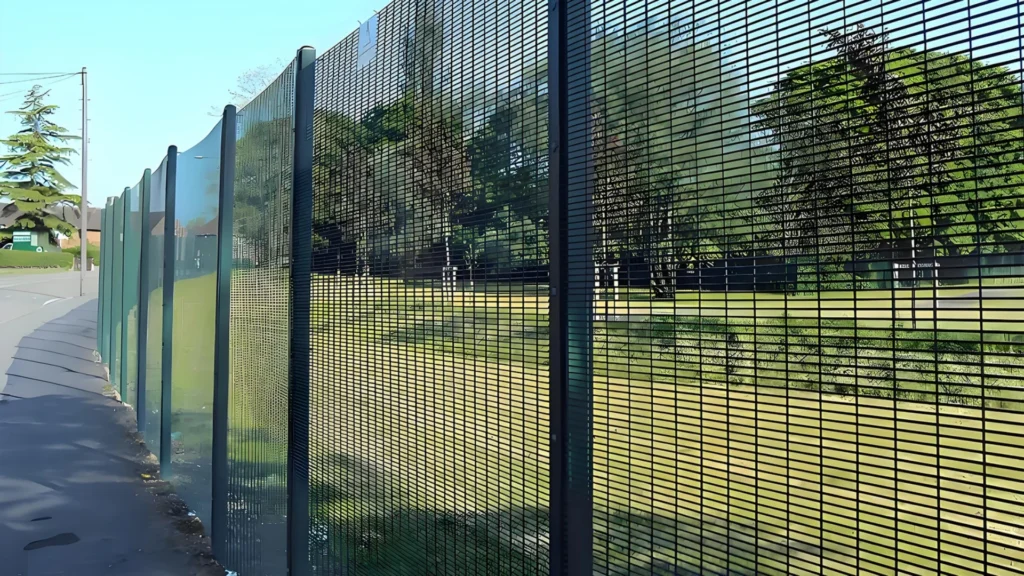
International zinc prices and supply conditions have once again drawn attention. For the steel fencing industry, zinc-market movements are not a distant metals-market issue, because the galvanized coating itself is an important part of fence cost. When a project moves from a standard galvanized requirement to a heavier zinc coating, both material consumption and production control can change noticeably.
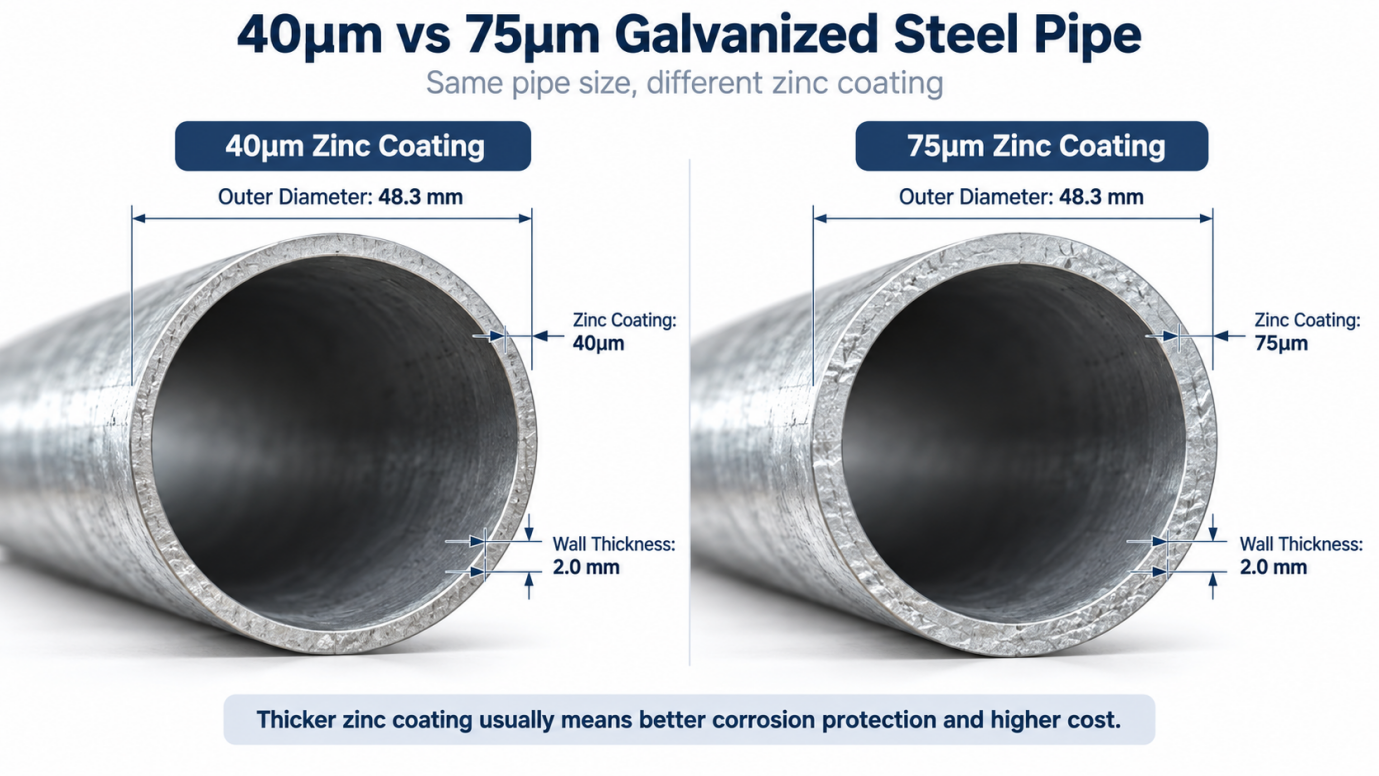
In real quotations, we often see a situation that seems counterintuitive: a 75μm galvanized fence may look less smooth than a 40μm fence, yet it costs more. For engineering procurement, the reason can be understood from two main angles.
|
1. 40μm and 75μm Represent Different Corrosion-Protection Requirements
When buyers inspect a galvanized fence, appearance is usually the first thing they notice: brightness, flatness and visible zinc texture. These are useful visual cues, but for engineering projects they tell only part of the story.
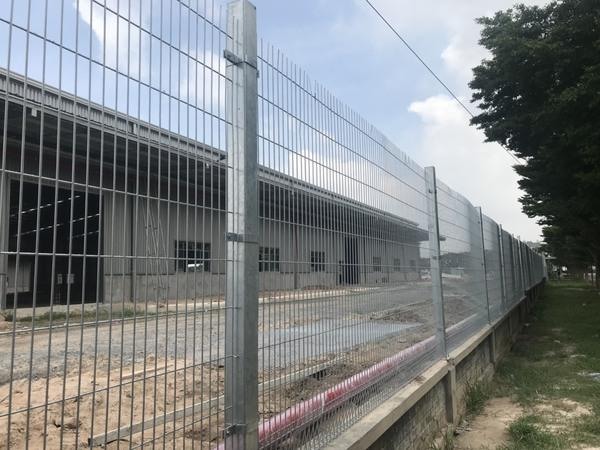
A zinc coating around 40μm can look relatively uniform, tidy and smooth when the process is well controlled. For projects in moderately corrosive environments with ordinary service-life requirements, this level may already be appropriate.
A 75μm requirement starts from a different objective. Its main purpose is not to make the fence look more polished, but to increase the protective zinc layer on the steel. As the coating becomes heavier, the zinc pattern around wires, welds, edges and other complex areas can become more visible. Some products may show more pronounced spangle, zinc-flow marks or slight surface unevenness.
So in practice, a 40μm product can look smoother while a 75μm product looks visually “heavier.” That does not mean the 40μm product provides better protection.
For fences intended for long-term outdoor use—especially infrastructure, industrial, transport and energy projects, high-humidity locations, or other corrosive environments—the key questions are whether the zinc coating meets the requirement and how the protection will perform over time. Surface smoothness and corrosion-protection level are not the same metric. In severe industrial or coastal conditions, related experience from chemical and LNG perimeter fencing is often more relevant than appearance alone.
|
2. The Extra Cost of 75μm Is More Than “Just a Little More Zinc”
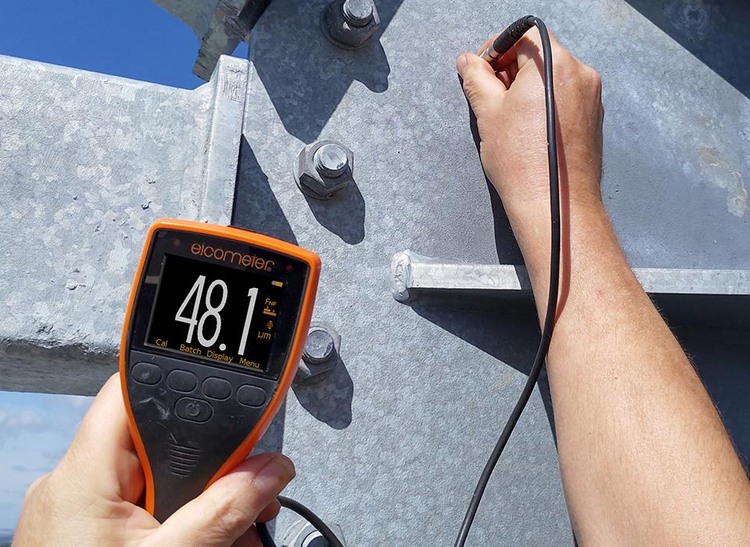
Numerically, moving from 40μm to 75μm is an increase of 35μm. Across a real fence project, however, the cost effect is more complicated.
The first factor is additional zinc consumption. A fence is not a small steel plate; it includes large quantities of wire, welds, posts, rails and fittings. When a project extends for several kilometres or even tens of kilometres, each increase in coating thickness becomes real material consumption. When zinc prices rise, products with heavier zinc coatings are therefore affected more strongly.
But zinc itself is only one part of the cost. A heavier coating usually requires tighter control of pretreatment and galvanizing conditions. Steel surface condition, pickling, fluxing, steel chemistry, immersion time, temperature and post-galvanizing treatment can all influence the final coating.
If the project requires a stable 75μm coating, the solution is not simply to leave the steel in the zinc bath for longer. The factory must control the full process so that different areas stay within the required range while also limiting excessive zinc build-up, zinc runs, lumps and other issues that could interfere with installation or use. This adds process-control and quality-control cost.
|
3. Steel Specifications Can Change the Price Just as Much as the Zinc Coating
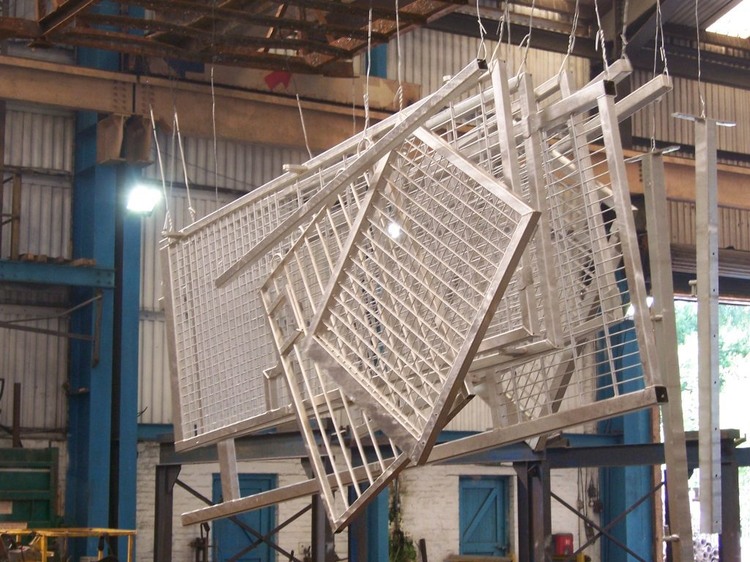
Another factor that is often overlooked is the steel itself. Two galvanized fences that look very similar may differ in price for reasons that have little to do with coating thickness. A 0.2mm change in wire diameter, a different post wall thickness, different steel weight, or a different welded structure can materially change the cost per square metre.
That is why a low quotation should not be evaluated only by asking, “What is your galvanizing thickness?” Procurement should also check the actual wire diameter, post wall thickness, steel weight per square metre, whether the product is galvanized before or after welding, and whether the requirement refers to an average coating thickness or a local minimum. These details often explain price differences better than product photos.
4. A Common Misunderstanding: A Smoother Surface Means Better Galvanizing
This is an easy procurement mistake. Appearance matters, especially for retail products, but an engineering fence is primarily a steel structure that may remain outdoors for years. If procurement focuses on a perfectly smooth surface while ignoring steel weight and zinc-coating requirements, the product may look excellent on delivery but show the real difference only after years of exposure.
The opposite is also true: a thicker zinc coating is not automatically the right choice for every project. If the environment is mild, the budget is limited and the design life is moderate, 40μm may be the more reasonable option. There is no benefit in paying for a higher number that the project does not actually need.
A sound engineering procurement approach starts with the project environment and the required corrosion-protection level, then selects the steel specification and surface treatment accordingly—not the other way around.
5. What Buyers Should Compare Before Choosing a Supplier
When comparing quotations from two fence suppliers, at minimum the wire diameter, mesh size, post specification, actual steel weight, galvanizing requirement, and any additional powder coating or PVC coating should be aligned first. Only when these basic conditions are equivalent are the prices genuinely comparable.
There is no absolute winner between 40μm and 75μm. One represents a balance between cost and standard corrosion protection, while the other is better suited to long-term outdoor service and higher corrosion-protection requirements. The correct choice depends on project location, service-life target, maintenance conditions and overall budget.
For fencing projects, purchase price is only one part of total cost. If a lower initial price leads a few years later to rust removal, repainting, fence replacement or renewed site work, the original saving can quickly be offset by maintenance cost. That is why for larger engineering projects, the use environment and technical requirements should be confirmed before deciding the zinc-coating thickness.
|
Project-Level Selection Matters More Than a Single Number
CommandFence can configure different steel specifications, galvanizing levels and galvanized-plus-powder-coated solutions according to project location, fence type, design service life and budget. The aim is to match corrosion protection to the real operating environment rather than simply quote a price per square metre.
If you are preparing a fence-project inquiry, project drawings, technical requirements, quantities and installation location can be reviewed together so that steel specifications and corrosion-protection levels are aligned before the quotation is compared. Visit CommandFence for project-level fencing support.






Leave a Reply