
|
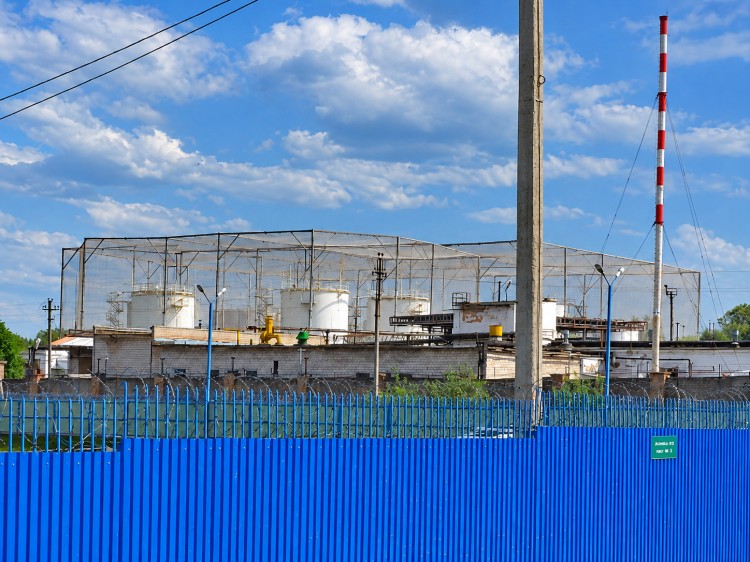
In recent years, low-altitude security risks associated with drones have drawn increasing attention. From airports and energy facilities to industrial parks and other critical public infrastructure, incidents involving accidental entry, unauthorized flights, and even malicious intrusion have become more frequent. In September 2026, Brussels Airport temporarily suspended operations on part of its runway after a drone was detected; at the same time, European authorities have continued to strengthen drone-protection measures for critical infrastructure. For many engineering projects, adding a stable, continuous, and cost-controlled layer of physical protection beyond the existing security system has therefore become an increasingly practical consideration.
Anti-drone protection nets are one physical protection method that has gained attention in this context. They are not intended to replace radar, electronic jamming, or other counter-drone systems. Instead, steel wire rope mesh, metal mesh, and supporting structures are used to create a physical barrier around or above the area that needs protection. For substations, oil and gas facilities, warehouses, critical equipment zones, military sites, and other high-security areas, the main advantage of this approach is that the structure is relatively straightforward, can remain in place for long-term use, and does not completely lose its protective function if an electronic system fails. From an engineering perspective, however, the effectiveness of a drone-protection net depends on more than simply whether “a net” is present. Two questions are especially important.
1. The First Question: Can the Net Actually Stop a Drone After Impact?
When people first look at an anti-drone net, they often focus on mesh size. In real engineering applications, however, mesh size is only one parameter. What ultimately determines performance is whether the entire system can absorb and distribute energy when it is subjected to a high-speed impact.
The load produced when a drone strikes a protection net is dynamic and is not the same as the wind load or human push load normally considered for a conventional fence. If the net is too rigid and lacks sufficient cushioning capacity, impact forces may concentrate at a single connection point, causing wire failure, detached fittings, or damage to the supporting posts. If the net is too flexible, excessive deformation may allow the drone to continue into the protected area. The design therefore needs to consider wire-rope diameter, mesh opening, net tension, material strength, and the allowable deformation of the overall structure rather than simply selecting a thicker wire or smaller opening.
 |
|
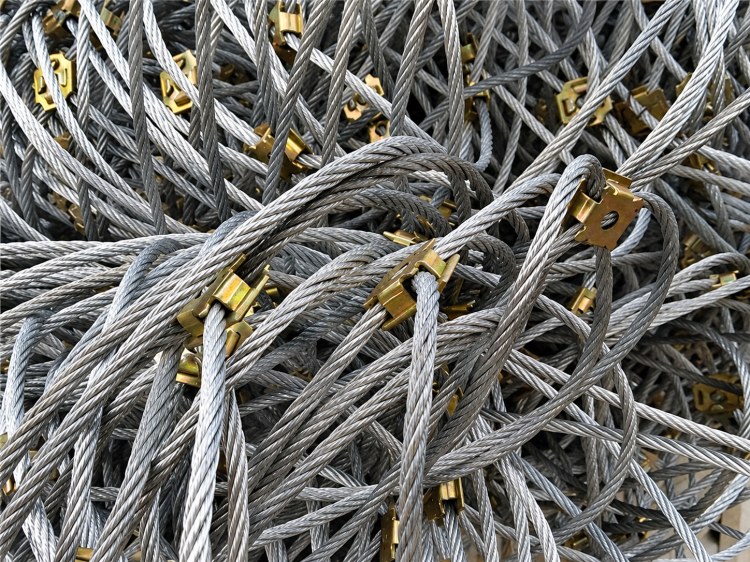
Steel wire rope mesh: flexible wire ropes and connection nodes |
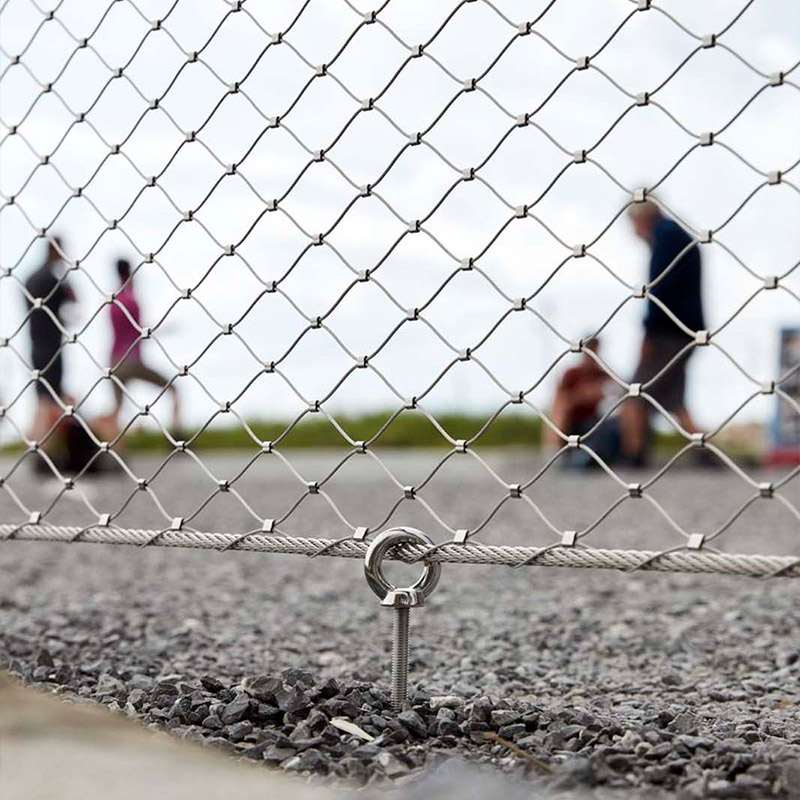
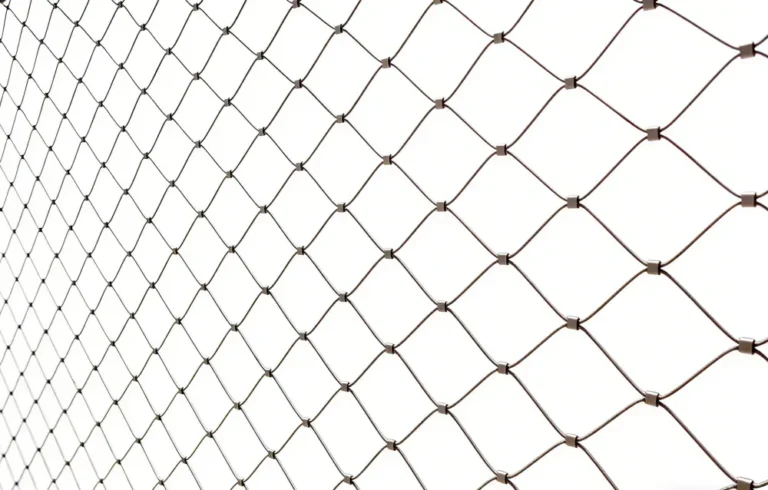
One advantage of steel wire rope mesh in this type of application is its controlled flexibility. When a drone strikes the mesh surface, the impact can be transferred through the wire ropes to multiple surrounding openings and fixing points, reducing the instantaneous load at any single point. For larger protection areas, perimeter cables, intermediate supports, posts, and anchoring systems also need to be arranged so that the net and the main supporting structure work together. Simply stretching a strong steel net between several posts does not mean the complete system has sufficient impact resistance.
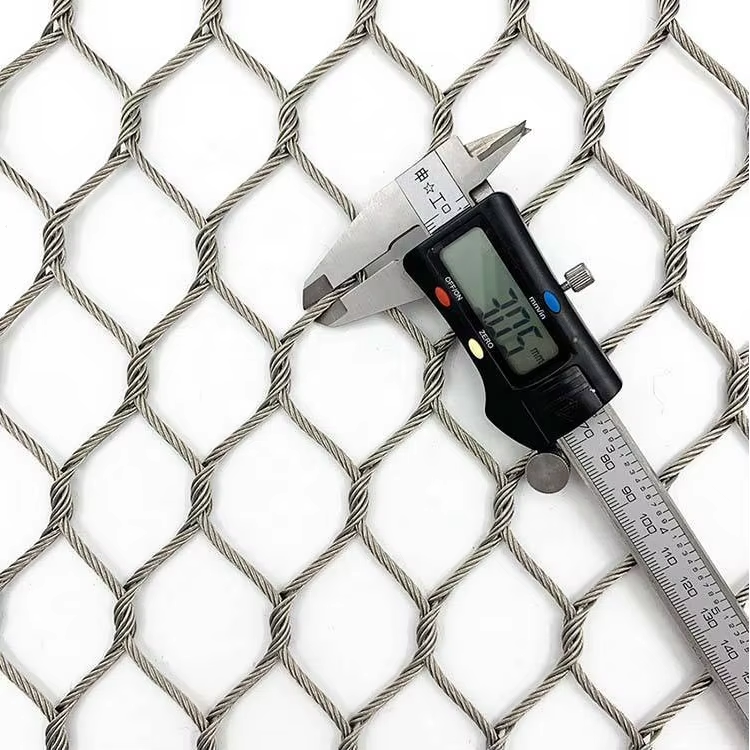
Mesh opening should also be selected according to the actual project requirements. Smaller drones generally require smaller openings, but reducing the opening also increases material weight, wind load, and overall cost. A practical design therefore needs to balance drone size, required protection level, installation span, and structural load. The engineering objective is not to maximize every material specification, but to keep the complete system stable, reliable, and economically reasonable while meeting the required level of protection.
|
2. The Second Question: Can the System Remain Stable Over the Long Term?
Anti-drone protection nets are normally not installed for only a few months. They are expected to remain outdoors for long periods. In many projects, the problem is not that the steel wire rope itself lacks strength, but that connectors, anchoring points, or support structures gradually corrode or loosen after long-term exposure to wind, rain, salt spray, and temperature changes.
A complete drone-protection system therefore needs to consider more than the net body. Posts, structural steel, perimeter cables, connectors, tensioning devices, and foundations all need to be assessed together. In coastal, high-humidity, industrially polluted, or high-salinity environments, corrosion protection is particularly important. Stainless steel, hot-dip galvanizing, or other suitable anti-corrosion systems should be selected for the wire ropes, connectors, and support structure according to the operating environment so that premature failure of one small component does not compromise the whole system.
|
Large-area protection nets are also exposed to wind load over long periods. Where the protected area is extensive, or where the system includes overhead coverage, the continuous tensile force generated by wind is transmitted through the net to the posts and foundations. The design stage therefore needs to account for net dimensions, installation height, support spacing, local wind speed, and foundation conditions. Some projects focus only on wire-rope specification while overlooking post and foundation design. If posts later tilt, cables become slack, or the net surface deforms, the underlying problem is often not the net itself but the fact that the complete structural system was not designed as an engineering system.
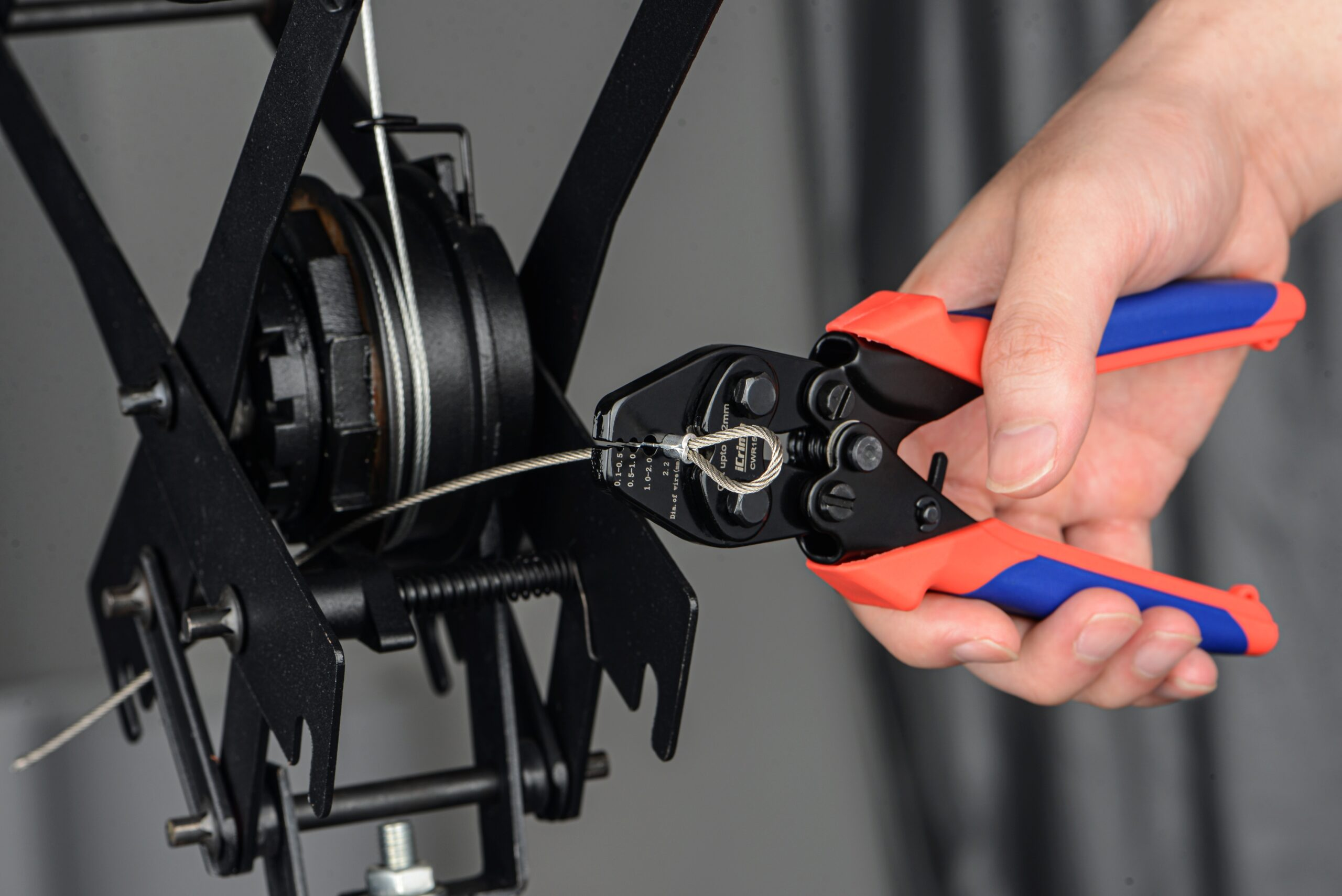
Maintenance should also be considered from the beginning. Tensioning devices should be accessible for adjustment, locally damaged wire rope should be replaceable where practical, connectors should be easy to inspect, and access openings may need to be reserved for equipment maintenance or vehicle movement. For large industrial and infrastructure projects, long-term maintainability can be just as important as the initial material strength.
|
Conclusion
As drone use becomes more widespread, critical facilities are facing increasing low-altitude security risks. Electronic detection, jamming, and monitoring systems can help identify and respond to drones, while steel wire rope protection nets can serve as a final physical barrier within a layered security system. For a real engineering project, the reliability of an anti-drone protection net should not be judged only by wire diameter or mesh opening. Impact resistance and long-term structural stability need to be evaluated together.
COMMAND can configure anti-drone protection net solutions according to the protection area, installation method, span, mesh opening, wire-rope specification, and environmental conditions of a project, together with matching connectors, support structures, and installation arrangements. For industrial facilities, energy facilities, warehouses, and other sites that require low-altitude physical protection, the system should be designed around the actual site dimensions, structural conditions, and protection requirements before the final specification is confirmed.
If you are planning an anti-drone protection net project, you can provide the project dimensions, installation-area photographs, structural drawings, and basic protection requirements. We can then help determine a more appropriate mesh opening, wire-rope specification, support method, and overall system configuration.
For broader perimeter-system planning, you can also visit CommandFence.
Image note: all images used in this article come from the existing material library and project/product photographs. No AI-generated images are used.





Leave a Reply