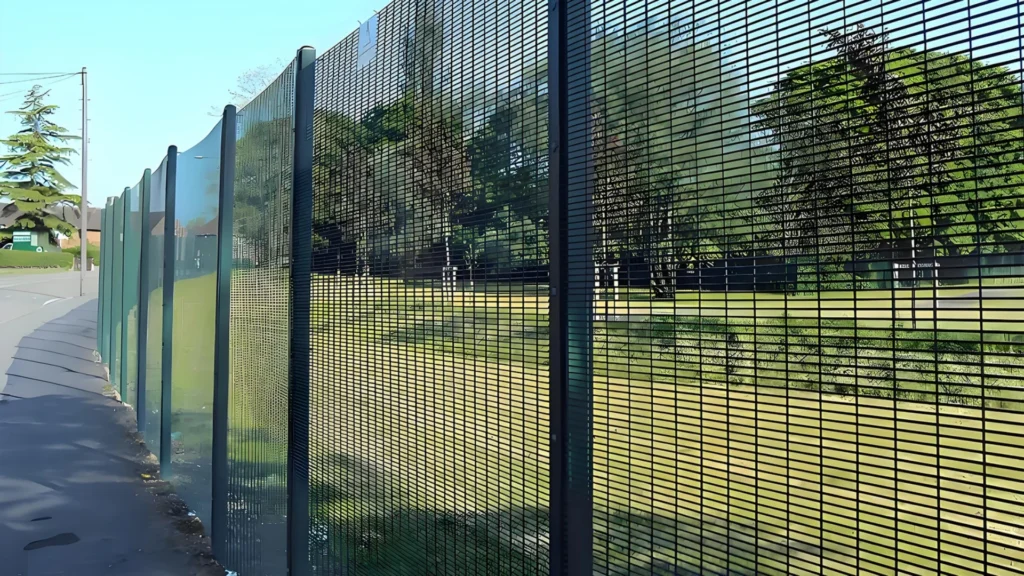
ASTM PVC Coated
Chain Link Fencing

ASTM PVC Coated Chain Link Fencing

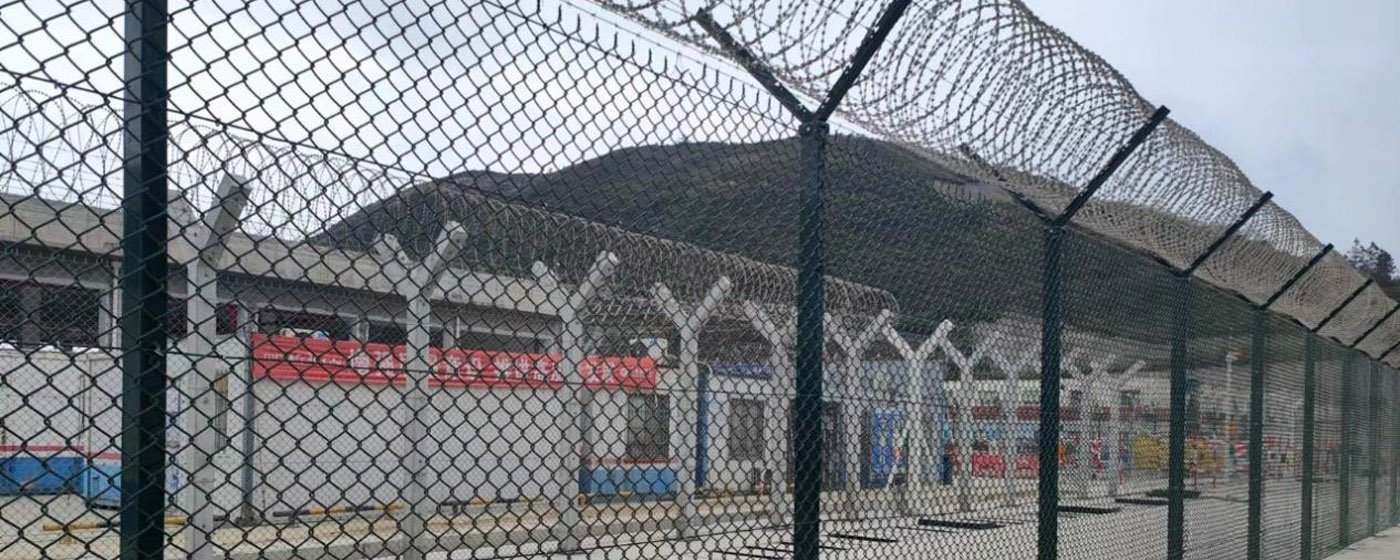
Fencing Overview

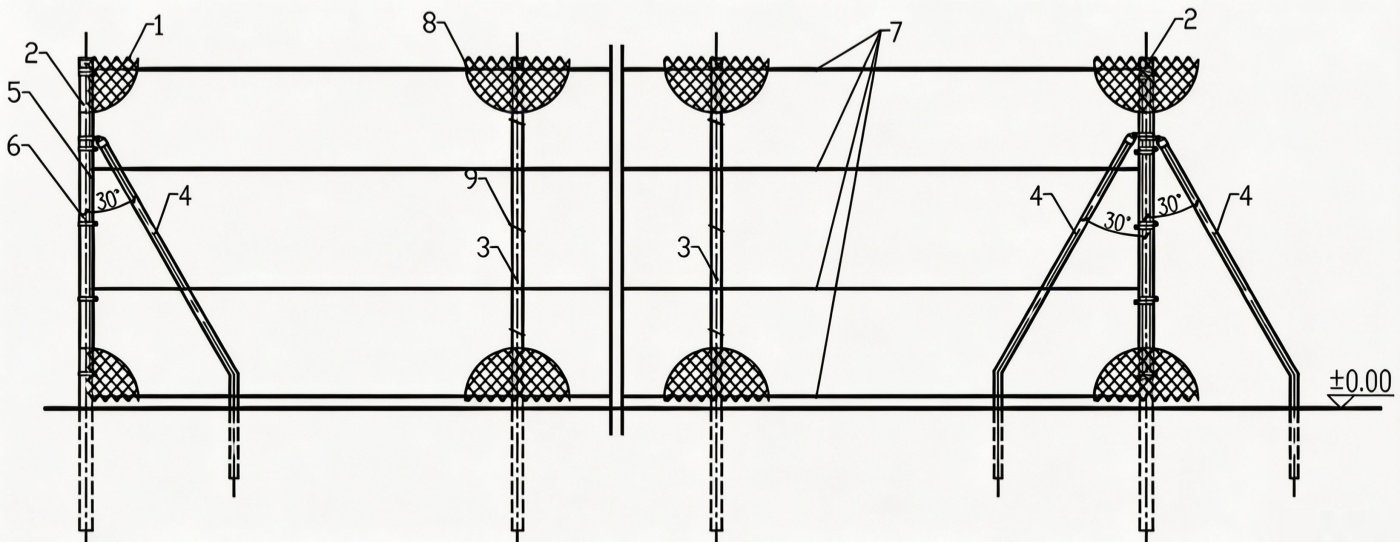
Chain Link Fence Elevation Drawing

Chain Link Fence Elevation Drawing

Connection Assembly

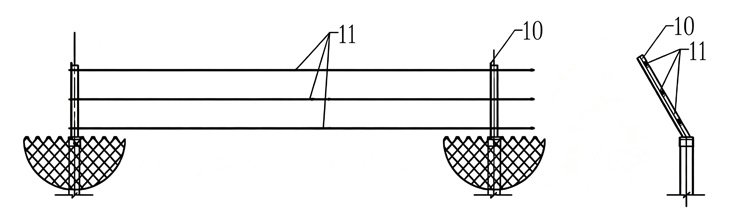
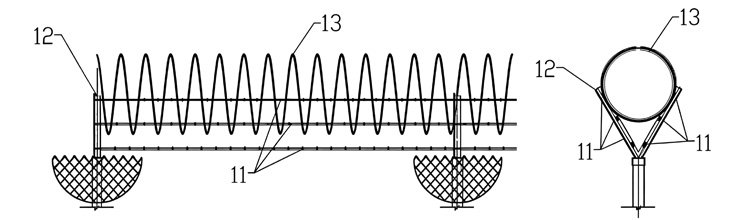
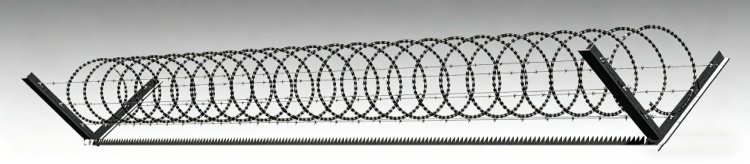
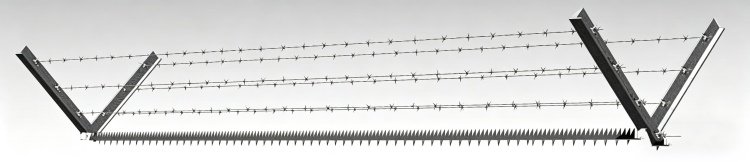
Top Security Detail

Top Security Detail

1 Chain Link
2 Straining Post
3 Intermediate Posts
4 Strut
5 Stretcher Bar
6 Band Clamp
7 Line Wire
8 Stainless Steel Mesh Clip
9 Wire Ties
10 Steel Flat Extension Arm
11 Barbed Wire
12 Steel Flat Extension Arm
13 Concertina Razor Wire

Compliance with

Standard Specification
ASTM F668-17 Standard Specification for Polyvinyl Chloride (PVC), Polyolefin and Other Polymer-Coated Steel Chain Link Fence Fabric
ASTM F1043-18 Standard Specification for Strength and Protective Coatings for Steel Industrial Fence Framework
ASTM F626-14 Standard Specification for Fence Fittings
ASTM A123 Standard Specification for Zinc (Hot-Dip Galvanized) Coatings on Iron and Steel Products
EN ISO 1461 Hot-dip galvanized coatings on fabricated iron and steel articles — Specifications and test methods
EN ISO 12944 Paints and varnishes — Corrosion protection of steel structures by protective paint systems

Chain link panel

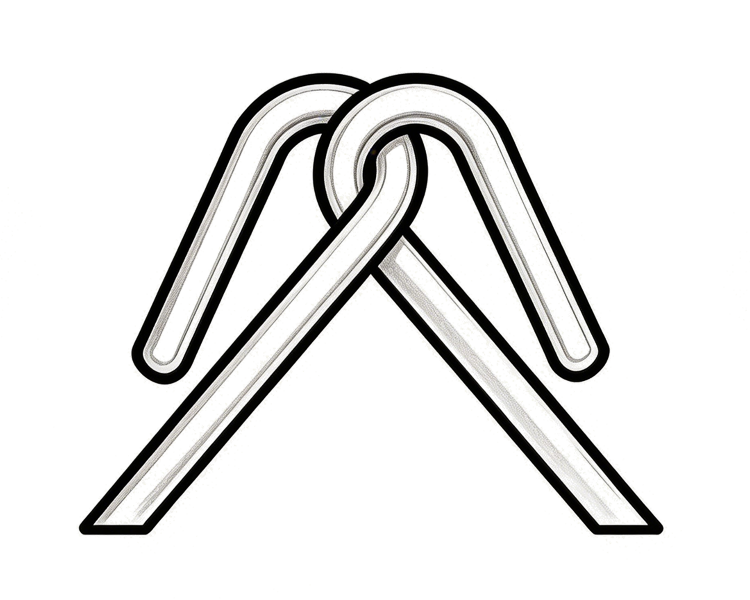
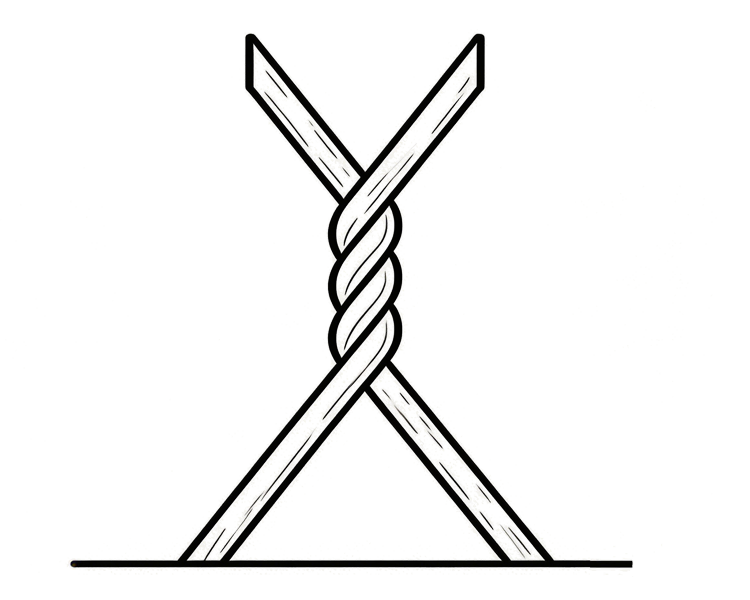
chain-link fence fabric—a fencing material made from steel wire helically wound and interwoven in such a manner as to provide a continuous mesh without knots or ties except in the form of knuckling or of twisting the ends of the wires to form the selvage of the fabric. Variations to knuckled or twisted selvages are permissible.


Class I consists of polymer coatings extruded over zinc-coated, aluminum-coated, or zinc-5 % aluminummischmetal alloy-coated, or zinc-5 % aluminum-mischmetal alloy-coated steel wire.

Class 2a consists of polymer coating extruded and adhered to zinc-coated, aluminum-coated, or zinc-5 % aluminum-mischmetal alloy-coated steel wire.

Class 2b consists of polymer coating fused and adhered to zinc-coated, aluminum-coated, or zinc-5 % aluminum-mischmetal alloy-coated steel wire.

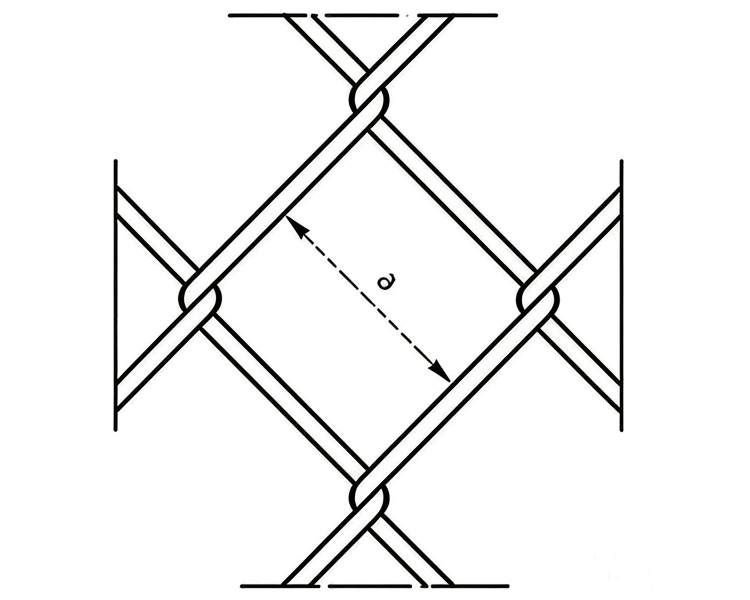
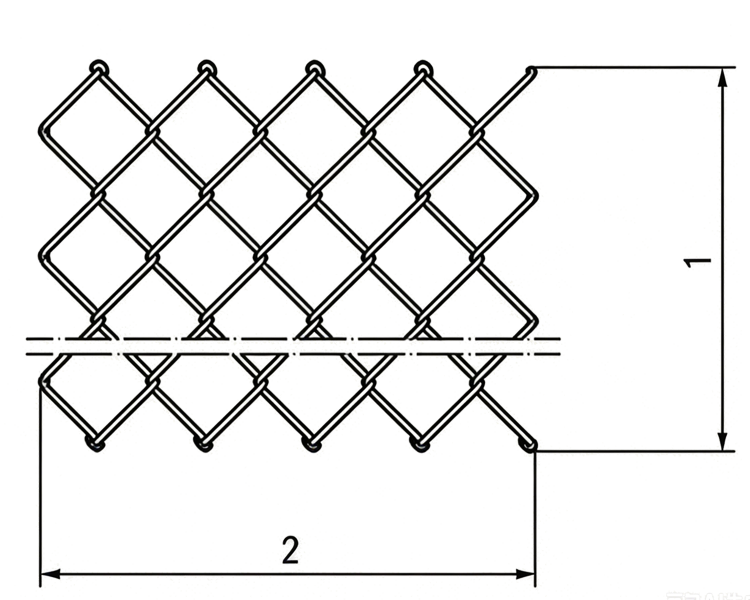
Figure 2 — Chain link fencing Figure 1 — Mesh size Figure 3 — Knuckled ends Figure 4 — Barbed ends
Figure 1 — Mesh size Figure 2 — Chain link fencing Figure 3 — Knuckled ends Figure 4 — Barbed ends
A distance measured at right angles.

1.height

2.length

Available Mesh Sizes,Zinc Coating Weights and Breaking Strength

Specified Diameter Mesh Sizes Zinc Coating Breaking Strength Polymer Coating
0.192 (4.88) 1 3/4 (45), 2 (50) 0.40 (122) 2170 (9650) 0.015–0.025 (0.38–0.64)
0.148 (3.76) 1 3/4 (45), 2 (50) 0.30 (92) 1290 (5740) 0.015–0.025 (0.38–0.64)
0.120 (3.05) 1 3/4 (45), 2 (50) 0.30 (92) 850 (3780) 0.015–0.025 (0.38–0.64)

Typical dimensions for steel posts and struts

Outside Diameter Wall Thickness Yield Strength
Group IA Group IC Schedule 80 psi (MPa) Schedule 40 psi (MPa)
1.660 (42.2) 0.140 (3.56) 0.111 (2.8) 30000 (205) 50000 (344)
1.900 (48.3) 0.145 (3.68) 0.120 (3.0) 30000 (205) 50000 (344)
2.375 (60.3) 0.154 (3.91) 0.130 (3.3) 30000 (205) 50000 (344)
2.875 (73.0) 0.203 (5.16) 0.160 (4.0) 30000 (205) 50000 (344)
3.500 (88.9) 0.216 (5.49) 0.160 (4.0) 30000 (205) 50000 (344)
4.500 (114.3) 0.226 (5.74) 0.226 (5.74) 30000 (205) 50000 (344)

Surface anti-corrosion treatment

Product Type ISO 12944
C1 C2 C3 C4 C5
Steel wire Minimum Weight of Zinc or Zinc-5% Aluminum Mischmetal Alloy Coating, g/m² 122 122 122 122 122
Polymer Coating Process Class I Class I Class I Class 2a Class 2a
Polymer Coating Type PE PE PE/PVC PVC PVC
Thickness of Polymer Coating in. (mm) 0.015 (0.38) – 0.025 (0.64) 0.015 (0.38) – 0.025 (0.64) 0.015 (0.38) – 0.025 (0.64) 0.015 (0.38) – 0.025 (0.64) 0.015 (0.38) – 0.025 (0.64)
Post Minimum Weight of Zinc or Zinc-5% Aluminum Mischmetal Alloy Coating, g/m² 275 g/m² 275 g/m² 275 g/m² 275 g/m² 275 g/m²

Polymer Coating Process Class I Class I Class 2b Class 2b Class 2b
Polymer Coating Type PE PE PVC PVC PVC
Thickness of Polymer Coating in. (mm) 0.003 (0.0076) 0.003 (0.0076) 0.01 (0.254) 0.01 (0.254) 0.01 (0.254)

One-Stop Fencing: Smart Design, Global Std

Engineering grade 2D fence
  1. Drawing Deepening Service: Our professional and highly efficient drawing deepening service has significantly reduced on-site adjustment time and errors.
  2. Custom Fencing Solutions: We offer comprehensive one-stop fencing customization services covering the entire process from design to precise construction.
  3. Material Optimization: We recommend optimal material solutions based on specific usage scenarios, striking a perfect balance between cost, durability, and performance.

Installation Method

Assemble the Post Elbow Fittings
Step 1: Assemble the Post Elbow Fittings
  1. Insert the post into the curved arm base sleeve to a depth of 35 mm.
  2. Secure it on both sides using M5.5 × 20 mm self-drilling countersunk screws.
Step 2:Assemble the Diagonal Bracing Connectors
Step 2: Assemble the Diagonal Bracing Connectors
  1. Insert the diagonal brace into the connector base sleeve.
  2. Secure it on one side using an M5.5 × 20 mm self-drilling countersunk screw.
Step 3:Install End Posts
 
Step 3: Install End Posts
  1. Install diagonal braces aligned with the fence installation axis at a height of 1.4 m above ground level, angled at 30° to the post.
  2. Install additional diagonal braces within the fence boundary, perpendicular to the fence installation axis, also at a height of 1.4 m and at a 30° angle to the post.
Step 4: Install Intermediate Posts

Step 4: Install Intermediate Posts

  • Space intermediate posts at 2.5 m intervals from the end post, and install a total of 19 consecutive intermediate posts (all posts are interchangeable/universal).
Install Intermediate Posts

Step 5: Install Reinforced (Braced) Posts

  1. Along the fence installation axis, install diagonal braces at a height of 1.4 m above ground level (two braces per side, vertically staggered), with one brace on each side of the post, angled at 30° to the post.
  2. Within the fence boundary and perpendicular to the fence installation axis, install diagonal braces at a height of 1.4 m above ground level, also at a 30° angle to the post.
Step 6: Install the tension wire

Secure the tension wire to end and reinforced posts. Secure the tension wire to end and reinforced posts.

Secure the tension wire to intermediate posts. Secure the tension wire to intermediate posts.

Secure the tension wire to end posts using Ø2.0 mm stainless steel tie wire.
Secure the tension wire to reinforced (or braced) posts using Ø2.0 mm stainless steel tie wire.
Step 7: Tension and secure the mesh panel

Offset clamp

Offset clamp

Five offset clamps are evenly spaced along both the end post and the reinforced post, through which the tensioned flat steel strap tightens the mesh panel.
End post
End post
Reinforced post
Reinforced post
The mesh is secured to the tensioned wire using dedicated stainless steel clips

Step 8: The mesh is secured to the tensioned wire using dedicated stainless steel clips

  1. which clamp the chain-link mesh firmly onto the tension wire.
  2. Six clips are evenly spaced across each 2.5-meter section of mesh.
Barbed wire installation

Step 9: Barbed wire installation

  • Each strand of barbed wire shall be seated into the dedicated barbed wire retaining slot in the post head and securely fastened by means of Ø1.0 mm stainless steel lashing wire through the lashing holes located at the base of the retaining slot.

Optional Accessaries

Single-curved arm + barbed wire
Double-curved arm + barbed wire
Dual arm + barbed + razor wire

Applications

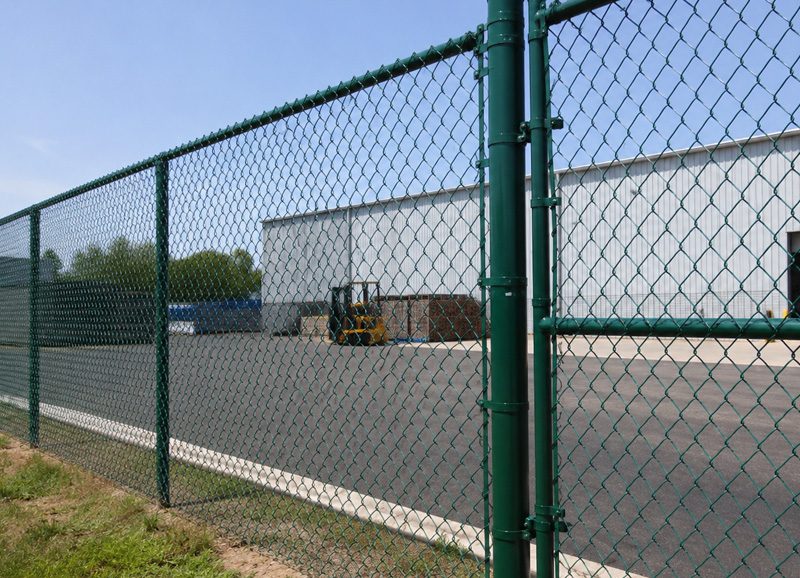
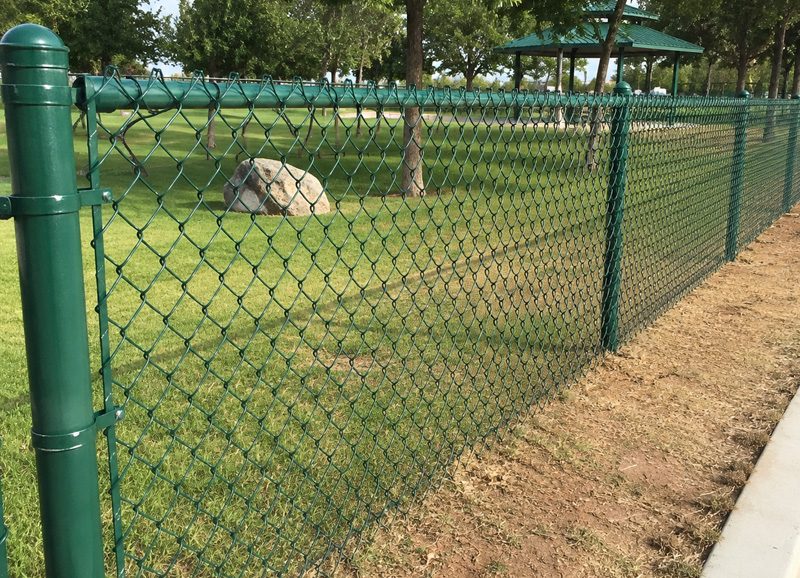
chain-link-fence-application
Commercial-Chain-Link-Fence
EnglishenEnglishEnglish
```html
Email