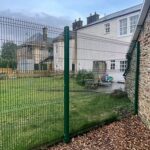
Panels, clamp bars and fixing holes in 358 close-mesh fencing must align. A small positioning error in one bay may go unnoticed during a short trial fit. Repeated along a run, it can make the final bay difficult to close or concentrate adjustments at a corner or gate.
Control starts with product dimensions, site setting out and the adjustment available at each connection. Agree on the acceptance criteria first, then use trial installations and section checks to find deviations before they reach the last bay.
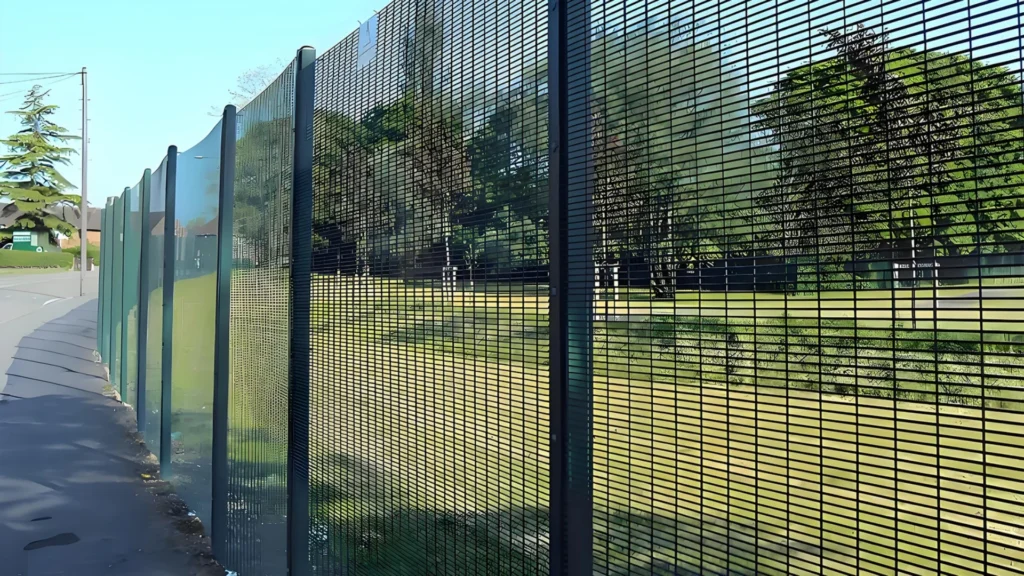
Figure 1. Close-mesh fencing at a UK school. Installation requirements should match the project drawings and fixing system.
Agree on manufacturing tolerances and installation limits separately
Panel dimensions, post sections, hole positions and fitting dimensions are manufacturing controls. Post position, plumb and top elevation are installation controls. The two interact and need separate acceptance criteria.
Specify the applicable standards, drawing requirements, measurement locations and assessment method in the procurement and installation documents. Project-specific limits should only be applied where the approved documents support them.
Set out from control points the crew can verify
Locate posts from approved control points and axes, then verify foundations, corners and gate openings. Measuring each new bay from the preceding post can carry positioning errors along the run.
Check the overall dimension between identifiable control points. Clarify which dimensions are set from those points and which depend on the product connection detail. Record changes to the setting-out datum so different crews work from the same reference.
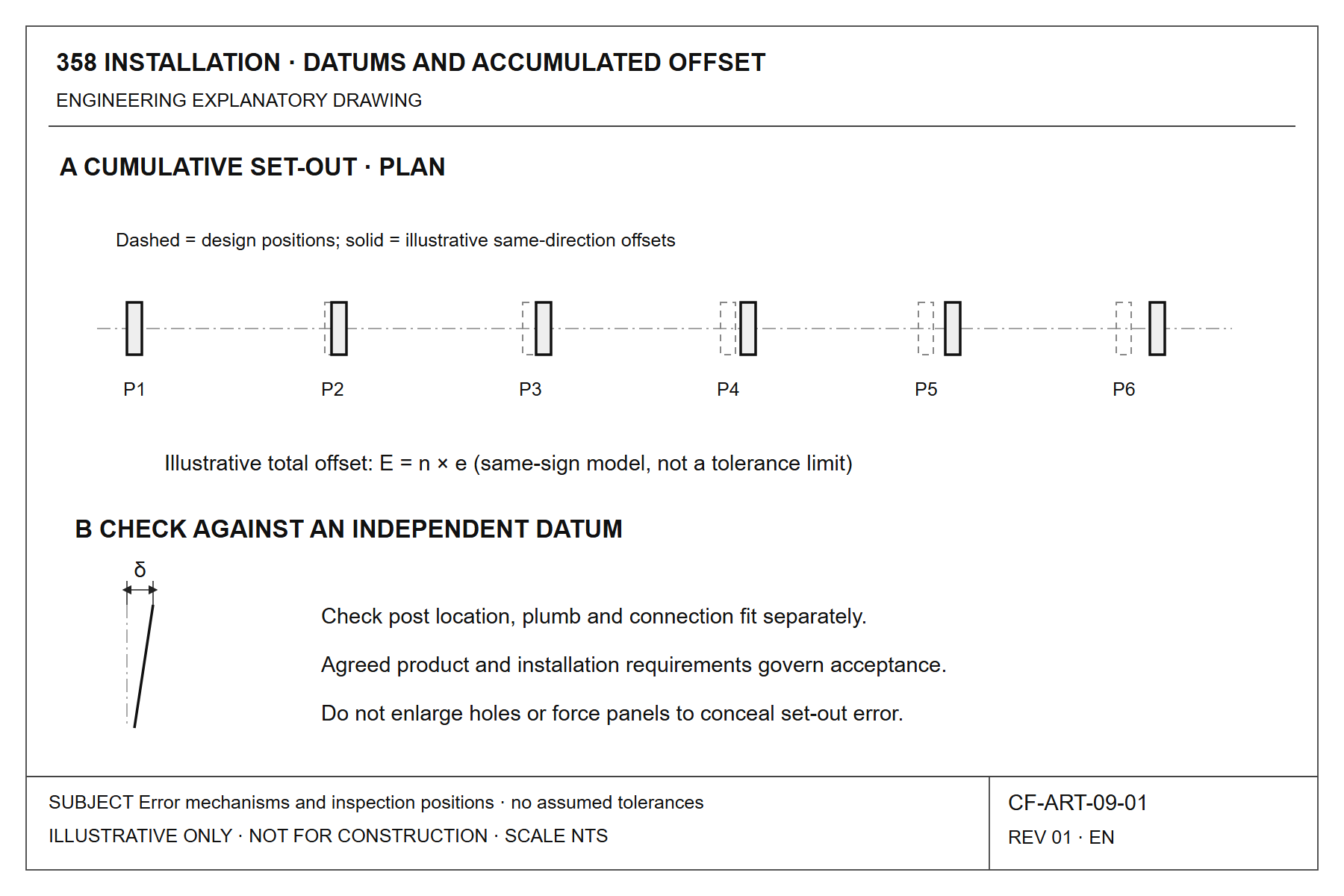
Figure 2. Cumulative positioning error and independent control points. The diagram illustrates the principle without prescribing a tolerance.
Check how much adjustment the connection allows
In a simplified example, if each of n consecutive bays is longer by e, the total displacement can reach n × e. This illustrates accumulation. Actual site deviations and allowable limits must be assessed separately.
Some fittings allow adjustment in specific directions and within defined limits. After adjustment, verify that clamping, edge connections and fastening still meet the approved detail. Escalate deviations beyond the available adjustment before drilling larger holes, omitting fasteners or bending panels.
Include representative details in the trial installation
A single standard bay on level ground gives limited evidence about changes in elevation, corners and gate-post connections. Choose a trial section that covers representative details and verify the installation sequence and tool clearance.
Record panel positioning, clamp bar or bracket installation, bolt insertion and final tightening. Where parts do not fit, check the drawings and component dimensions before carrying an unapproved site modification into the rest of the run.
Tie inspection records to sections and components
Record the section number, post location, component batch and drawing revision. At recheck, look beyond overall alignment to panel fixing points, bottom clearance and unusual deformation.
Before continuing into a corner, gate area or end bay, verify the remaining dimensions. Resolve deviations as they arise and record how each was closed, so the handover can be assessed against the installation records.
Coordinate CommandFence supply documents with site requirements
Share project dimensions, tolerances and connection details with CommandFence during quotation and drawing review. We can coordinate panel, post, clamp bar and fitting information and identify locations requiring special configurations.
For larger projects, agree on the standard bay and representative connections first, then organize materials and installation information around the approved revision. Linking product requirements to site measurements gives receiving, trial installation and maintenance teams a clear reference.