
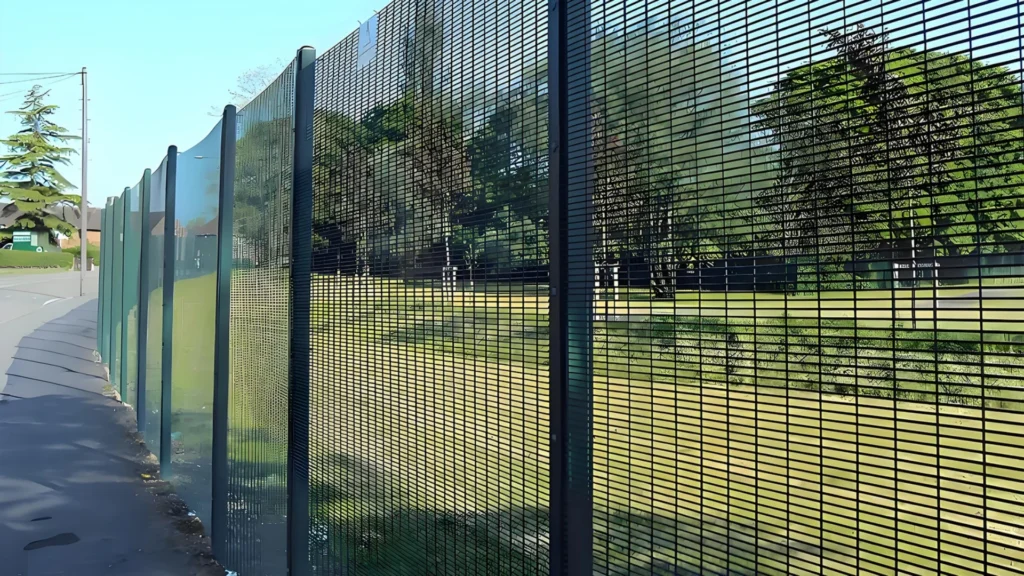
Corrosion-Resistant 358 Fence for Coastal Projects: An Engineering Case Study
Coastal corrosion engineering • Duplex protection • Component-specific specifications • Quality control
1. International Context and Project Background
Ports, LNG terminals and coastal industrial facilities, coastal power facilities, data centers and other critical infrastructure are increasingly being developed in marine and high-humidity environments. For these projects, perimeter security systems must provide not only intrusion resistance, but also reliable long-term performance under aggressive atmospheric exposure.
In one coastal industrial project, the client specified a 358 anti-climb fence for the perimeter. The site was exposed to high humidity, airborne chlorides and salt-laden winds, making corrosion protection a key engineering requirement.
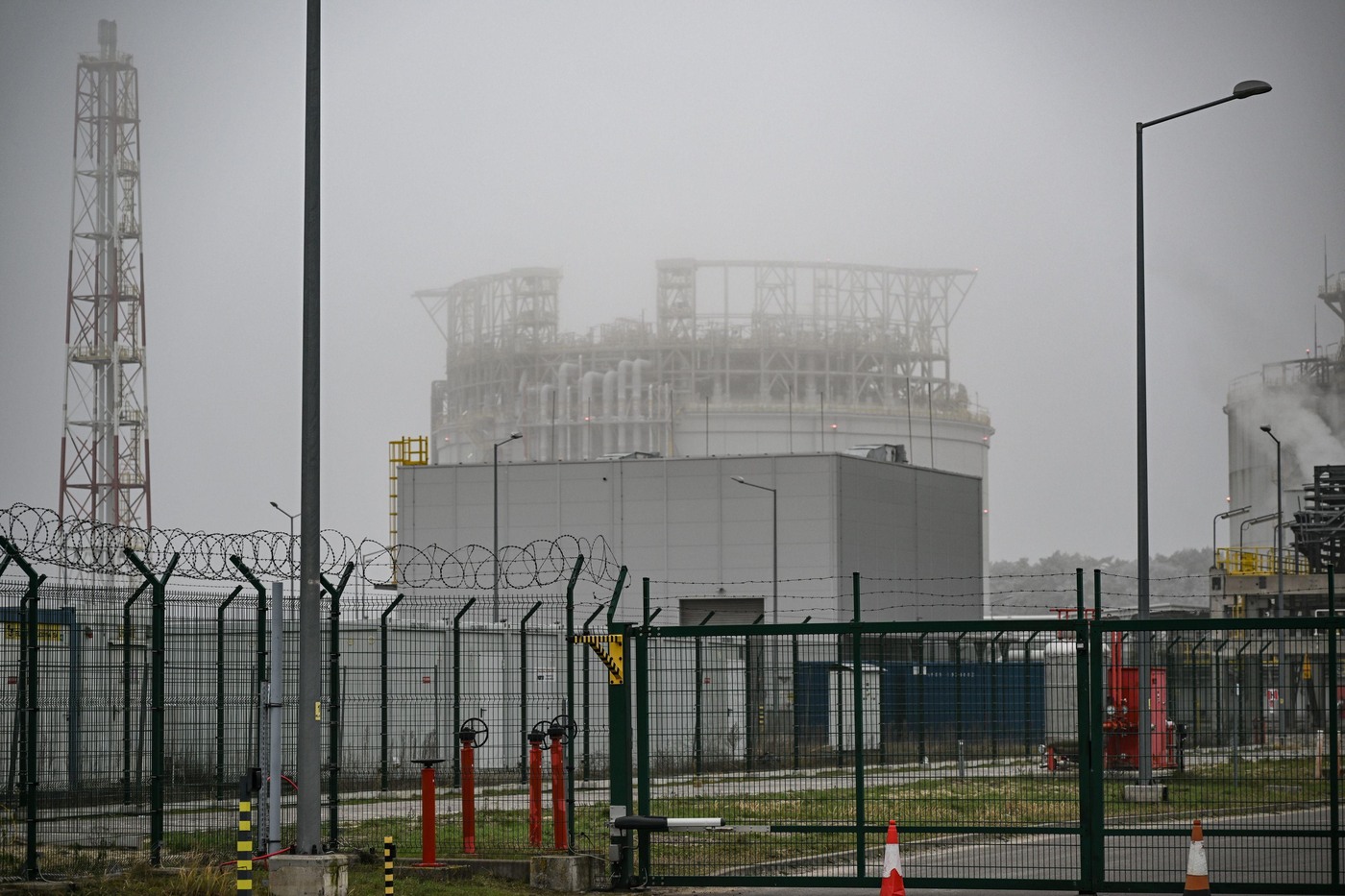 Security perimeter around an industrial facility in a humid atmosphere. |
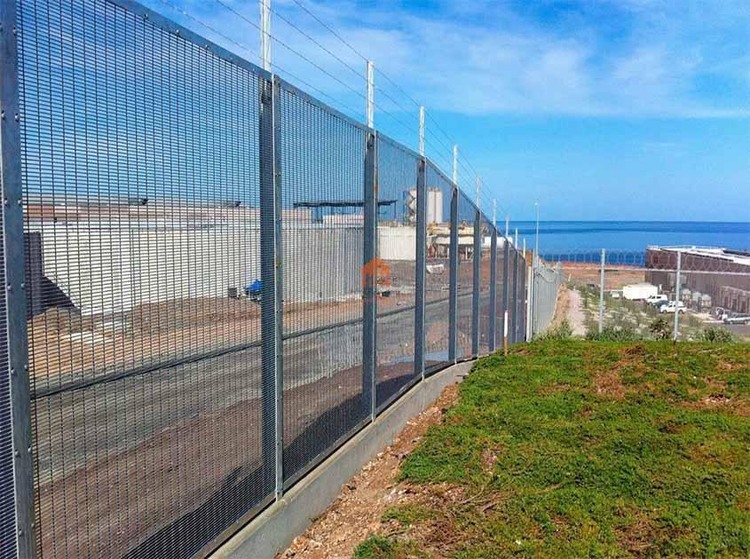 Perimeter fencing installed near a marine/coastal site. |
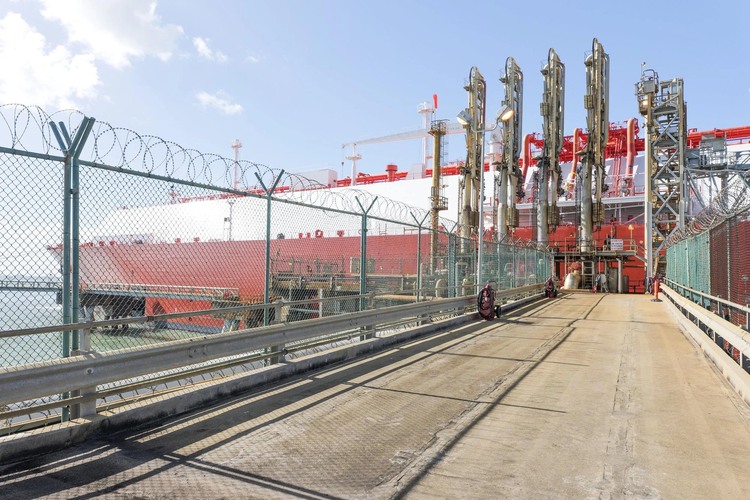 Industrial perimeter protection at a major process facility. |
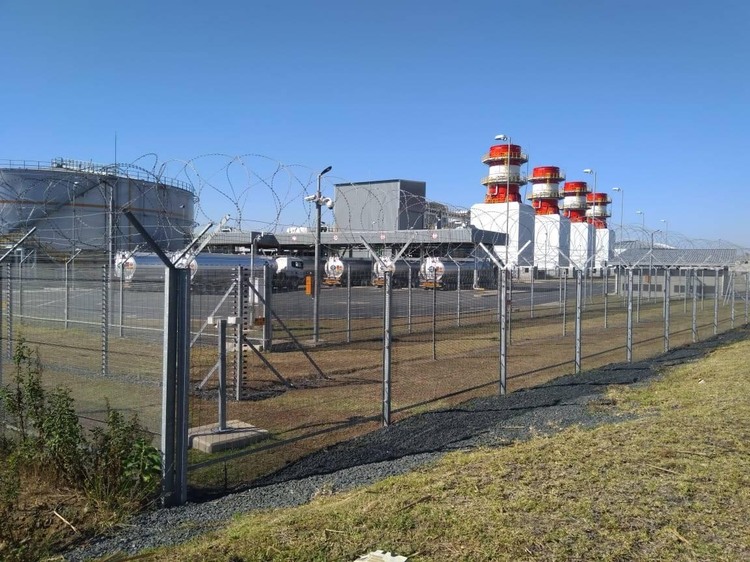 High-security fencing protecting critical infrastructure. |
The project therefore focused on two issues:
- defining the actual corrosivity of the site;
- selecting a complete corrosion-protection system for the fence panels, posts, fixings and gates.
2. Define the Corrosivity Environment Before Selecting the Coating System
“Coastal environment” is not a complete technical specification.
Under the ISO 12944 approach, atmospheric environments are classified according to corrosivity. Depending on actual exposure, a coastal project may fall into C4, C5 or, in more extreme marine conditions, CX.
The classification should consider factors such as:
- airborne chloride deposition;
- relative humidity;
- time of wetness;
- rainfall and wet/dry cycling;
- prevailing marine winds;
- industrial pollution;
- required durability;
- maintenance accessibility.
For 358 fencing, chloride exposure is particularly important because salt deposits can remain on steel surfaces, absorb moisture and accelerate electrochemical corrosion. A related project perspective is available in CommandFence’s article on 358 anti-climb fencing for oil and gas perimeter security.
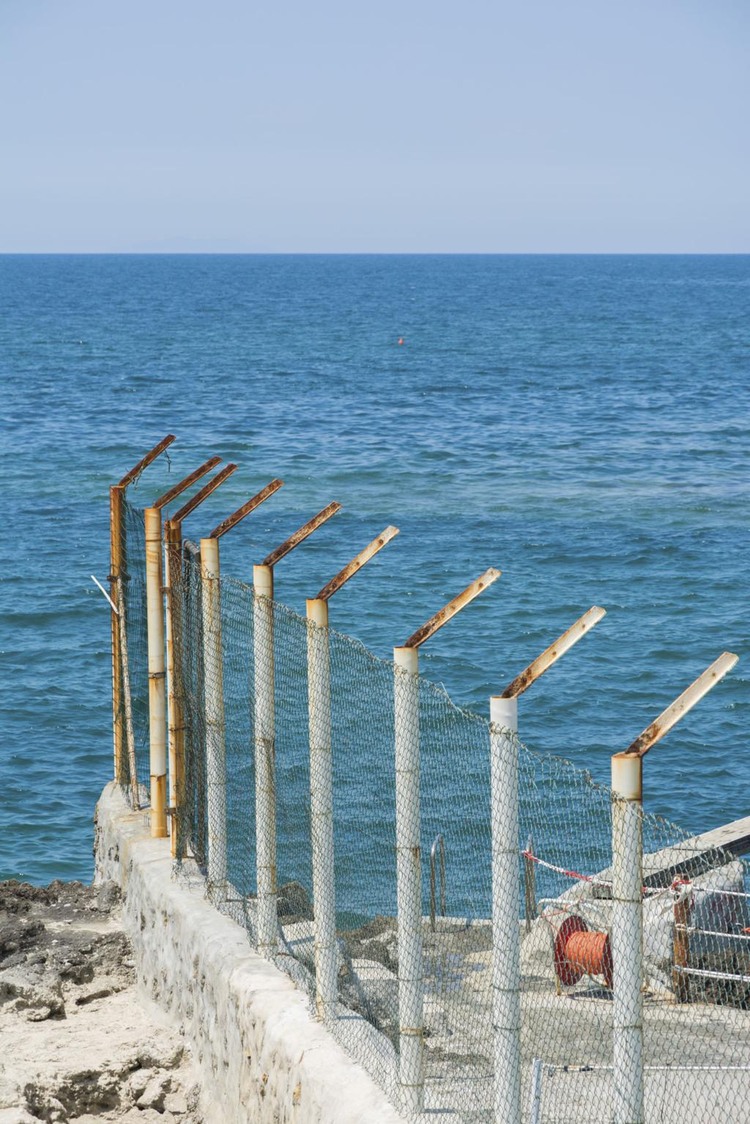 Fence line directly exposed to marine salt spray and airborne chlorides. |
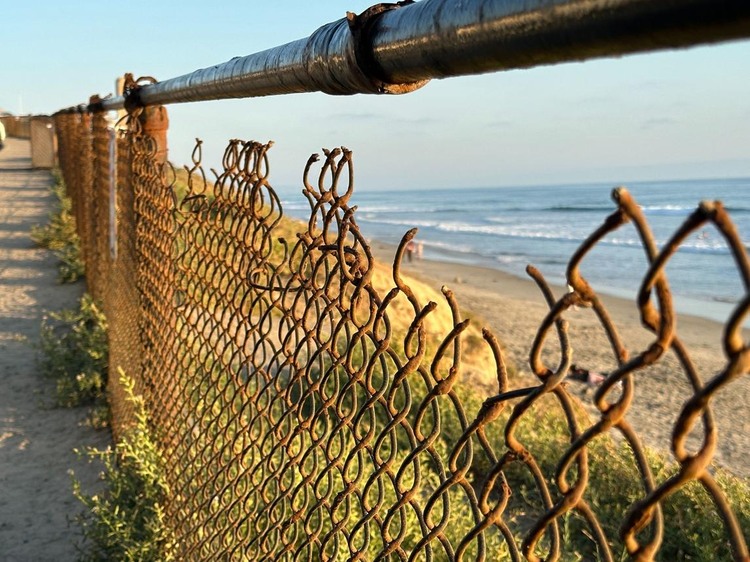 Severe corrosion of coastal steel fencing caused by long-term chloride exposure. |
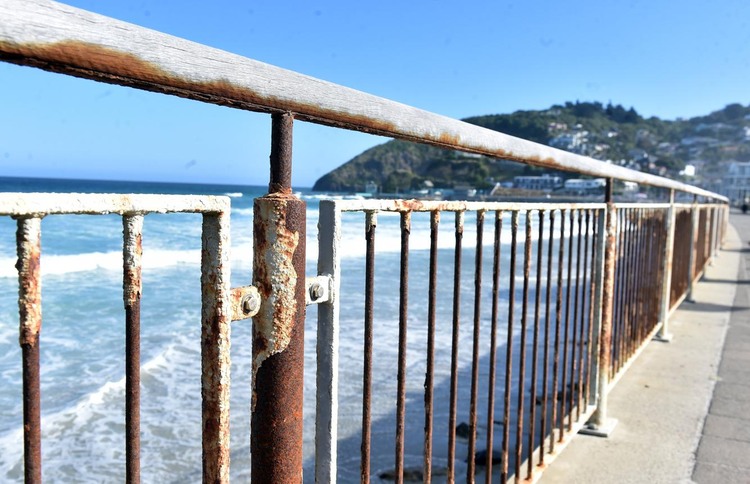 Rust development on unprotected or degraded coastal steel railings. |
Typical vulnerable areas include:
- welded mesh intersections;
- exposed wire ends;
- post-to-panel connections;
- clamps and bolt holes;
- post bases;
- gate-frame welds;
- hinges and roller assemblies.
For an engineering project, the preferred sequence is therefore:
rather than simply specifying:
3. Duplex System: Galvanizing + Powder Coating
For demanding coastal applications, a common solution is a duplex corrosion-protection system combining:
The zinc layer provides both barrier protection and sacrificial protection. If small local defects expose the steel substrate, the surrounding zinc can preferentially corrode and help protect the underlying steel.
The powder coating then provides an additional external barrier against:
- moisture;
- chlorides;
- salt deposits;
- industrial contaminants.
|
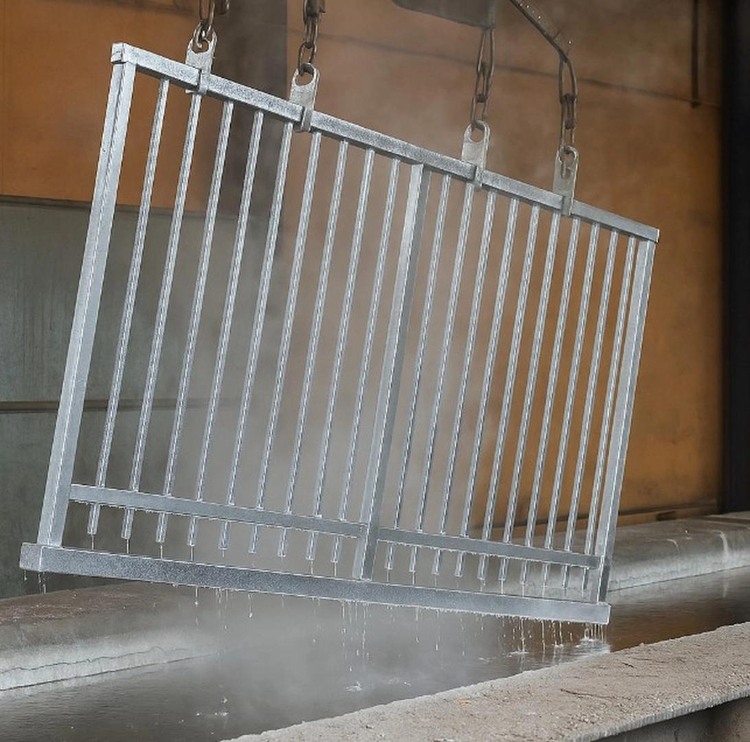
The protection concept can be simplified as:
External environmental barrier
↓
Zinc Coating
Barrier protection + sacrificial protection
↓
Steel Substrate
The purpose of a duplex system is not simply to increase total coating thickness. It is to combine two different protection mechanisms and improve the durability of the complete steel system.
For long perimeter installations around ports, LNG facilities, substations or coastal industrial plants, this can also reduce future maintenance requirements.
4. Surface Preparation Is Critical
A duplex system is only effective when the galvanized surface is properly prepared before powder coating.
Freshly galvanized steel may contain oxides, hydroxides or other surface conditions that can reduce coating adhesion.
If pretreatment is inadequate, typical defects may include:
- blistering;
- peeling;
- pinholing;
- local delamination;
- adhesion failure.
ASTM D7803 provides guidance on the preparation of hot-dip galvanized steel for powder coating.
|
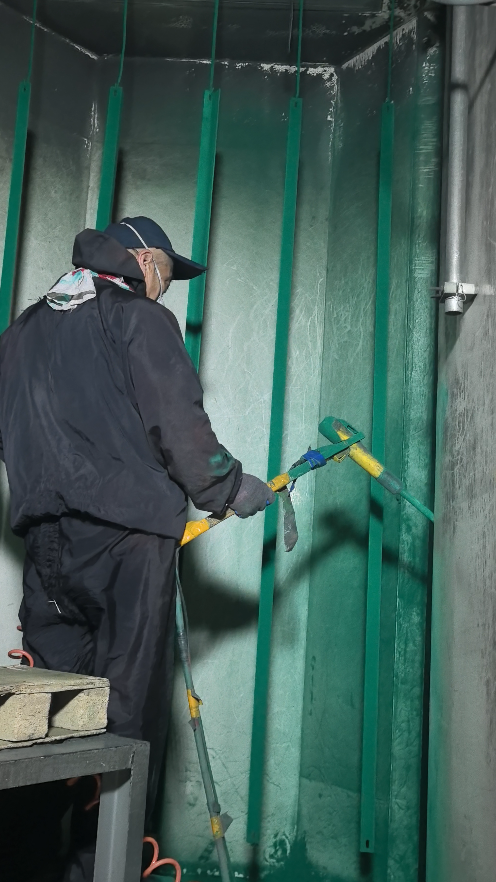
A controlled production sequence should therefore include:
This is why coating performance cannot be evaluated only by checking powder thickness or RAL colour.
For coastal projects, adhesion, curing and surface preparation are equally important.
5. Different Components Require Different Coating Specifications
A complete 358 fence system contains components manufactured by different processes, including:
- welded mesh panels;
- steel posts;
- clamps;
- bolts and nuts;
- base plates;
- pedestrian gates;
- vehicle gates;
- gate hardware.
It is therefore technically incorrect to assume that one galvanizing standard applies to every component.
For example, ISO 1461 applies to batch hot-dip galvanized fabricated iron and steel articles, but does not apply in the same way to continuously galvanized wire or welded mesh products.
Similarly, ASTM A123/A123M is commonly used for fabricated hot-dip galvanized steel, while hardware such as bolts may fall under other applicable specifications such as ASTM A153/A153M.
This distinction is important when reviewing EPC specifications. For related system engineering context, see CommandFence’s article on 358 fence post and connection design.
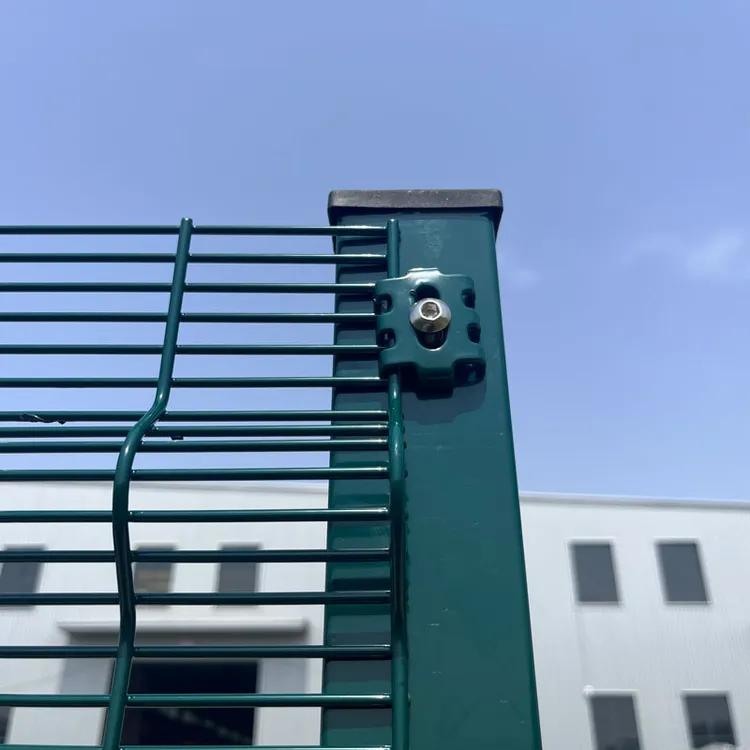 Post-to-panel connection detail on a high-security fence system. |
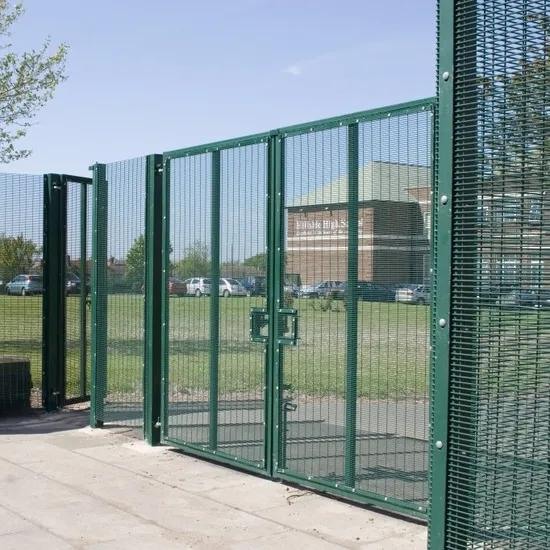 Pedestrian/vehicle gate assembly as part of the complete perimeter system. |
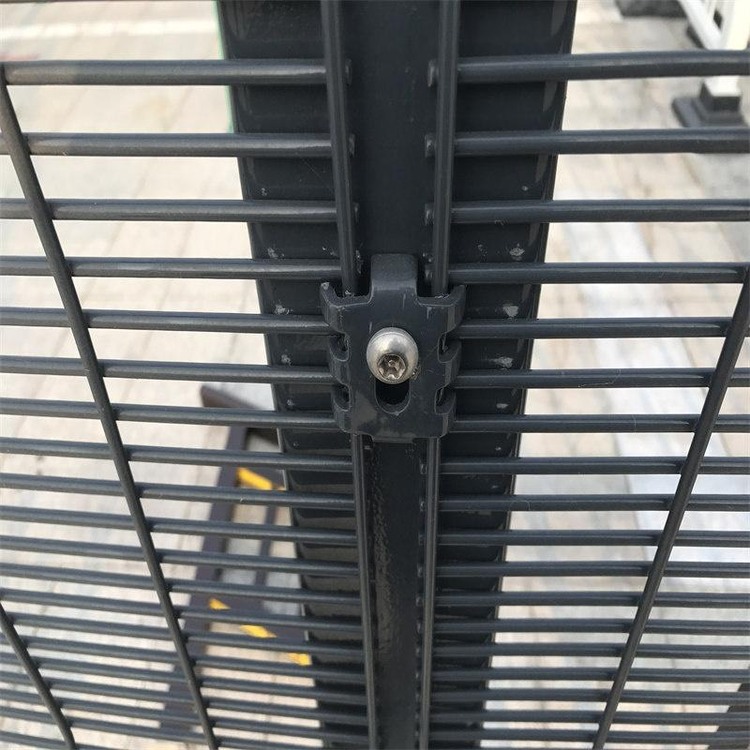 Fastener and panel connection detail requiring compatible corrosion protection. |
The coating requirement should therefore be defined according to the component and manufacturing process:
Fabricated Post → batch galvanizing requirement
Gate Frame → fabricated steel coating requirement
Fasteners → dedicated hardware specification
The durability of the complete perimeter system depends on consistency between these components.
A high-performance fence panel offers limited benefit if bolts, clamps or gate hardware have significantly lower corrosion resistance.
6. Quality Control, Engineering Summary and About CommandFence
For an engineering project, corrosion protection must be measurable and verifiable during manufacturing.
Depending on the approved specification, quality-control requirements may include:
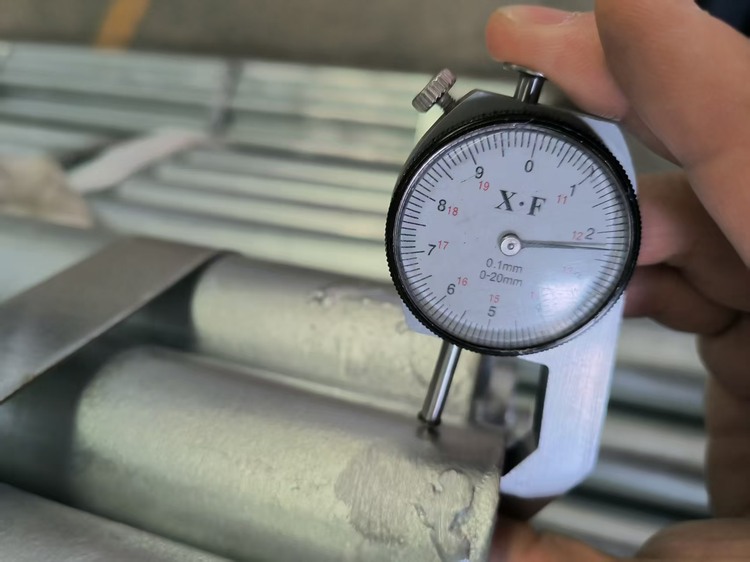 Coating-thickness measurement during quality control. |
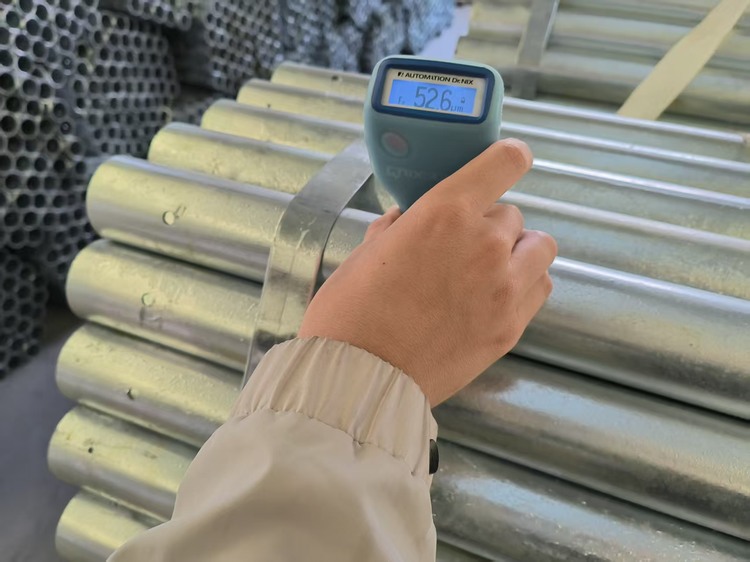 Dimensional inspection of galvanized steel components. |
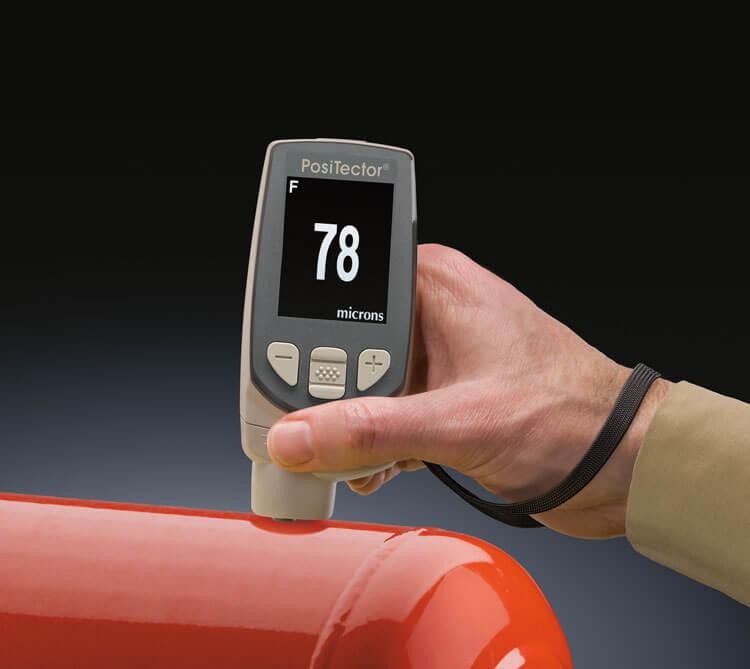 Coating thickness verification on a finished coated surface. |
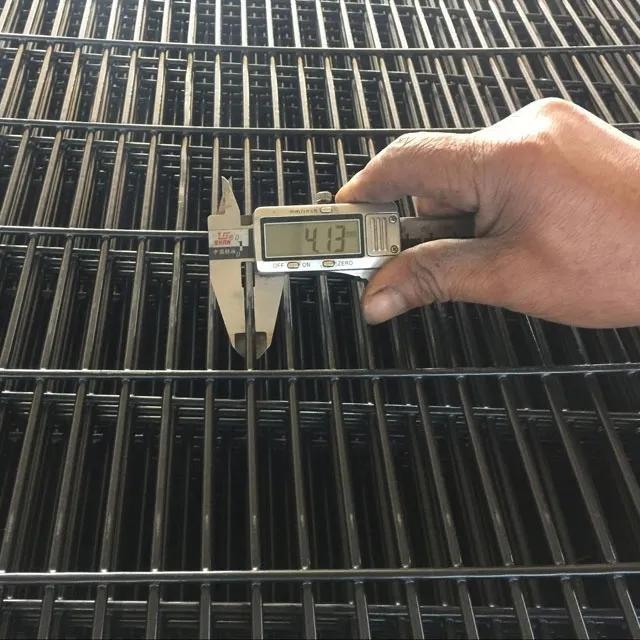 Wire/mesh dimensional inspection during manufacturing quality control. |
- wire diameter and mesh aperture;
- weld integrity;
- panel and post dimensions;
- zinc coating mass or thickness;
- powder-coating thickness;
- coating adhesion;
- curing condition;
- surface continuity;
- fastener specification;
- gate-component protection.
The objective is not simply to produce a visually acceptable fence.
The objective is to deliver a perimeter system in which the security requirement, corrosion environment, coating system and component specifications are technically compatible.
For coastal 358 fencing, the main engineering questions are therefore:
- What is the actual corrosivity category?
- What durability is required?
- Which coating system is appropriate for each component?
- Are the mesh, posts, fixings and gates protected to a comparable level?
For ports, LNG terminals, coastal power facilities, substations, data centers and other critical infrastructure, a 358 fence should be treated as a complete steel perimeter-security system operating under a defined atmospheric exposure condition. For an overseas example of port perimeter fencing project delivery, see the CommandFence Chancay Port case listed on the company Blog.
About CommandFence
CommandFence manufactures and supplies metal fencing, security fencing, vehicle gates, pedestrian gates, and complete physical perimeter protection systems.
For ports, LNG terminals, coastal energy facilities, data centers, airports, air-logistics parks, airport equipment zones, and other infrastructure projects, the system can be configured according to security level, terrain, vehicle and pedestrian movement, and environmental corrosion conditions, using 358 anti-climb fencing, chain-link fencing, welded mesh fencing, vehicle gates, and pedestrian gates as appropriate.
CommandFence also works with fencing distributors, agents, engineering contractors, EPC contractors, and project partners on perimeter-security projects, supporting technical specification review, product selection, custom manufacturing, quality control, and delivery coordination according to project requirements.
For project-specific perimeter security and corrosion-protection configuration, visit CommandFence.





Leave a Reply