
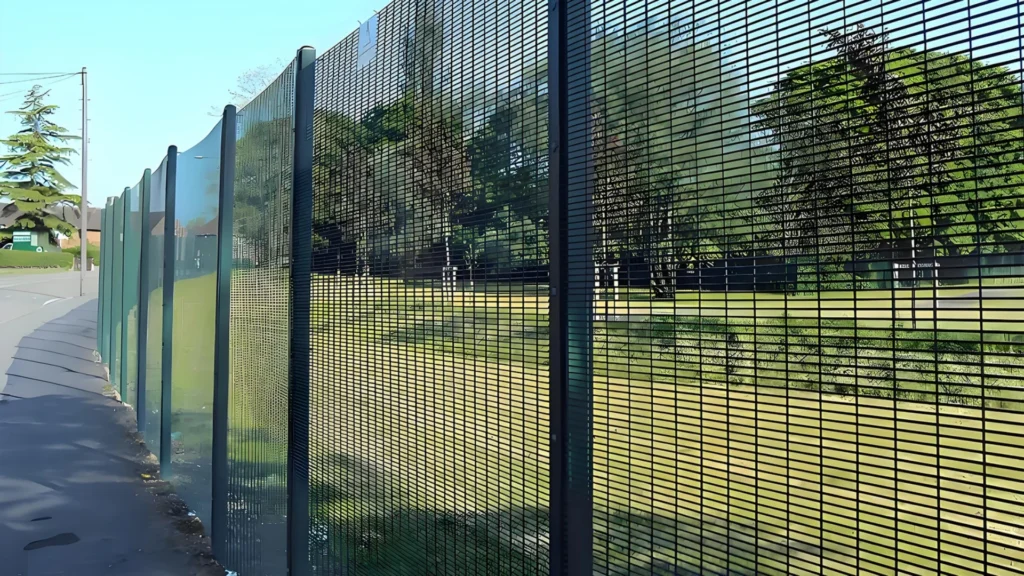
1. Panorama general del proyecto
Este proyecto implica la construcción de hembras para campos deportivos comunitarios al aire libre en Brasil. Su contexto general de planificación se deriva de la ola de mejoras de infraestructura deportiva urbana impulsadas por la Copa Mundial de la FIFA de 2014 Brasil, así como del impacto a largo plazo de los principales eventos deportivos internacionales sobre la elevación de estándares para espacios deportivos públicos.
Promovido por el marco de eventos de la Copa Mundial, numerosas ciudades brasileñas han avanzado continuamente la modernización de instalaciones deportivas—antes y después del torneo. Esto ha transformado muchos campos deportivos comunitarios de las parcelas tradicionales y básicas en espacios deportivos multifuncionales capaces de Apoyo a la capacitación competitiva, acceso comunitario, y Desarrollo del deporte juvenil.
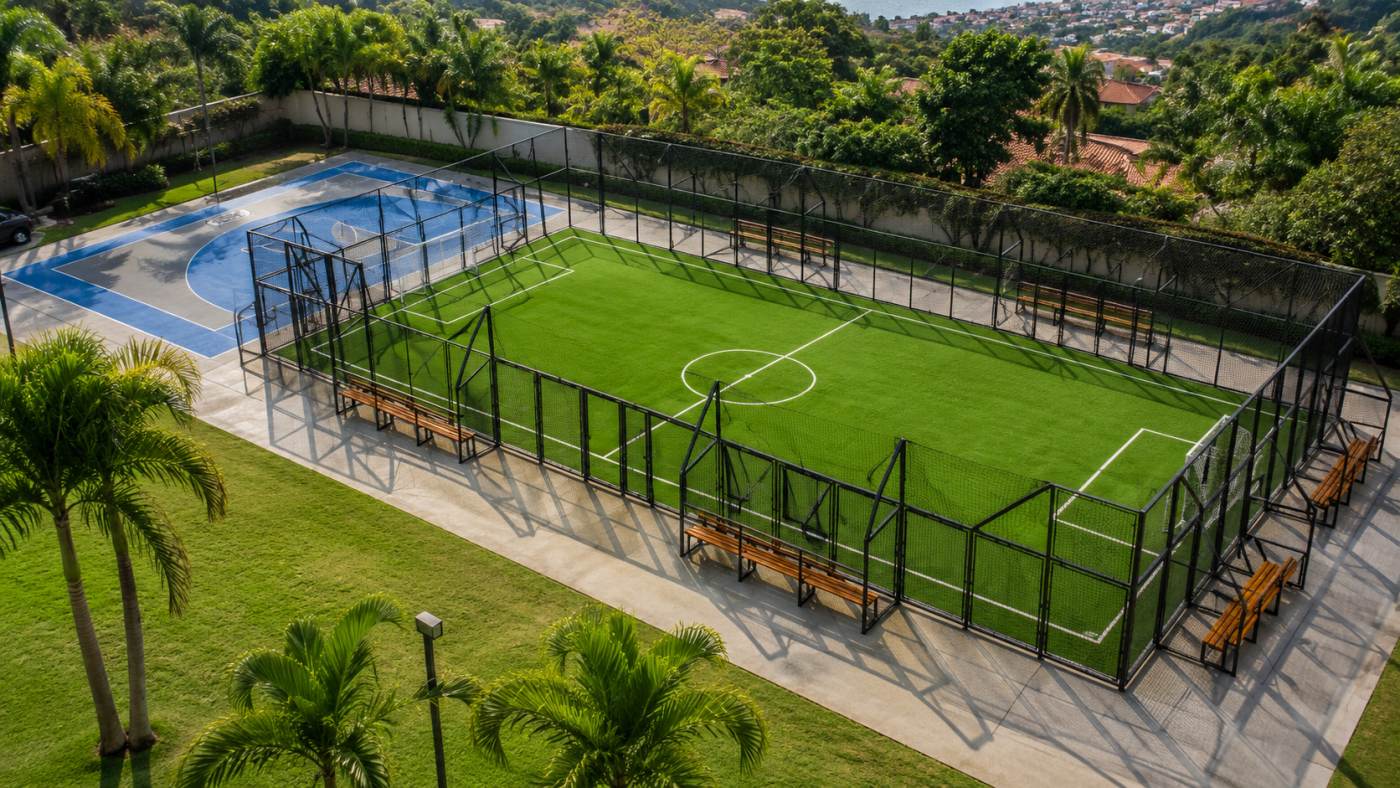
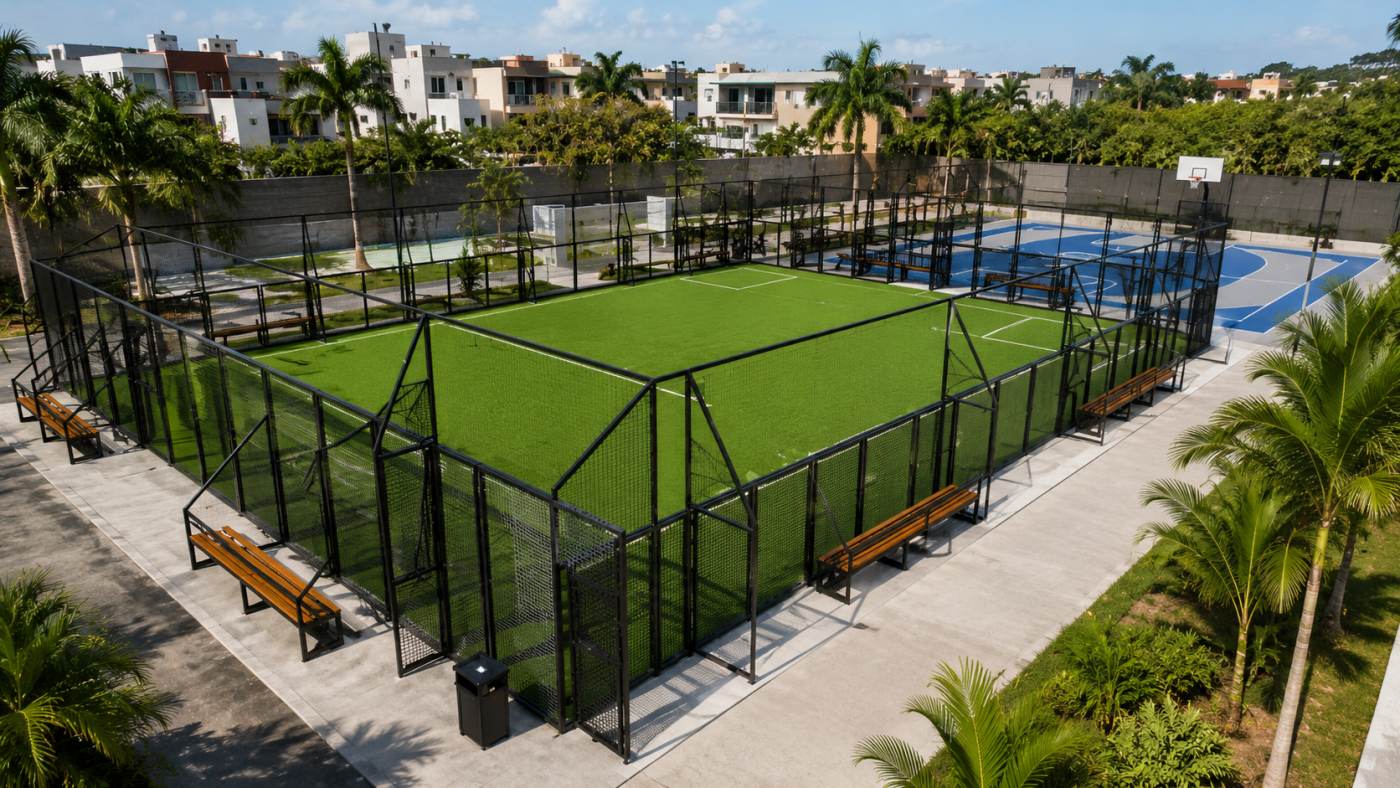
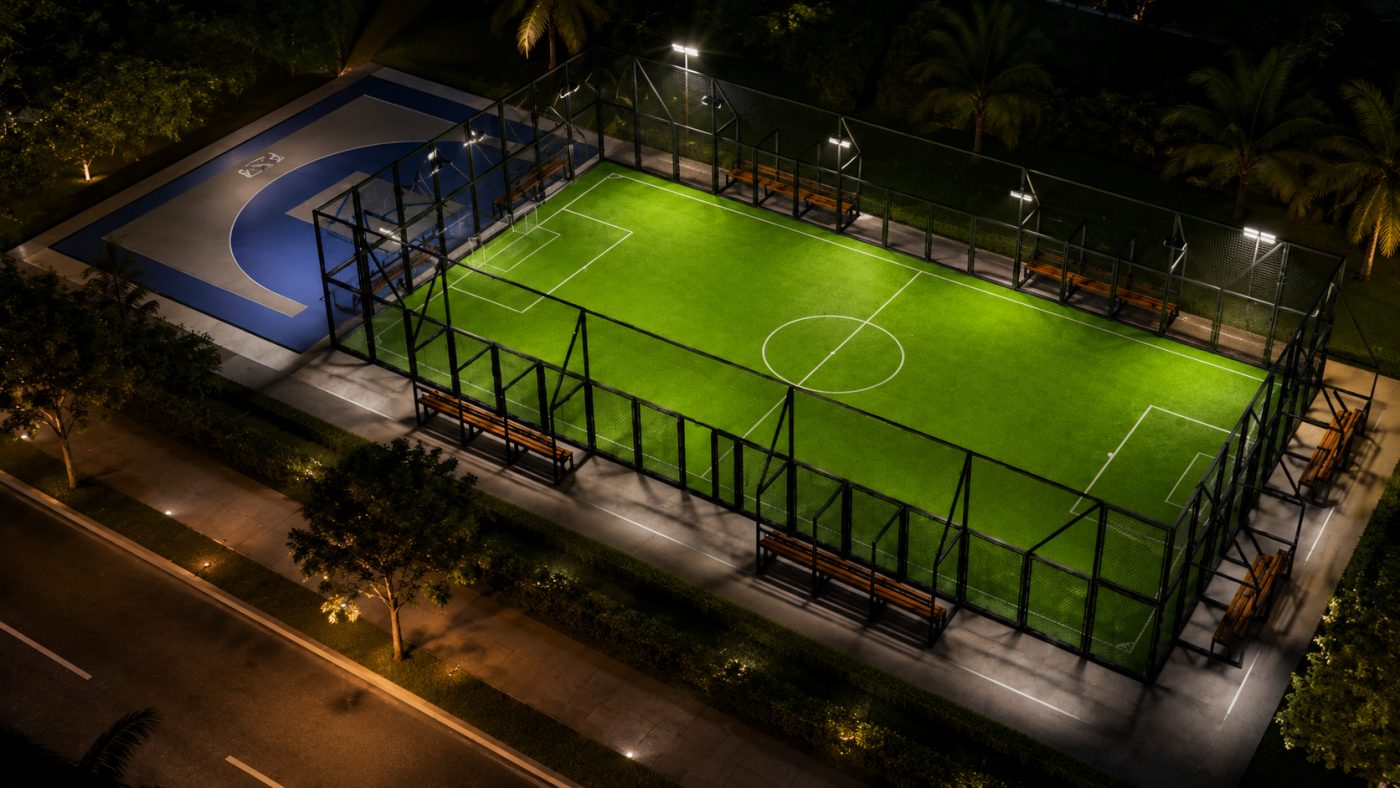
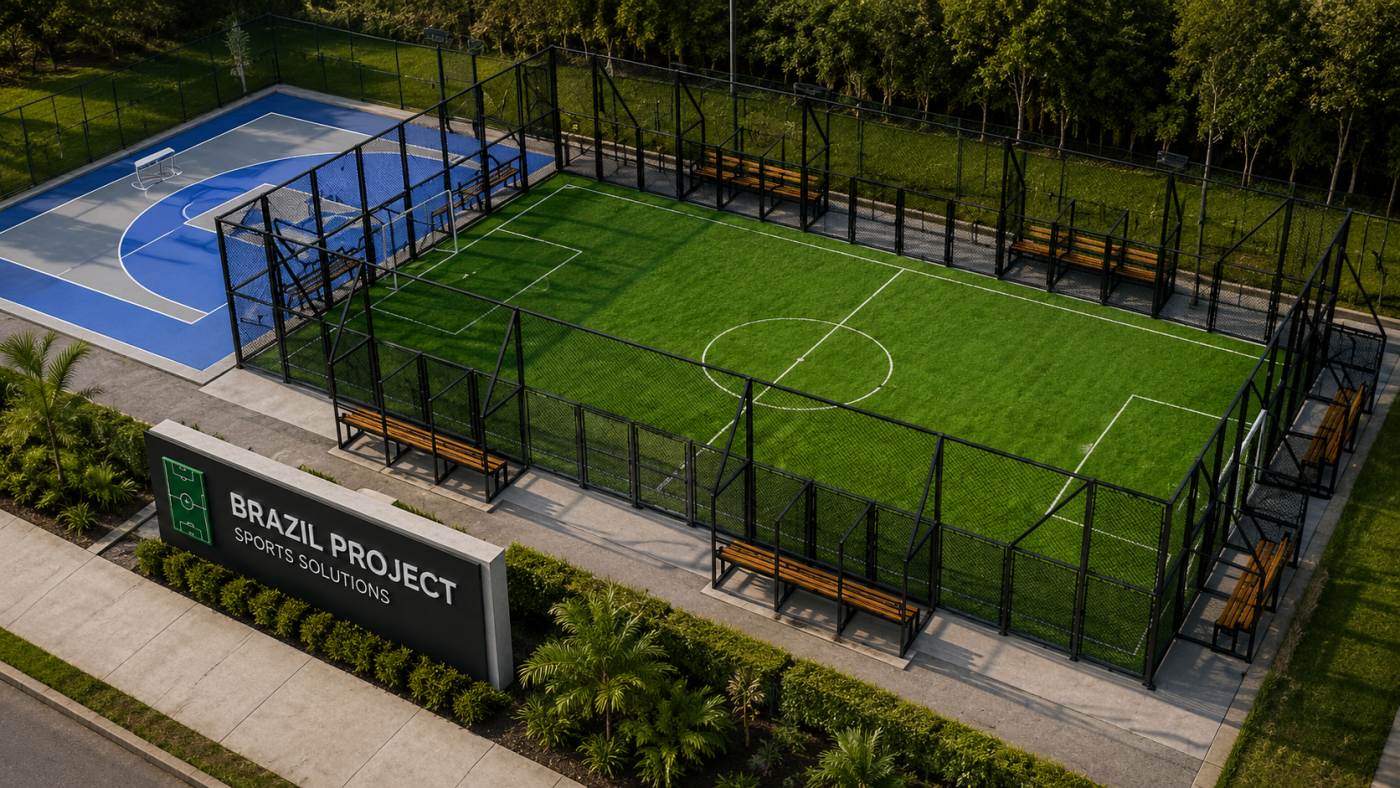
Este proyecto es una actualización de campo deportivo a nivel comunitario realizada en el contexto del desarrollo deportivo mundial. Su filosofía general de diseño se alinea con las normas de seguridad y la lógica operacional de los espacios internacionales de competencia, pero su posicionamiento funcional prioriza el uso público a largo plazo y la accesibilidad multiescenario en lugar de servir como sede de partidos profesionales.
Centrado en el fútbol, la instalación también alberga el entrenamiento de cricket, torneos comunitarios, clases escolares de PE y actividades diarias de fitness para el público en general; es un ejemplo quintesencial de un "espacio deportivo urbano que se extiende desde el legado de la Copa Mundial.”
En términos de lógica global de planificación, el proyecto enfatiza no sólo la "usabilidad", sino la alineación con cuatro principios básicos derivados de estándares profesionales de la competencia:
- Zona de seguridad sistemática (zonas activas, vías de circulación y zonas de amortiguación del espectador)
- Protección integral para deportes de pelota (contención para deportes de alta velocidad como fútbol y cricket)
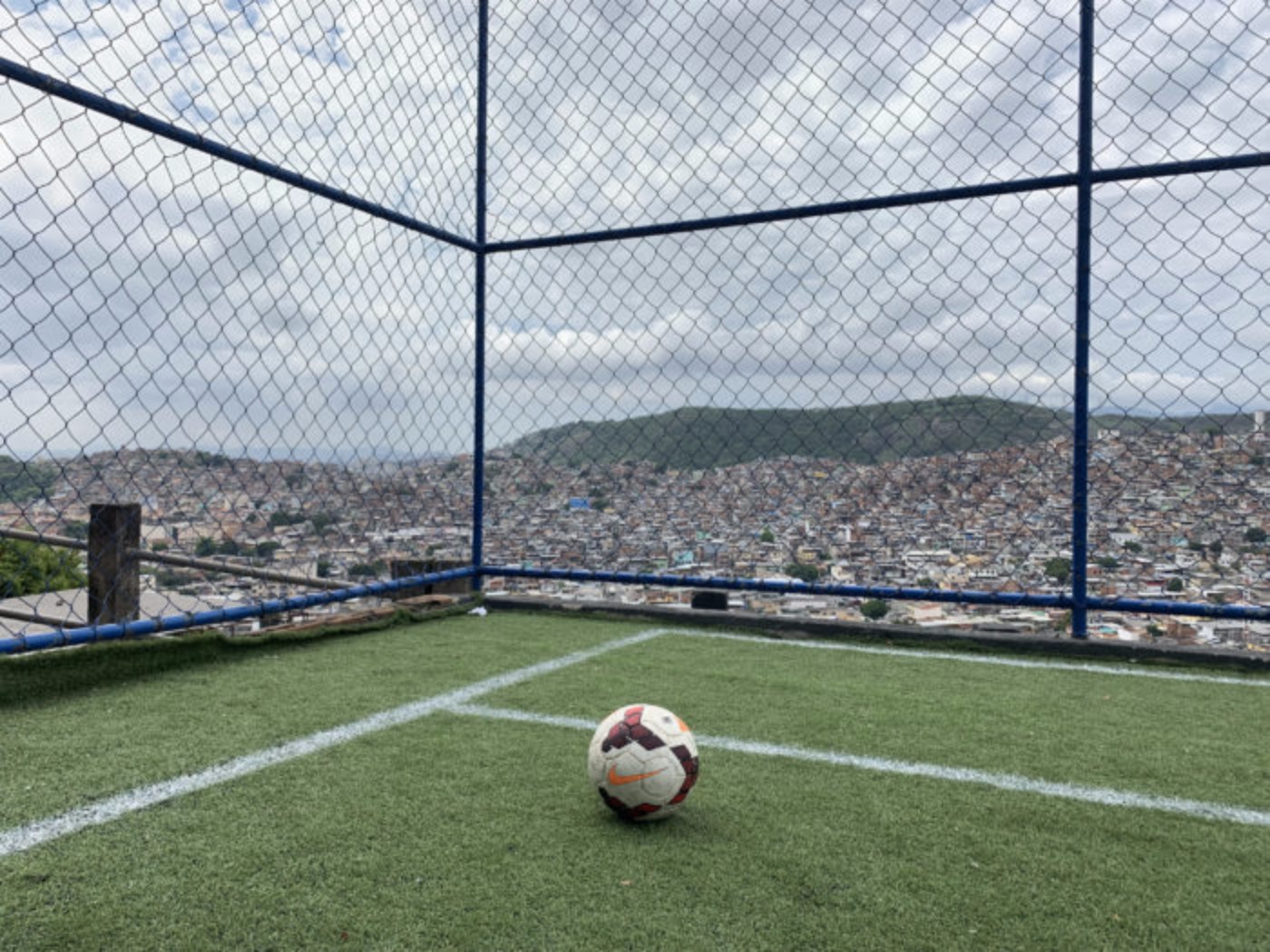
- Equilibrio entre la transparencia visual y una experiencia abierta (líneas optimizadas para la visualización de nivel de partido)
- Diseño estructural exterior duradero (configurado para entornos de uso de alta intensidad)
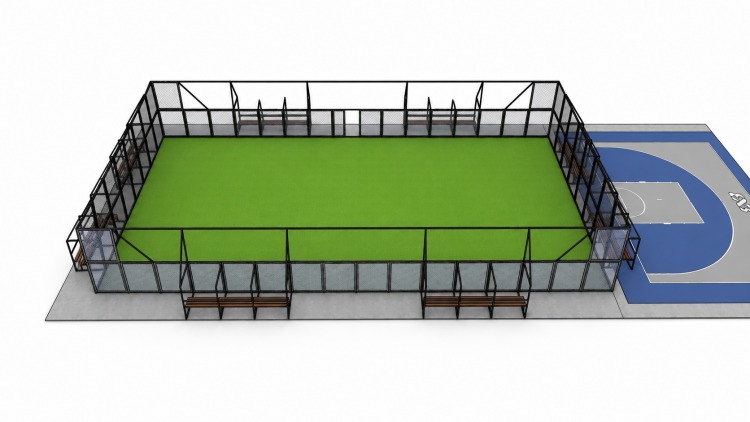
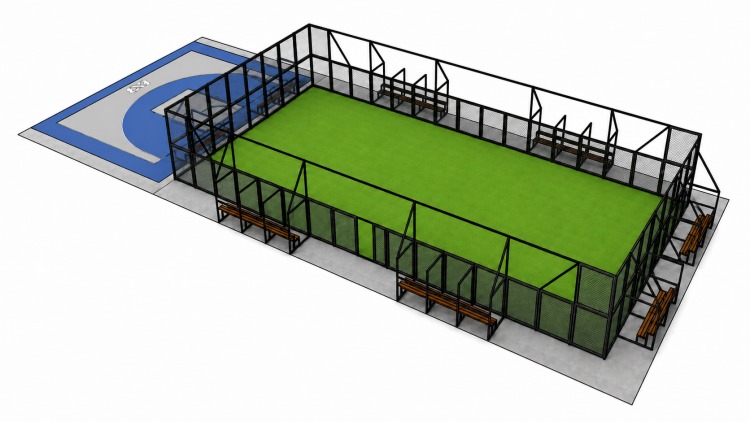
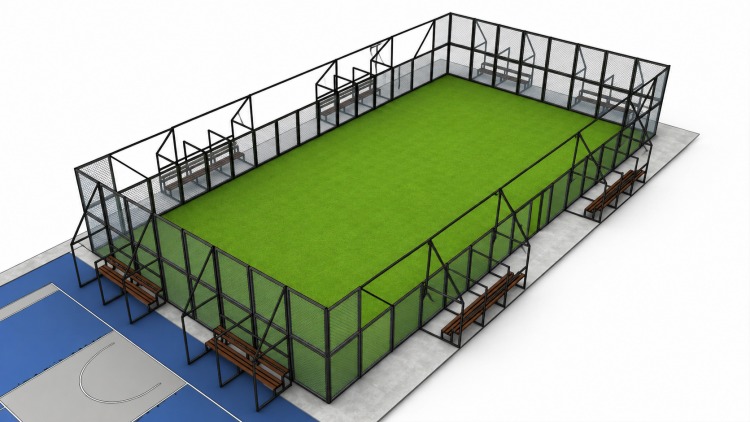
En este proyecto, el sistema de esgrima va más allá de servir simplemente como una instalación de límites; en cambio, asume un papel funcional similar a un "sistema de seguridad de lugar de competencia", que abarca:
- Impida que las bolas de alta velocidad salgan del lugar y causen peligros
- Garantizar la seguridad de atletas, jóvenes y el público circundante
- Establecer un sistema claro de zonificación para las funciones deportivas
- Mantener un sentido de apertura y asegurar la consistencia visual de los partidos
- Soporta las condiciones climáticas de Brasil—caracterizado por calor alto, alta humedad y radiación UV intensa
- Support high-frequency use for both community activities and training sessions
Comando participa en proyectos de mejora del campo deportivo comunitario en el contexto de eventos deportivos internacionales, proporcionando soluciones integrales del sistema de vallas que abarcan todo el proceso—de diseño detallado e implementación de ingeniería a diseño estructural, especificación de productos, aprobación de muestras, fabricación de fábricas, embalaje de exportación y soporte técnico para instalación.
2.Contexto del proyecto: Demanda de las instalaciones de deportes comunitarios
Brasil cuenta con una rica cultura de fútbol, con deportes comunitarios, formación de jóvenes, y el uso de instalaciones deportivas públicas está siendo generalizado. Más allá de los estadios profesionales de gran escala, hay una necesidad de espacios deportivos al aire libre más flexibles y prácticos en comunidades, escuelas y zonas públicas.
Estas instalaciones deportivas orientadas a la comunidad difieren de los locales de competición estándar. Si bien no requieren necesariamente dimensiones profesionales o puestos de espectador a gran escala y una amplia infraestructura de apoyo, exigen altos estándares en materia de seguridad, contención de bolas, zonificación y durabilidad a largo plazo.
Estas instalaciones suelen tener las siguientes características:
- Medidas relativamente flexibles
- Zonas funcionales múltiples
- Base de usuario amplia
- Alta frecuencia de uso diario
- Debe equilibrar seguridad, durabilidad y coste
- Facilidad de mantenimiento futuro
La alimentación es un componente fundamental de esos proyectos. Si la valla es demasiado baja, las bolas vuelan fácilmente fuera de la corte; al contrario, si está demasiado cerrada, obstruye la visibilidad y disminuye el sentido de la apertura. Por lo tanto, el tipo y la altura del esgrima deben ser adaptados a la función específica de cada área.
Para proyectos deportivos y instalaciones deportivas públicas, Command aprovecha las condiciones específicas del sitio para ofrecer soluciones de esgrima que son ideales para uso comunitario.
3. Project Site Environment (Actual Site in Brazil)
El proyecto se encuentra en una instalación deportiva al aire libre en Brasil, donde el esgrima está constantemente expuesto a la luz solar, la lluvia, el aire húmedo y las fluctuaciones de temperatura.
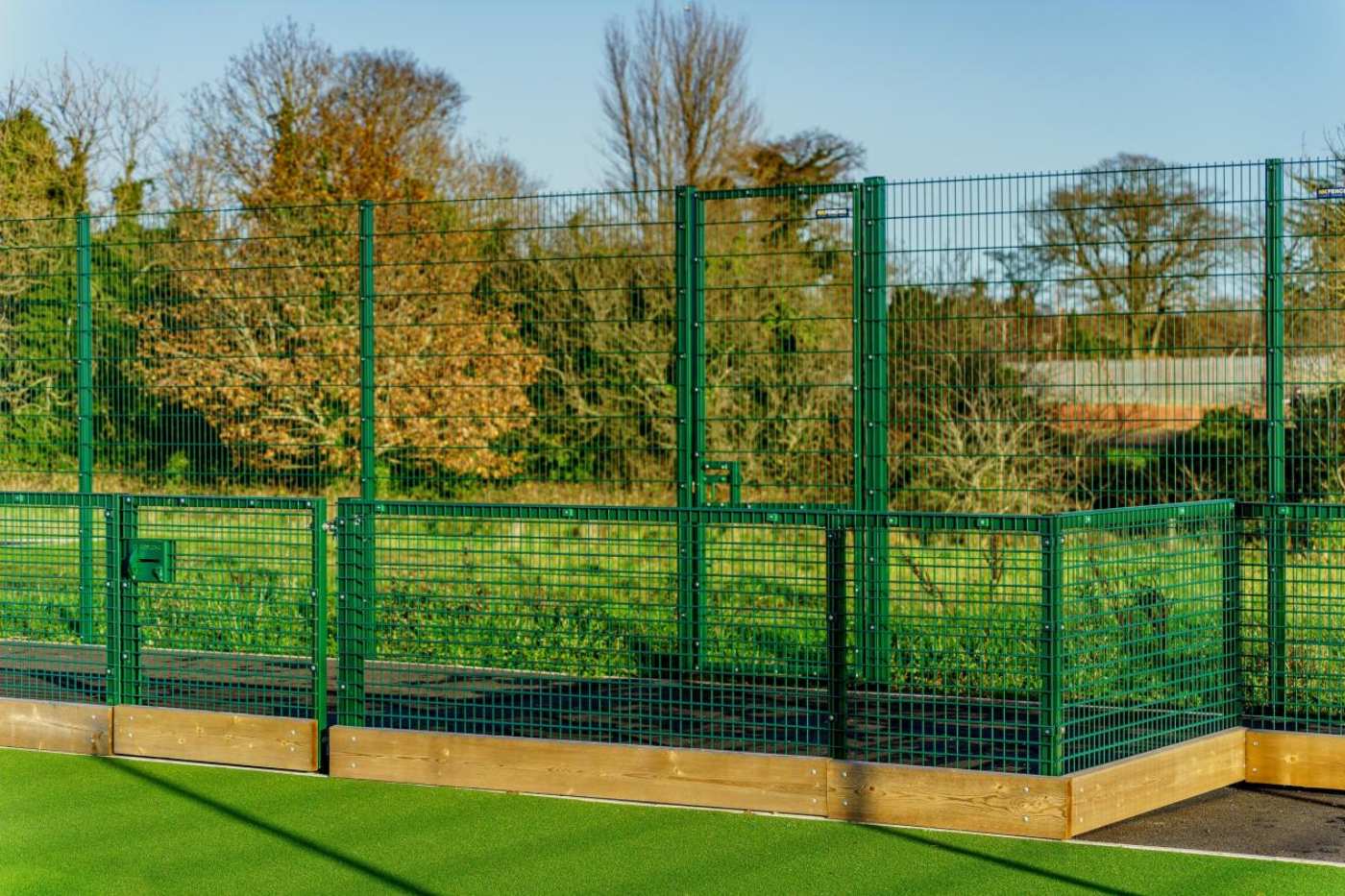
El entorno del sitio se caracteriza por lo siguiente:
- Alta humedad
- Luz solar intensa y exposición UV significativa
- Uso al aire libre a largo plazo
- Exposición significativa a la precipitación y al aire húmedo
- Uso multideporte
- Alta frecuencia de uso
Para el esgrima exterior, la instalación inicial no garantiza la estabilidad a largo plazo. En entornos con alta humedad, altas temperaturas y fuerte radiación UV, las áreas de riesgo crítico incluyen puntos de soldadura, conectores, bordes de panel de malla y estructuras de puertas.
Por lo tanto, este proyecto hace especial hincapié en diseñar sistemas robustos contra la corrosión y resistentes al clima en relación con materiales y procesos de fabricación.
4. Diseño de ingeniería y diseño
Antes de comenzar la construcción de la valla, el diseño general debe ser confirmado sobre la base de los dibujos de diseño originales, dimensiones del sitio y requisitos operativos.
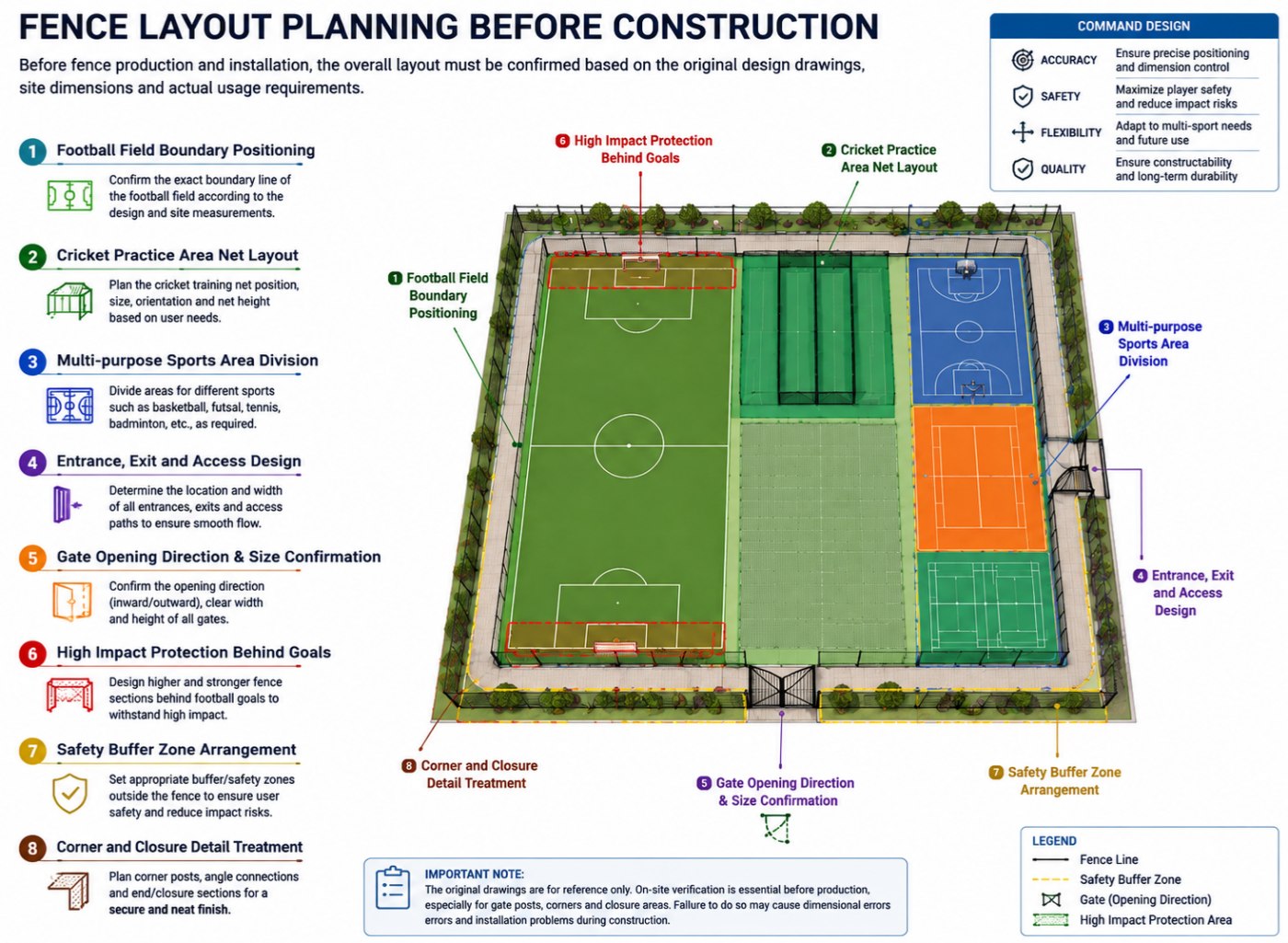
Lorem ipsum dolor sit amet, consectetur adipiscing elit. Ut elit tellus, luctus nec ullamcorper mattis, pulvinar dapibus leo.
Entre los elementos principales figuran los siguientes:
- Posición de los límites del campo de fútbol
- Diseño de esgrima perímetro para áreas de entrenamiento de cricket
- Zoning of multiusos deportes areas
- Diseño de entradas, salidas y caminos de acceso
- Confirmación de direcciones de apertura de puertas y dimensiones
- Design of high-impact protection zones behind goalposts
- Diseño de zonas de amortiguación de seguridad
- Detalle de estructuras de esquina y terminación
Los dibujos originales sólo sirven como referencia preliminar; la verificación in situ es obligatoria antes de la producción real—especialmente para puestos de puerta, esquinas y puntos de terminación—para evitar errores de instalación.
4.1 Diagramas modelo y soporte de diseño detallado
Los recintos deportivos comunitarios a menudo cuentan con estructuras geométricas no estándar que deben integrarse con carreteras, paisajismo, sistemas de drenaje y instalaciones circundantes.
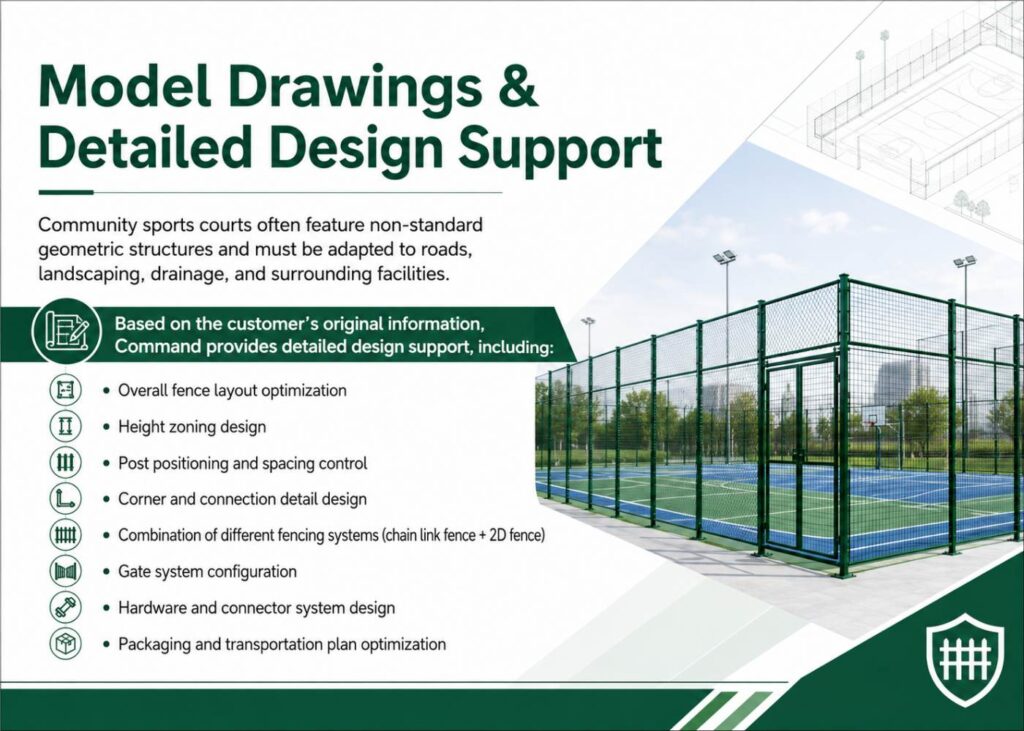
Comando realiza un diseño detallado basado en las especificaciones iniciales del cliente, cubriendo:
- Optimización del diseño general de hencing
- Diseño Zonal basado en requisitos de altura
- Posición y control de espaciado
- Diseño estructural para esquinas y puntos de conexión
- Combinación de diferentes sistemas de esgrima (por ejemplo, malla de enlace de cadena + esgrima 2D)
- Configuración del sistema de puerta
- Sistemas de componentes de hardware y conexión
- Optimización de los planes de embalaje y transporte
5. Sistema de alimentación deportiva
Este proyecto utiliza un sistema modular de esgrima, con configuraciones adaptadas a las funciones específicas de diferentes áreas.
5.1 Componentes del sistema de alimentación
- Sistema post galvanizado de acero caliente
- Sistema de hembras de enlace de cadena
- 2D sistema de trineo de malla soldado
- Recubrimiento anticorrosión PVC
- Sistema de entrada y puerta
- Sistema de conexión y soporte
5.2 Proceso de Galvanización de gases de efecto invernadero
La estructura de acero utiliza un "proceso de galvanización de agua caliente de unidad completa" en el que se completa la soldadura estructural primero, seguido de la inmersión de toda la asamblea en un baño galvanizado.
Las ventajas de este proceso son:
- Protección de la corrosión superior para zonas soldadas
- Mayor resistencia al clima exterior
- Adecuación para entornos de alta humedad y alta seguridad
- Vida útil ampliada
- Reducción de los costos de mantenimiento a largo plazo
Comando opera su propio sistema de producción galvanizador, lo que permite un flujo de trabajo de fabricación integrado que abarca todo desde el corte de materiales y la soldadura hasta la galvanización y embalaje de unidad completa.
6. Instrucciones de aplicación de productos
6.1 Enlace de cadena Fence
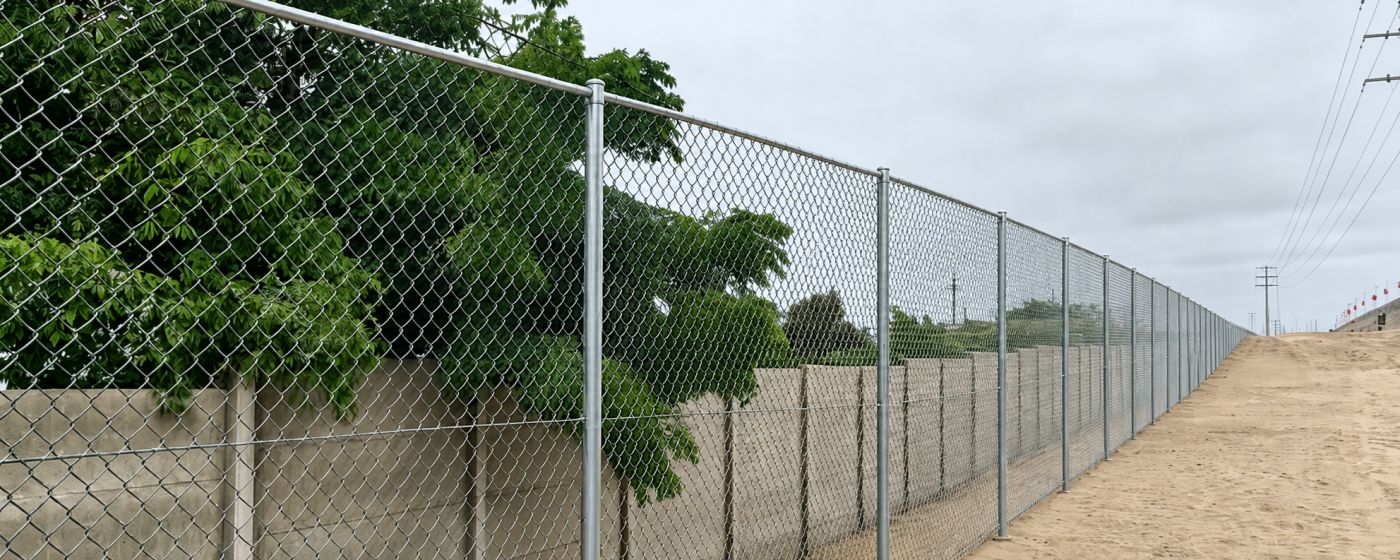
Adecuado para:
- Perímetros de campo de fútbol
- Zonas de formación de cricket
- Campos deportivos escolares
- Tribunales de deportes comunitarios
Características:
- Efectivo para las grandes zonas
- Alta transparencia
- Instalación eficiente
- Costos bajos de mantenimiento
6.2 2D doble penetración horizontal soldada
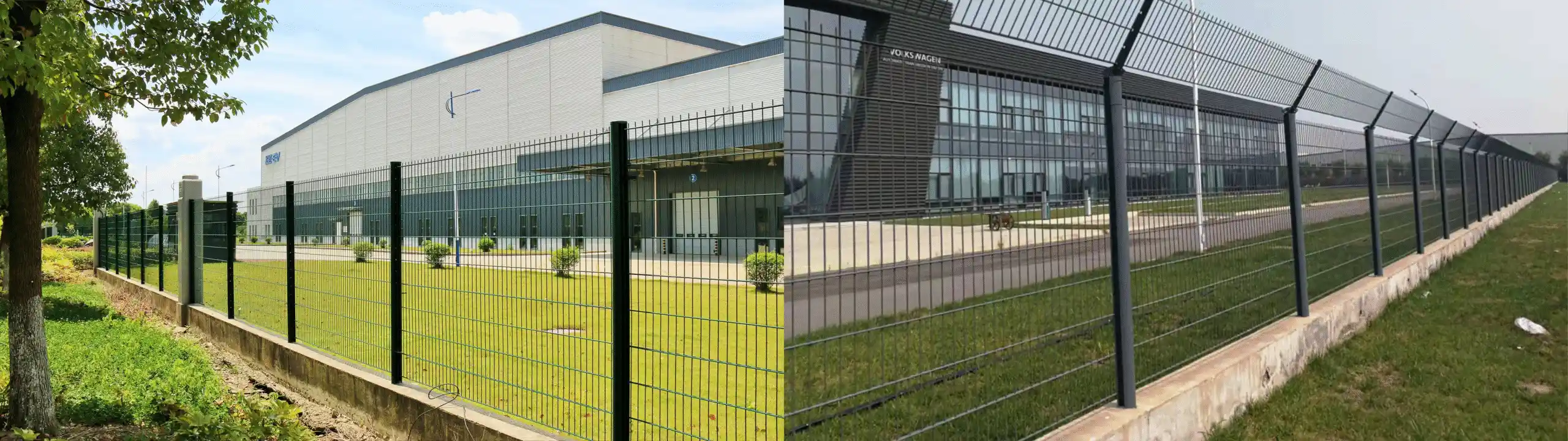
Adecuado para:
- Zonas de alto impacto detrás de los objetivos
- Zonas de segregación del espectador
- Pasajes y puntos de entrada/salida
- Áreas de formación profesional
Características:
- Estructura de alta rigidez
- Resistencia al impacto alto
- Neat apariencia
- Larga vida útil
7. Proceso de aprobación de muestras, inspección de fábrica de clientes y confirmación de pedidos
Antes del lanzamiento oficial de la producción en masa, Command completó la fabricación y prototipado de pruebas de las muestras del sistema de vallas por adelantado, de acuerdo con los requisitos técnicos del proyecto y los dibujos detallados de diseño.
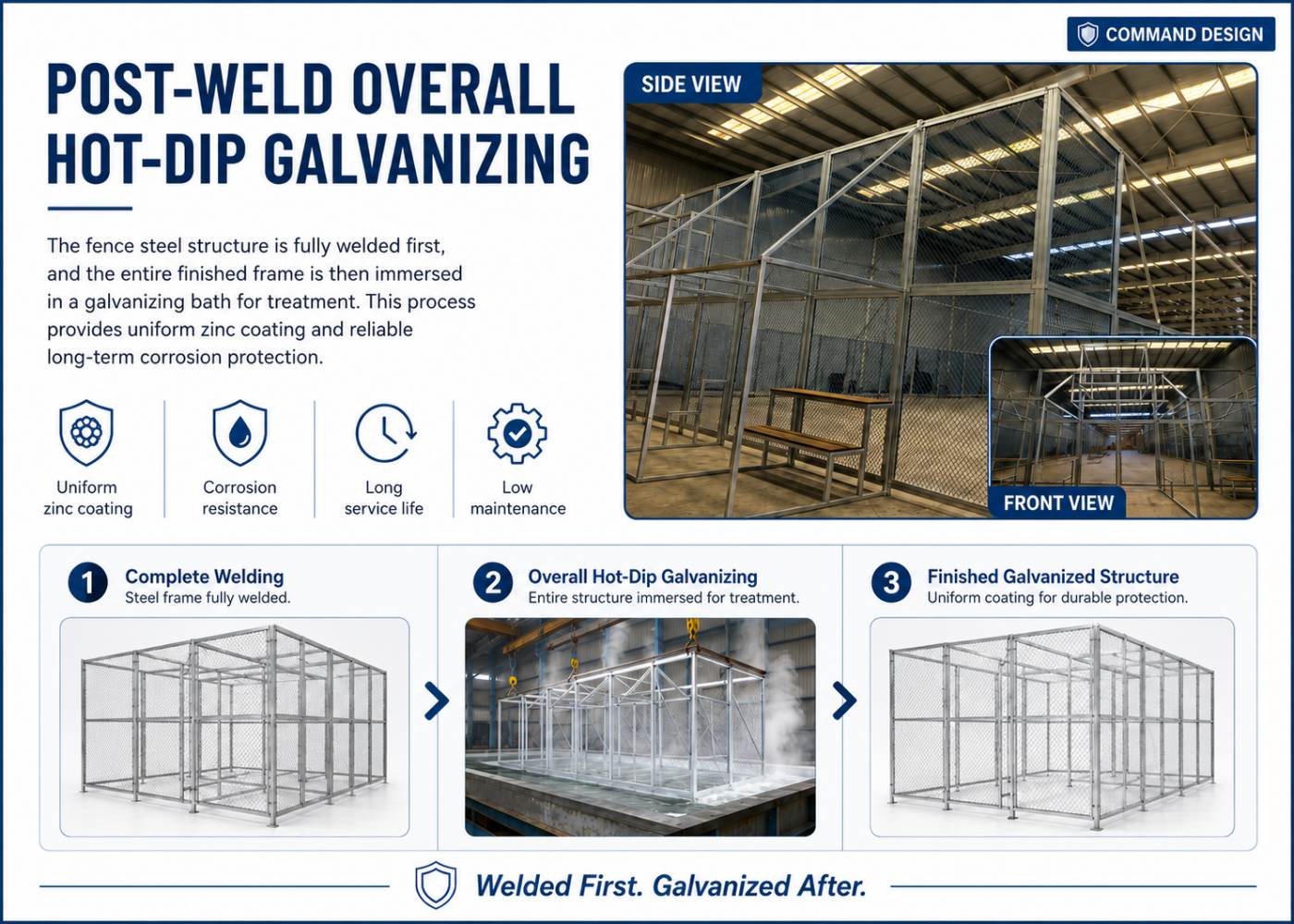
- Corte de acero y soldadura estructural
- Galvanización post-dormidera
- Aplicación de revestimiento anticorrosión PVC
- Alimentación de malla y panel formando
- Sistema de puerta de montaje
- Inspección de calidad y pruebas de producto terminadas
- Preparación para la carga de envases y contenedores
Todo el proceso estableció un flujo de trabajo cerrado completo—de la "verificación del muestreo" y "aprobación del cliente" a "la colocación del orden formal" y "producción de masa"—asegurar una calidad de ingeniería coherente y entrega confiable para un proyecto que requiere el rendimiento estándar de la Copa Mundial.
8. Resultados de la terminación del proyecto
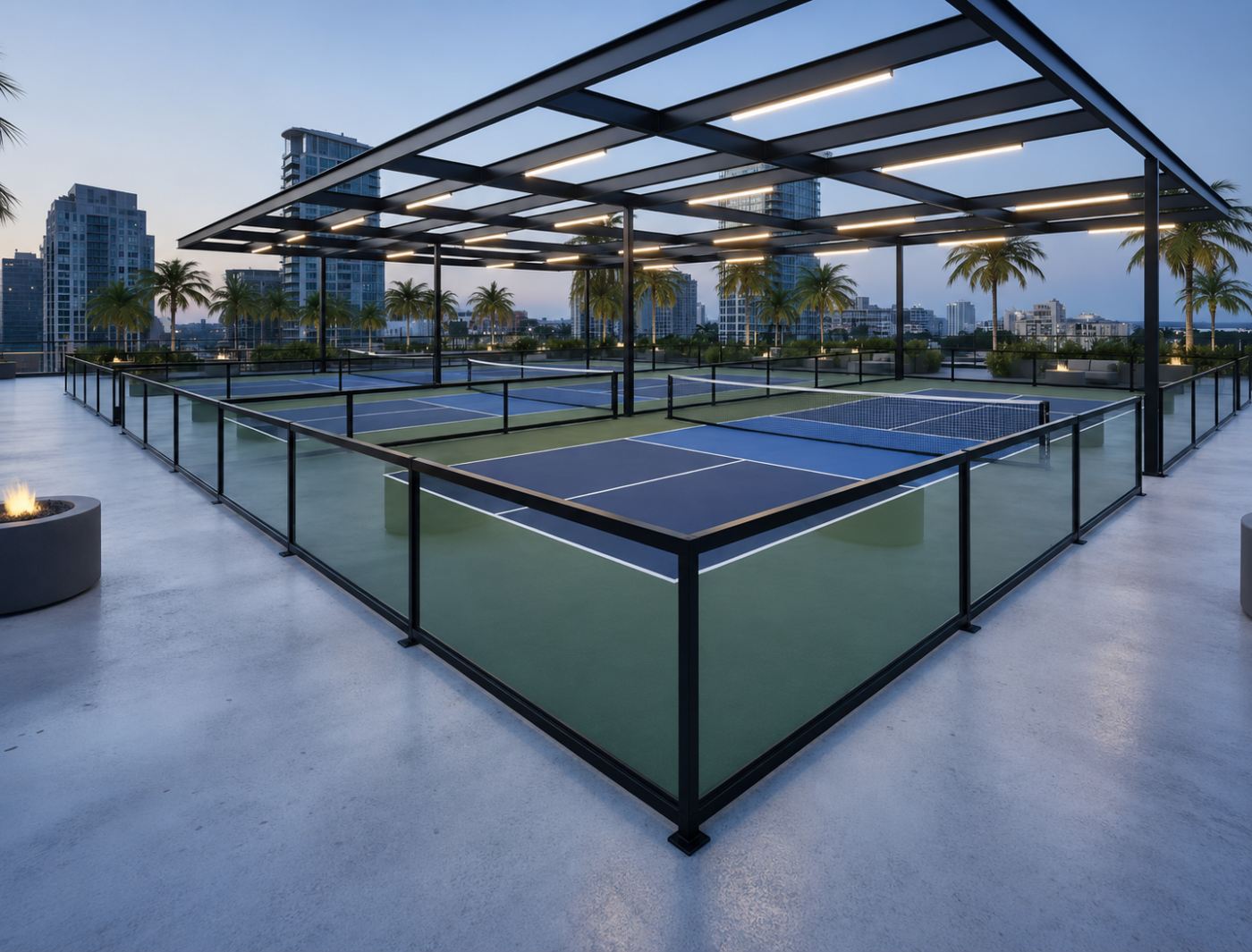
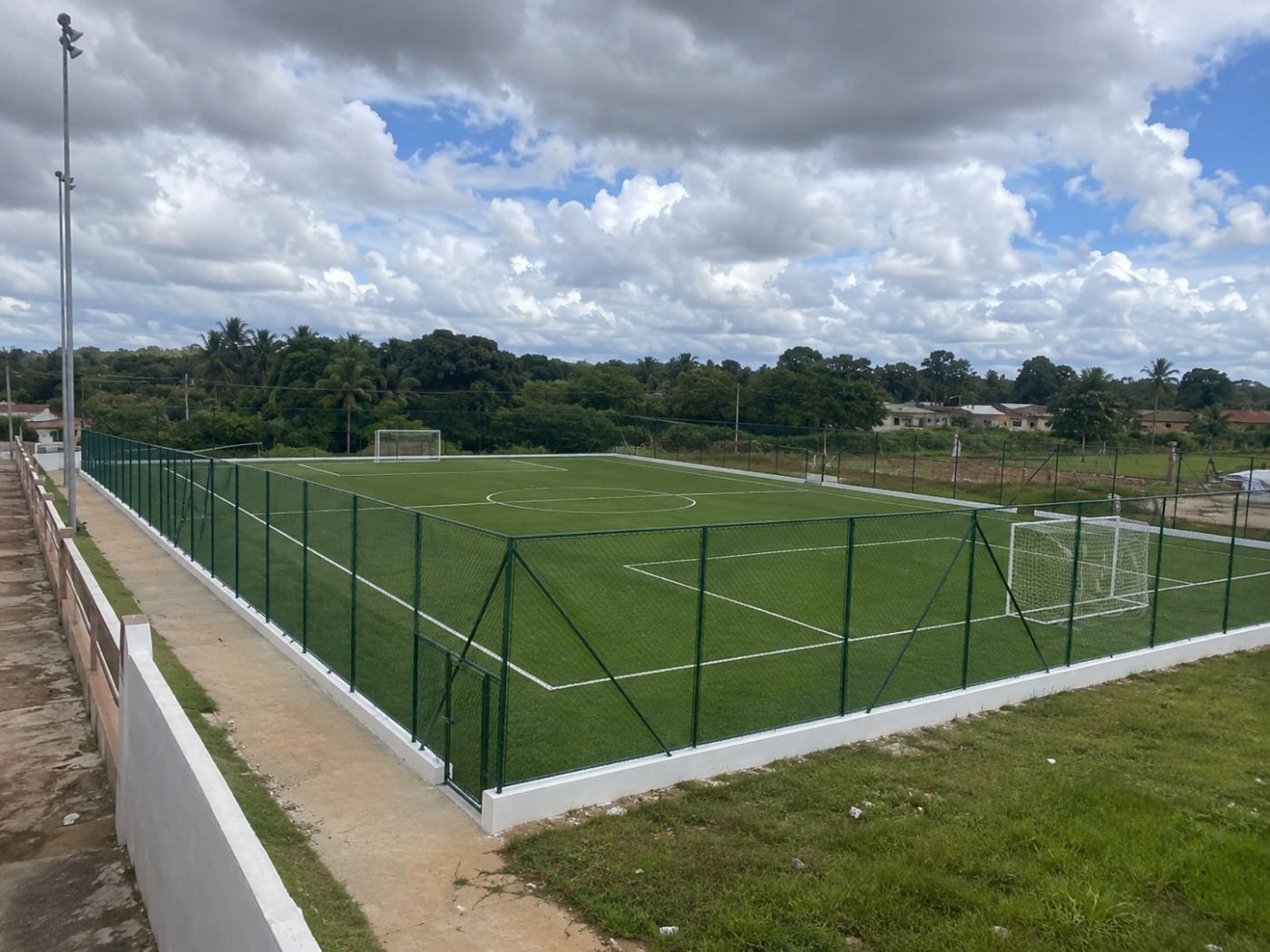
Una vez finalizado el proyecto, se estableció un sistema de zonificación espacial claro:
- Separación distintiva entre el campo de fútbol y las áreas de entrenamiento
- Riesgo reducido de bolas volando fuera del área de juego
- Mayor seguridad
- Excelente transparencia visual
- Gastos de mantenimiento inferiores
- Mejora de la apariencia general de la instalación
9. Por qué es adecuado para el mercado brasileño
Esta solución está adaptada para campos deportivos comunitarios de alta frecuencia en Brasil, con ventajas básicas como:
- Adaptabilidad a climas calientes y húmedos
- Alta durabilidad estructural
- Costos bajos de mantenimiento
- Compatibilidad con espacios multifuncionales
- Seguridad y apertura equilibradas
10. Capacidades del Servicio del Proyecto Comando
Comando ofrece los siguientes servicios:
- Diseño de diseño
- CAD y dibujos de ingeniería detallados
- Prototipado y muestreo
- Producción y galvanización de fábrica
- Exportación de embalaje y carga de contenedores
- Soporte técnico de instalación
- Coordinación de proyectos en el extranjero
11. Escenarios de aplicaciones
- Campo de fútbol
- Cricket practice grounds
- Escuelas de deportes
- Centros deportivos comunitarios
- Espacios deportivos públicos
- Campos multideporte
12. Ejecución del proyecto
Con énfasis en el uso comunitario a largo plazo, este proyecto pretende—contra el telón de fondo de las mejoras de infraestructura deportiva urbana impulsadas por eventos de la Copa Mundial—crear espacios deportivos que combinen seguridad, durabilidad y experiencia de uso abierto.





Responder