
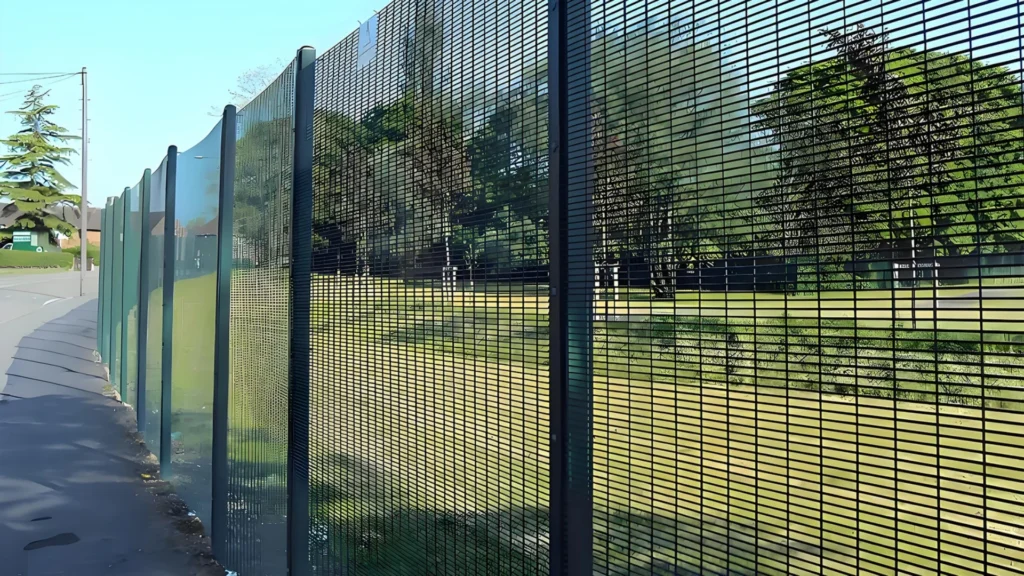
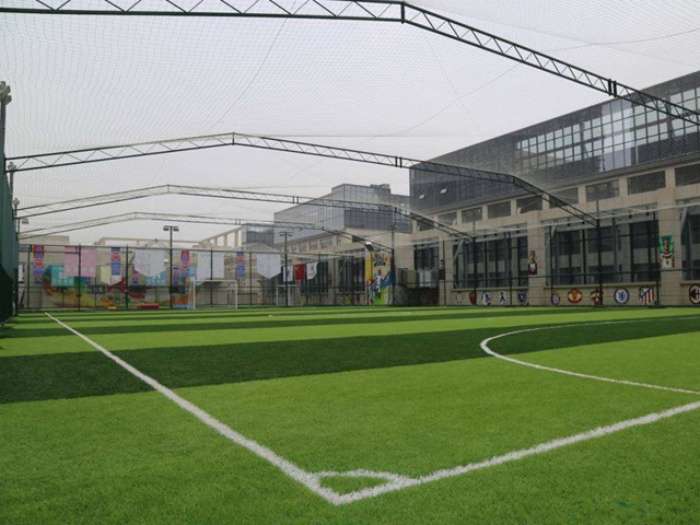
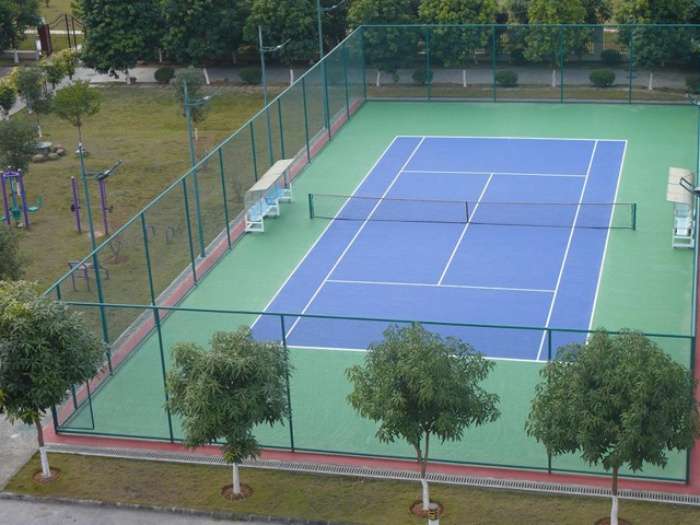
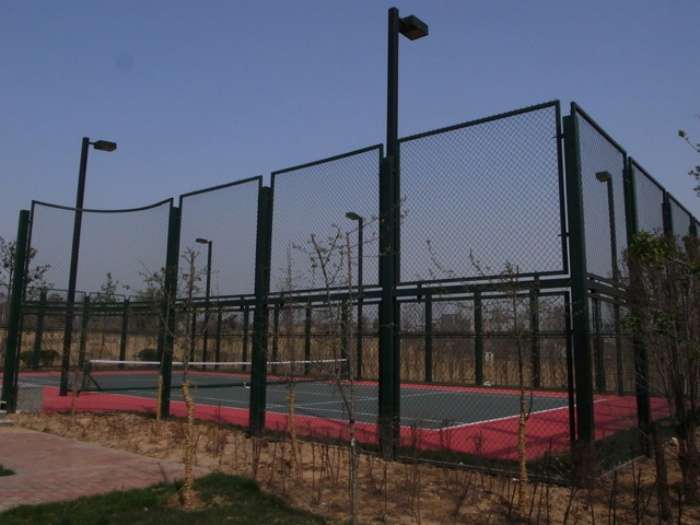
If you’ve ever played volleyball seriously—or even watched a match—you’ve probably noticed that sleek green fence surrounding the court. It’s not just for looks. That’s a purpose-built sports safety enclosure, and it’s doing way more than keeping balls from rolling into the bushes.
Let’s break down what actually goes into building a proper volleyball court—and why the fencing matters just as much as the lines on the sand or hardwood.
📏 First: Space Matters (A Lot)
Before you even think about posts or mesh, you need room:
- The official playing zone is 18m × 9m.
- But to meet safety and regulation standards, you’ll want at least 26m × 14m of total cleared area.
- And above? Nothing—nothing—should hang lower than 12.5 meters. That includes lights, speakers, or tree branches.
- Speaking of lights: aim for 1,000–1,500 lux of even, glare-free illumination. Too dim? Players miss cues. Too bright? Glare ruins the game.
Now… onto the fence.
🔒 The Go-To Choice: Plastic-Coated Woven Mesh
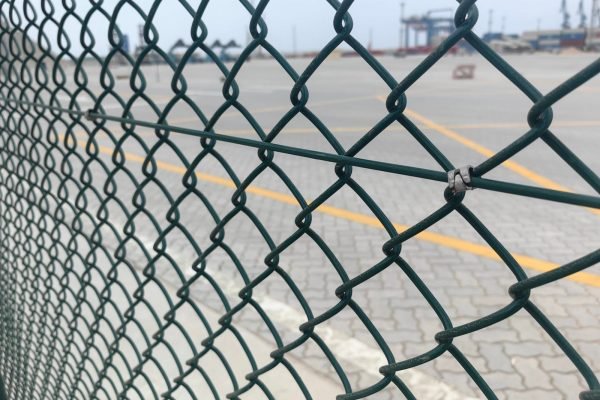
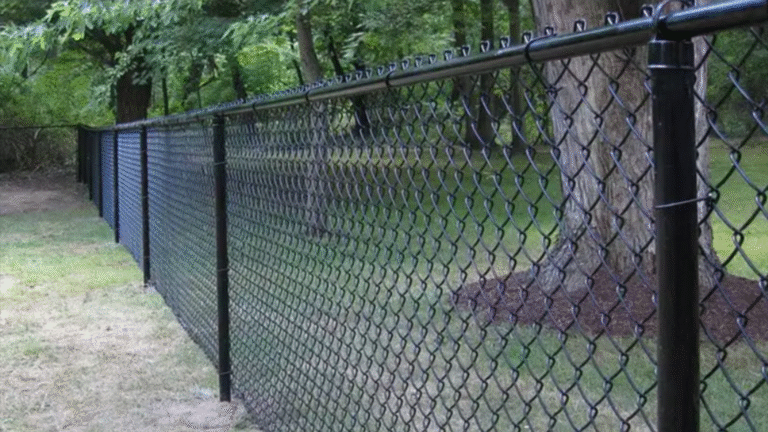
Forget old-school welded panels. Modern volleyball courts almost always use flexible, woven diamond mesh with a protective plastic skin—usually labeled as PVC or PE coated chain-link.
Here’s what makes it special:
- Inside: Strong galvanized steel wire (low-carbon, rust-resistant).
- Outside: A smooth, weatherproof layer of PVC or PE plastic—this is what gives it that rich green color and extra toughness.
- No welding needed: The mesh is knitted, not fused, so it has a bit of “give”—perfect for absorbing the impact of a spiked ball without denting or tearing.
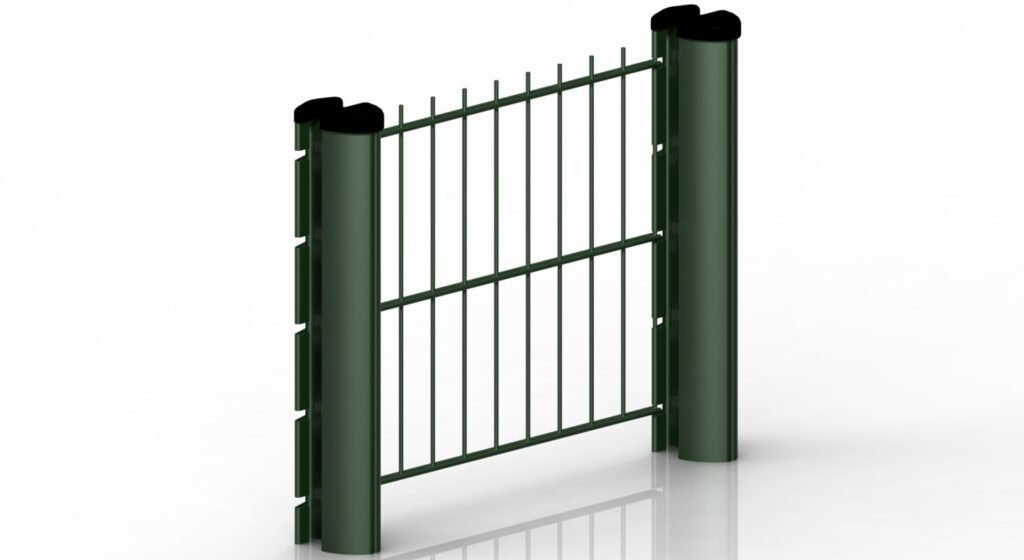
The supporting frame? Heavy-duty round tubing:
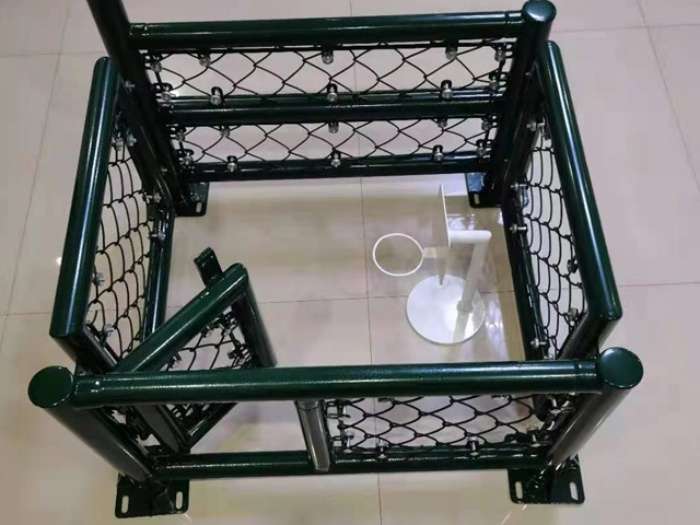
- Main posts: 60mm or 75mm diameter, 2.5mm thick
- Top & bottom rails: 50mm tubes, 2mm wall
All finished with powder coating or dip coating to match the mesh and resist chipping.
🎨 Standard Setup (But Customizable)
Most suppliers offer panels around 3 meters wide, with heights between 3 and 4 meters—tall enough to stop high volleys, short enough to keep costs reasonable.
Mesh openings? Usually 50×50mm or 60×60mm. Small enough to contain balls, large enough to let light and airflow through.
And yes—dark green dominates. Why? It blends into grass, reduces visual distraction, and hides dirt better than white or gray. Some go with forest green, but dark green is the industry default for a reason.
✅ Real-World Perks You’ll Appreciate
- Looks clean from day one—and stays that way
- Zero upkeep: No painting, no rust treatment, no repairs
- Installs fast: Bolt-together system, no sparks or heavy tools
- Multi-role performer: Safety barrier + visual screen + aesthetic finish
Whether it’s a high school gym annex, a beach resort court, or a municipal sports complex, this fencing solution delivers function, form, and long-term value—without compromise.
So next time you see that deep green perimeter around a volleyball court, know this: it’s not just a fence. It’s part of the game.



发表回复