
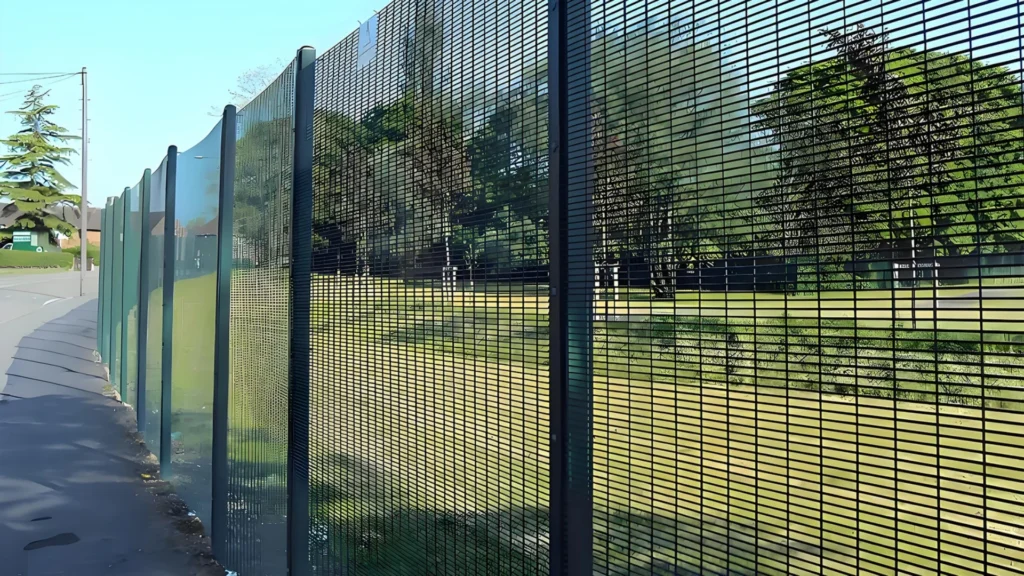
1. Introduction to Tennis Court Fencing
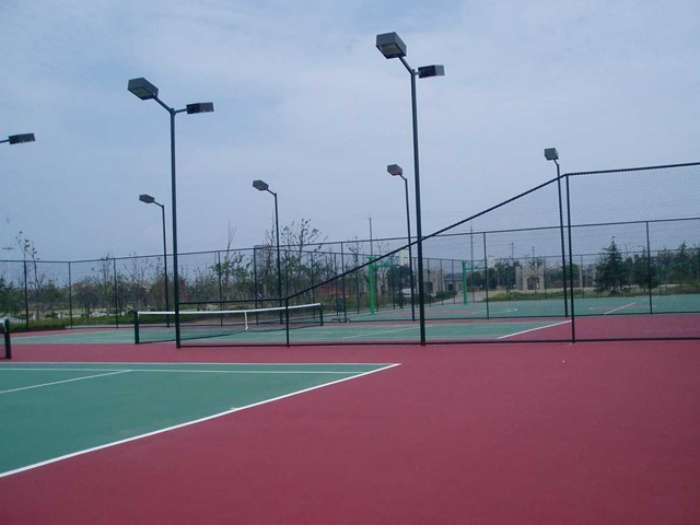
A regulation tennis court requires a minimum total area of 670 square meters, measuring 36.6 meters in length (north–south direction) and 18.3 meters in width (east–west direction). This overall footprint defines the space enclosed by perimeter fencing or interior walls. Within this boundary, the actual playing area for doubles matches measures 23.77 meters long by 10.98 meters wide. To ensure safe and functional play, a clearance of at least 6.40 meters must be maintained behind each baseline, and a minimum of 3.66 meters should extend beyond each sideline.
The net posts are positioned so that the distance between their center points is exactly 12.80 meters. The top of each net post stands 0.914 meters above the court surface.
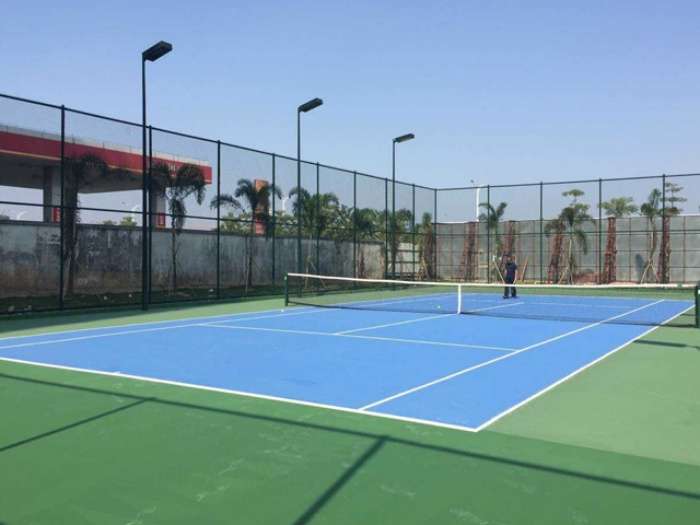
2. Product Overview: Tennis Court Fence
Our tennis court fencing system is engineered for performance, durability, and visual appeal, making it ideal for both recreational and professional facilities.
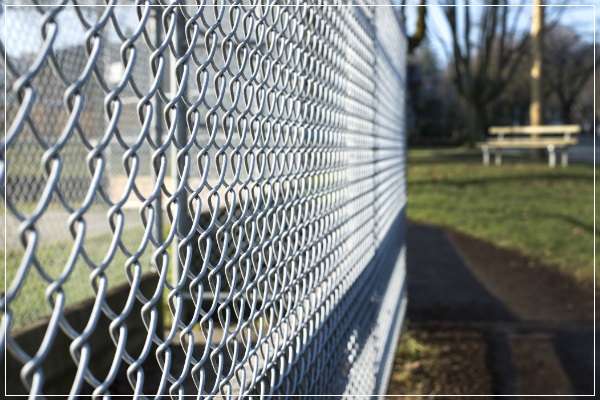
- Material: Constructed from high-quality low-carbon steel wire, ensuring strength without excessive weight.
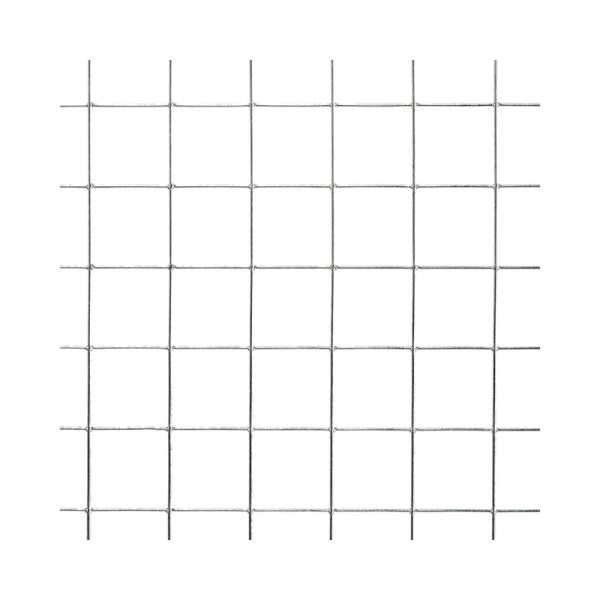
- Manufacturing Method: Combines precision welding with woven mesh techniques for consistent structural integrity.
- Surface Finish:
- Mesh wires are coated with PE or PVC for weather resistance and color retention.
- Posts and support frames undergo dual protection: powder coating followed by dip coating, enhancing corrosion resistance and longevity.
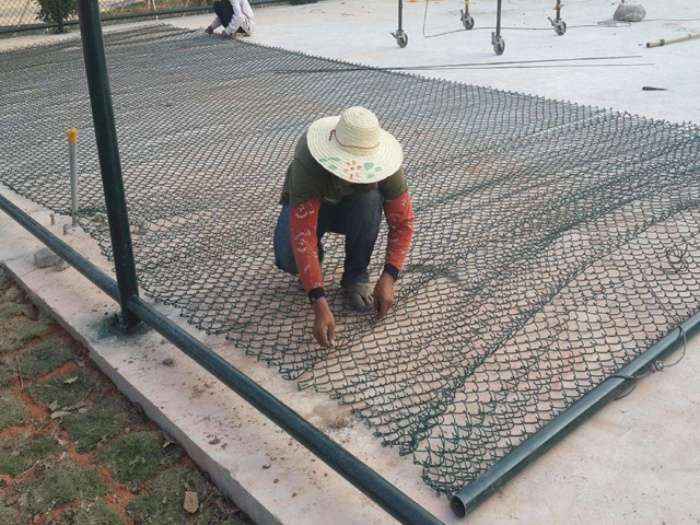
Key Specifications:
- PVC-coated wire diameter: 3.8 mm
- Mesh aperture options: 50 mm × 50 mm or 45 mm × 45 mm
- Panel dimensions: 3,000 mm (width) × 4,000 mm (height)
- Main posts: Round steel pipe, 60 mm outer diameter with 2.5 mm wall thickness
- Horizontal support rails: Round steel pipe, 48 mm outer diameter with 2.0 mm wall thickness
Available Colors:
Standard options include dark green and grass green, with dark green being the most widely selected due to its natural blend with outdoor environments and reduced glare.
Benefits:
This fencing solution offers an elegant appearance, exceptional durability, and virtually zero maintenance. It’s simple to install, provides reliable safety containment, and enhances the overall aesthetics of any tennis facility.
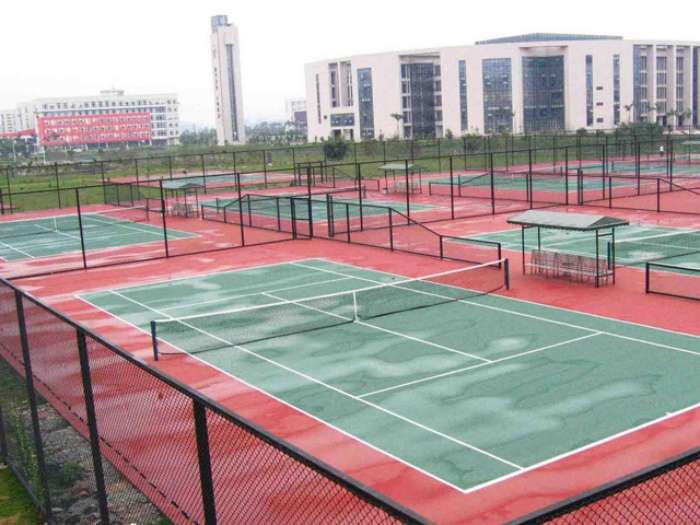
3. Installation Methods
Two primary installation approaches are available, depending on site conditions:
(1) In-Ground Embedment (Concrete Foundation)
- Begin by excavating foundation holes at designated post locations.
- Insert the fence posts into the holes, ensuring proper alignment and level.
- Secure the posts by pouring concrete around their base.
- Once the concrete has fully cured (typically after 24–48 hours), attach the fence panels to the posts.
(2) Surface-Mount Base Plate (for Hardened Surfaces)
- Suitable for existing concrete or asphalt surfaces where digging isn’t feasible.
- Position the posts and secure them directly to the ground using heavy-duty expansion bolts through pre-fitted base plates.
- This method allows for quick installation without disturbing the underlying surface.
Both methods ensure a stable, long-lasting fence structure that meets the functional and safety demands of modern tennis courts.






发表回复