
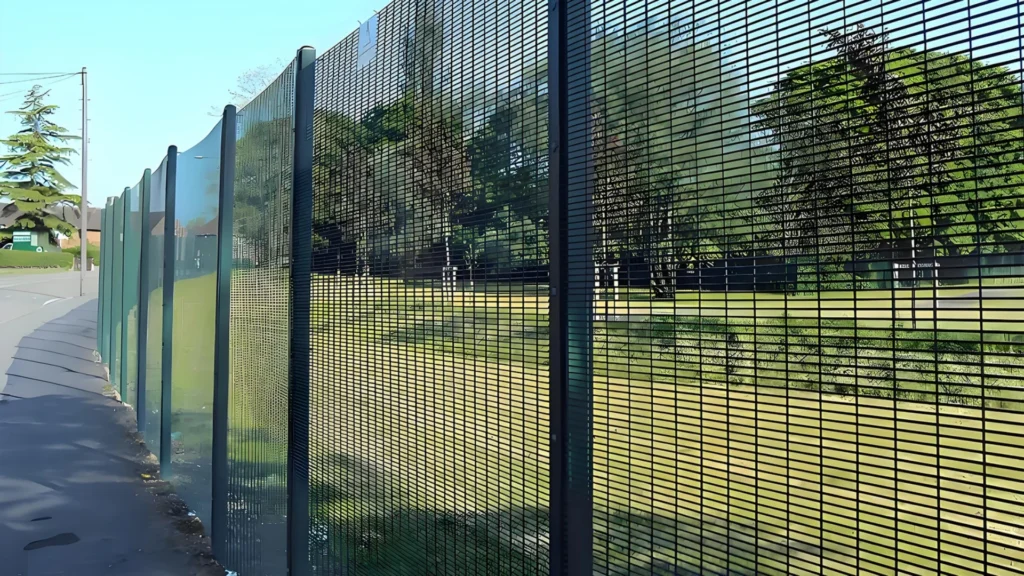
When governments or correctional authorities specify perimeter security for prisons, detention centers, or high-risk facilities, the goal isn’t just “keeping people in.” It’s about creating a fail-safe, tamper-resistant, maintenance-proof barrier that performs flawlessly for decades.
Yet too often, the weakest link isn’t the design—it’s the on-site execution.
Here’s what global best practices actually require for prison-grade steel mesh fencing systems, based on real-world deployments and forensic failure analyses:
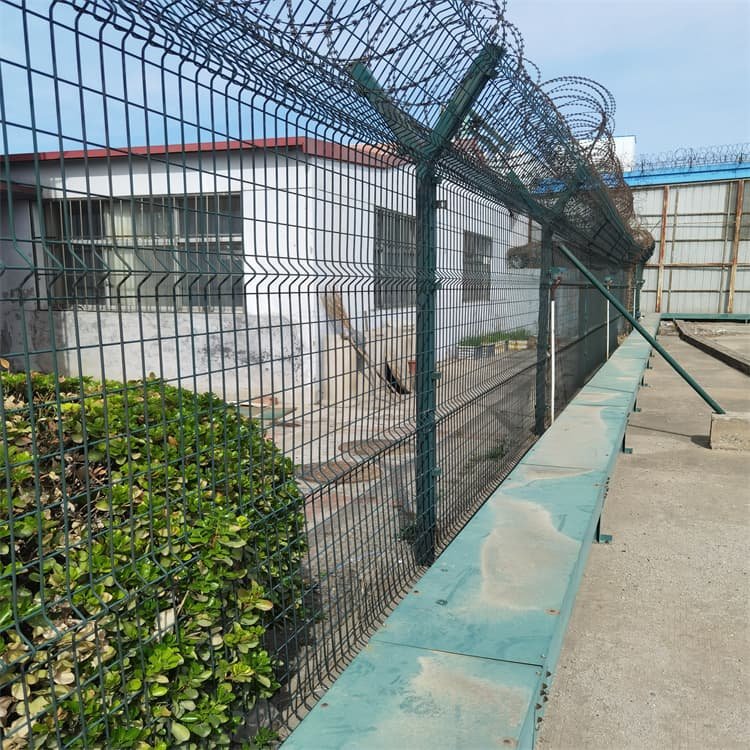
Core Components: It’s a System, Not Just Parts
A true prison fence integrates four critical elements:
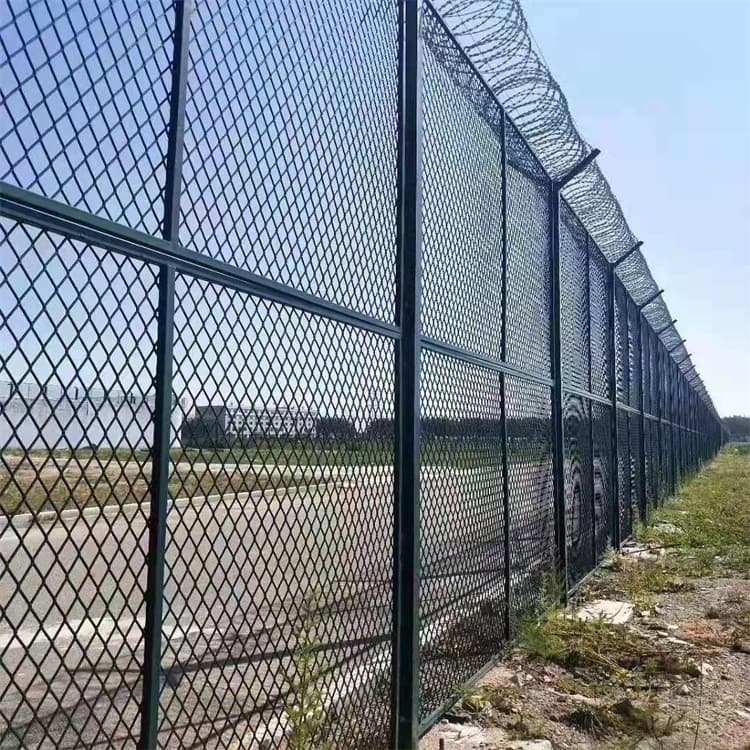
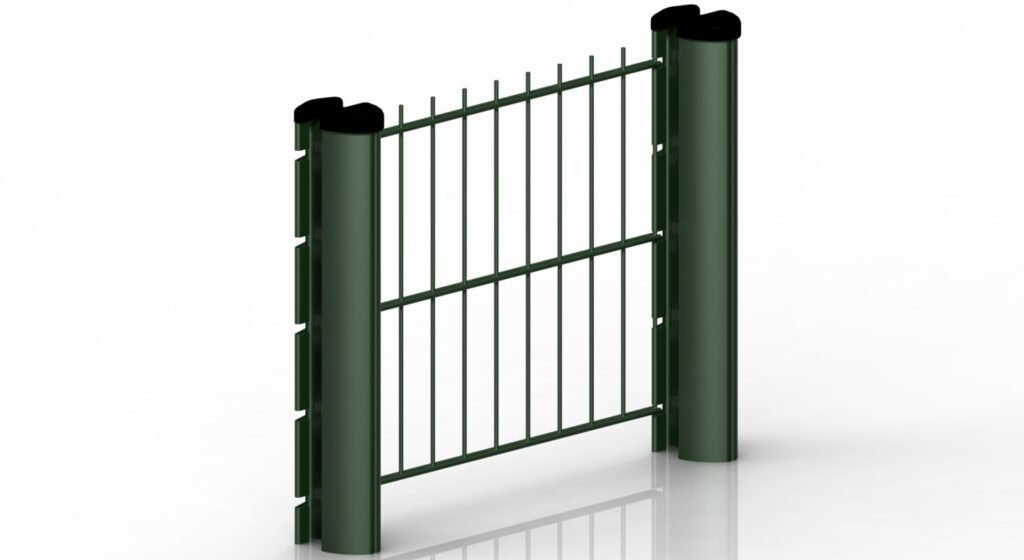
- Y-profile vertical posts – engineered for torsional rigidity
- Rigid welded mesh panels – typically 358 or 3510 specification
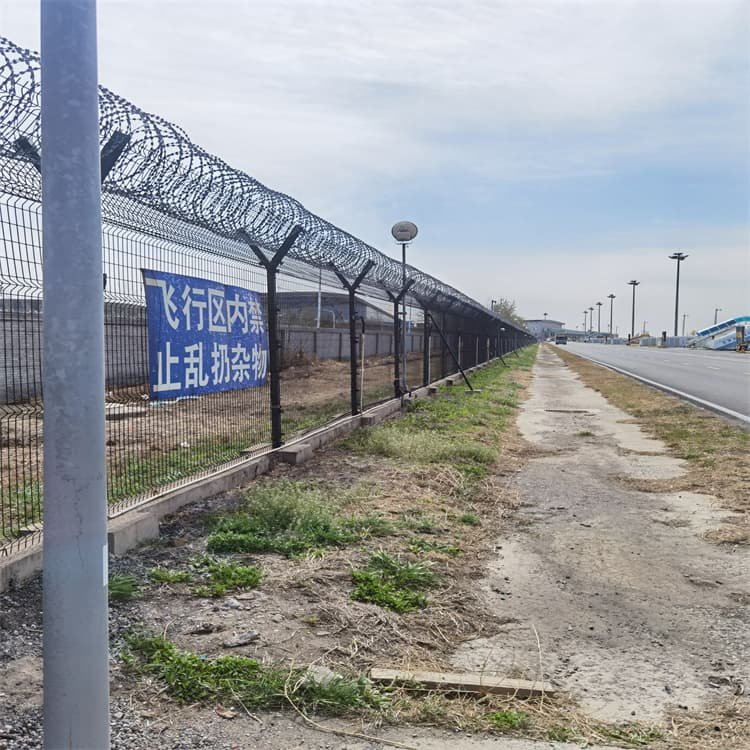
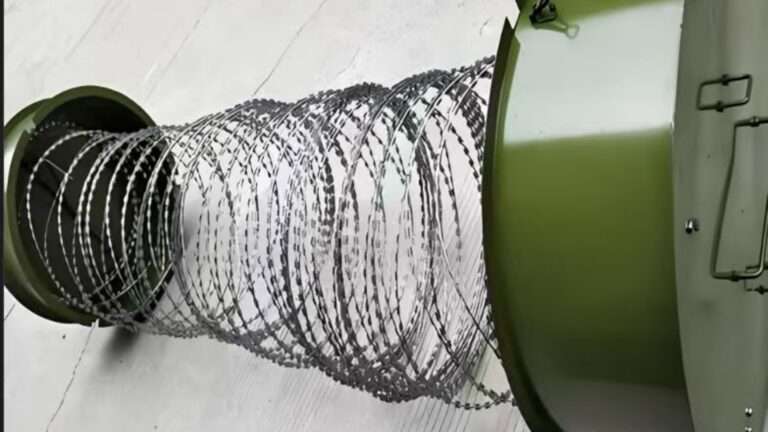
- Helical concertina razor wire – not decorative, but functional deterrent
- Tensioned horizontal support wires – to lock coils in place and prevent sag
Omit or downgrade any one component, and the entire system’s integrity collapses.
Precision Installation: Where Theory Meets Reality
🔩 Mechanical Connections Must Be Redundant
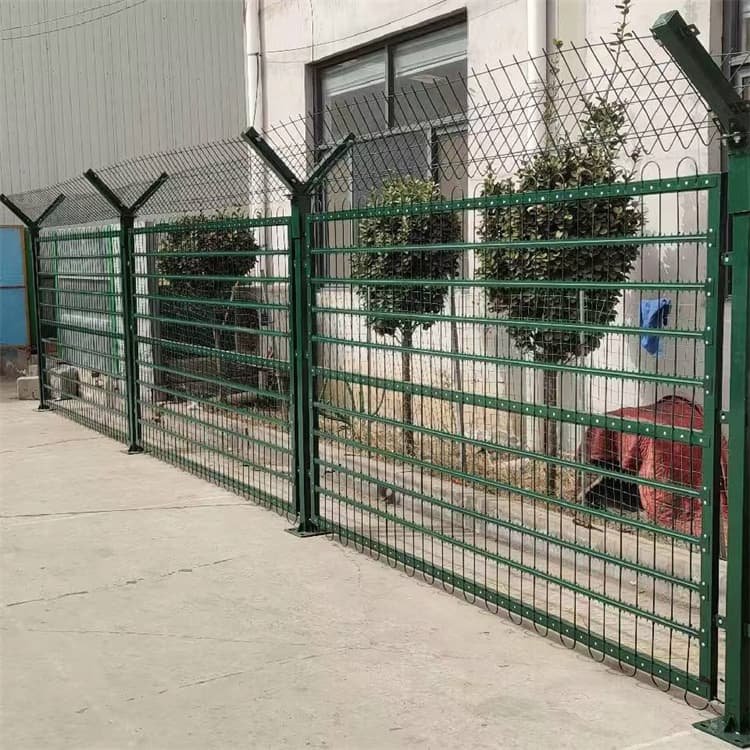
- Mesh panels connect to posts via hot-dip galvanized flat ears (40×50×5mm).
- Each ear features slotted holes (~15mm adjustment) for field alignment—critical on uneven terrain.
- Fastening uses M14×50mm HDG bolts, with minimum 6 connection points per panel edge. Fewer? Risk of panel detachment under stress.
📏 Geometric Tolerance Is Non-Negotiable
- Frame must be perfectly square; diagonal deviation ≤15mm across any panel.
- Mesh apertures oriented vertically—horizontal alignment compromises anti-climb performance.
- Over 100 linear meters, total angular drift must not exceed 6°. Posts are leveled and plumb-corrected every 20m.
⚔️ Razor Wire: Function Over Form
- Concertina coils: minimum 10 turns per meter, spaced 100mm apart.
- Every 20m, coils are clamped to horizontal tension wires with anti-rotation clips.
- At corners or segment joints, both ends are mechanically interlocked—no dangling ends, no gaps.
- Entire coil line must run parallel and co-planar with the mesh—any tilt creates climbable voids.
🧱 Concrete Foundations: The Hidden Backbone
- On wall-mounted installations: concrete anchors every 3 meters.
- For freestanding runs: expansion joints every 120m, using dual-post isolation bases (double volume vs. standard).
- Corner and break-point posts use monolithic dual footings to resist lateral pull.
- Curing time is mandatory—no loading until concrete reaches design strength. Rushing = foundation shift = system failure.
The Human Factor: Why Training Matters More Than Tools
No matter how good the specs are, if the crew doesn’t understand why each detail exists, shortcuts happen. And in perimeter security, a shortcut isn’t a cost saver—it’s a vulnerability.
That’s why reputable suppliers require certified installers or on-site technical supervision for prison-grade projects. It’s not about liability avoidance—it’s about ensuring the barrier performs as engineered.
Final Thought
Modern prison fencing isn’t built—it’s assembled like precision machinery. Every bolt torque, every concrete pour, every coil alignment serves a purpose. When done right, it deters, delays, and detects. When done wrong, it gives a false sense of security.
If your project involves high-security perimeter barriers, demand more than a product catalog. Demand proven installation protocols, technical oversight, and compliance documentation.
Because in corrections infrastructure, there are no second chances.
We provide fully engineered prison fencing systems compliant with international security standards (including NIJ, CEN, and local correctional codes), backed by on-ground installation support in over 30 countries.




发表回复